



BOOST FOR NEW WELDING METHOD
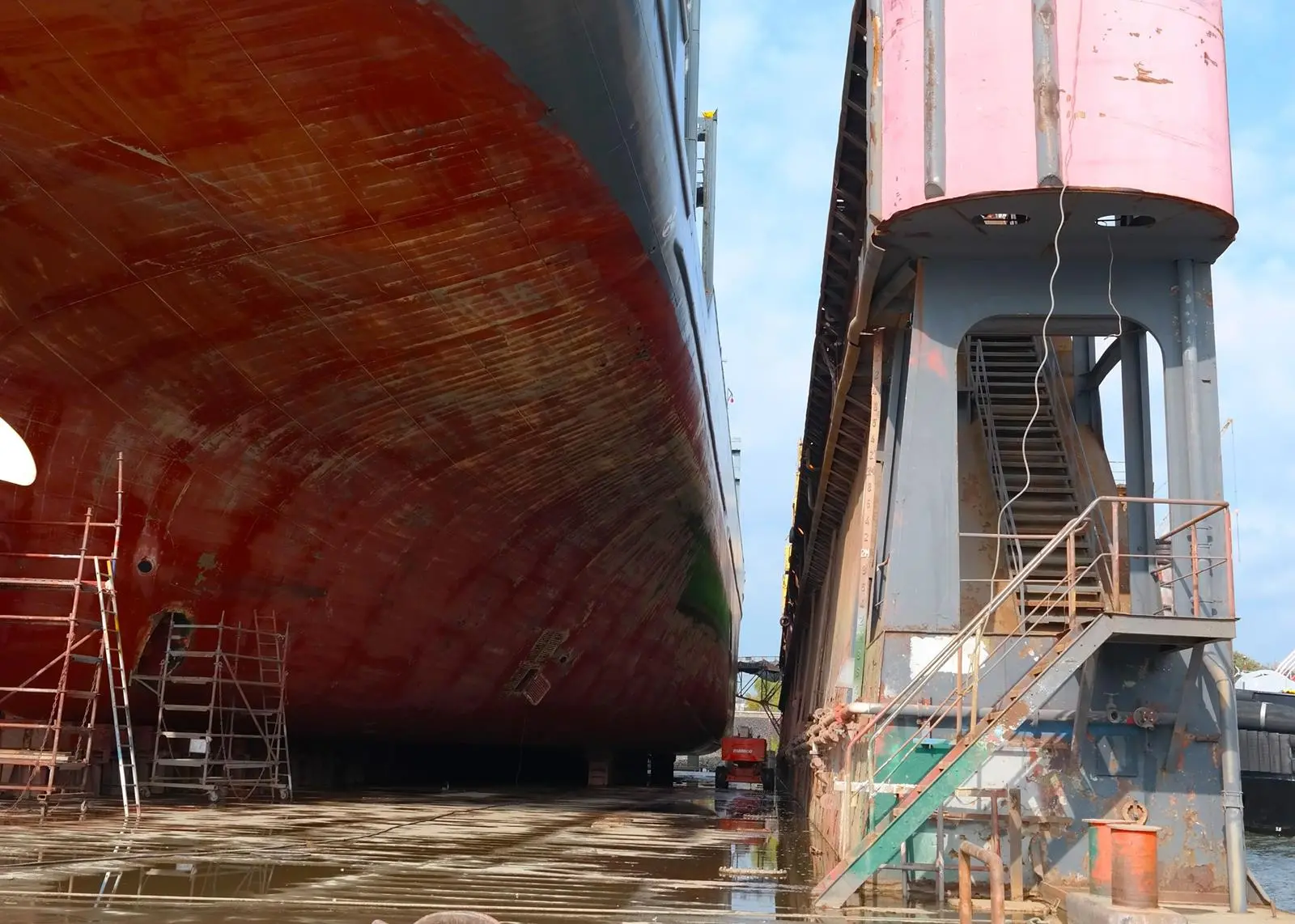
Launched with EU funding, the RESURGAM initiative, denoting ‘robotic survey, repair and agile manufacture’, is aimed at improving European shipyard productivity and creating new opportunities in specialist repair and maintenance.
A prime mover for the endeavour is The Welding Institute (TWI) of the UK, which conceived the process in 1991. A recent breakthrough in the tooling material available for FSW, showing potential for the technique to be used in welding steel structures, has been a spur to the creation and sponsorship of the RESURGAM research consortium. The TWI is joined by 12 other organisations representing industry and academia from nine European countries.
The European Commission has authorised EUR 5 million (US$6m) in funding from its Horizon 2020 programme towards the overall EUR 6.2m million (US$7.4m) budget for the three-year project, due to be completed by 31 January 2024.
Co-ordinator for the collaborative work is the Brussels-based European Federation for Welding, Joining and Cutting, while the project technical manager is the Cumbrian firm Forth Engineering. Cambridge-based TWI and Forth Engineering, which has pioneered an FSW robotic crawler for pipeline repair and maintenance, are the recipients of the single largest grant allocations.
The 13 partners in RESURGAM will look to transfer FSW technology, in combination with the new tool material, into steel welding systems that can be retrofitted to shipyards’ existing CNC (computer numerically-controlled) machines, and into AI (artificial intelligence)-enabled, robotic systems for underwater weld repairs.
According to the consortium, “These fabrication and repair capabilities, backed by the secure, digital Industry 4.0 infrastructure and techniques already in widespread use in the automotive and aerospace industries, will facilitate the rapid, coordinated but distributed modular manufacture of ships and watercraft throughout Europe.”
It also holds out the prospect for undertaking repairs to damaged ships in situ anywhere in the world, without necessarily having to reach or use the nearest drydock. This opens up both the options available to shipowners and also the market for repair yards.
Digital connectivity is at the heart of the project to enable stakeholders to cooperate on modular production of sophisticated ships and on the planning and implementation of shiprepair, modification and maintenance.
In FSW, the weld is made in the solid phase, with no melting. Frictional heat is generated between the rotating, non-consumable welding tool and the material of the workpieces. The heat causes the latter to soften without reaching the melting point and allows the traversing of the tool along the weld lines, leaving a solid phase bond between the two pieces.
FSW is a low distortion, environmentally benign welding technique, allowing the automated production of high strength welds and which can also be used underwater. It is widely employed in aluminium craft and vehicle manufacture. The technology was investigated in an earlier EU research project, designated HILDA (High integrity, low distortion assembly), and recommended for shipbuilding due to its high quality and suitability for automation.
Related Articles
 ALTERNATIVE FUELS & LUBRICANTS
 GENERAL NEWS
 GENERAL NEWS