



BV grants AiP for large LH2 carrier
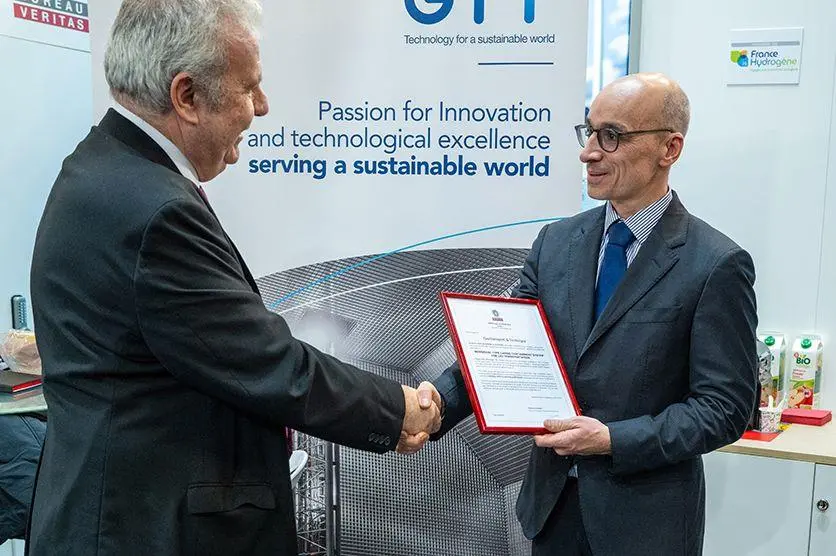
A joint development project undertaken by GTT, TotalEnergies, vessel designer LMG Marine, and Bureau Veritas (BV) has led to the design of a cryogenic membrane containment system for liquefied hydrogen (LH2) and the preliminary design of a 150,000m3 LH2 carrier.
The vessel has a single shaft and electric propulsion. The power plant is based on a mix of dual fuel H2 genset and fuel cells, primary fuel being hydrogen. As H2 is an extremely low-density product, the conventional hulls shapes found on common gas tankers were not suitable, so a specific hull shape has been developed to ensure proper propeller immersion.
An extensive risk assessment was conducted by the partners which identified that the main safety risks for the carriage of hydrogen relate to its wide range of flammability and the low amount of energy needed to ignite an inflammable air/H2 mix. The range of flammability of H2 is very large, from 4% to 75% in the air mix, compared to approximately 5% to 15% for CH4.
This flammability means that there is an additional risk in the case of a gas release on board a LH2 carrier. Additionally, the energy required to ignite a flammable H2/air mix is very low, which means that there is a higher risk of fire or explosion on board in case of a LH2 leak or H2 release.
Benoit Grovel, Gas Expertise Director, BV M&O, said: “While the specifics of innovative solutions must remain confidential, our analysis identified that some of the main challenges revolve around the boil off management and mitigating fire/explosion risks associated with handling large quantities of liquid hydrogen.
“As liquid hydrogen must be stored using cryogenic technology at very low temperatures, it is very sensitive to heat ingress and will naturally vaporise. The resulting gas warms and expands, requiring a large containment system capable of minimising boil off gas. This feature is pivotal to the vessel’s design.
“Given the highly flammable nature of hydrogen, our safety measures must be meticulously designed to effectively mitigate fire risks and prevent any potential escalation to other vessel system, ensuring a robust and secure operational environment.”
In November 2023, BV released its first classification rules for hydrogen-fuelled ships (NR678) to support the safe development of hydrogen propulsion within the maritime sector. “By developing the classification rules that make safe innovation possible, BV plays a vital role in building trust between stakeholders while supporting shipping in its transition towards a sustainable future,” said Grovel.
At IMO level, a correspondence group is working on the development of interim guidelines for ships using hydrogen as fuel. Additionally, an IMO drafting group is working on the revision of the “Interim Recommendations for Carriage of Liquefied Hydrogen in Bulk.”
TotalEnergies specified the design codes, the vessel’s limits in terms of dimensions and capacity, the requirements for the propulsion mode, and the associated CO2 emissions on the shipping routes envisaged.

The 290-metre vessel design is part of TotalEnergies’ broader hydrogen strategy that includes its large-scale transport and use as a fuel for both land and sea transport. The energy major has said that the environmental benefits of hydrogen as a fuel, such as zero polluting tailpipe emissions, combined with the many practical advantages, such as driving comfort, make it one of the most promising alternative fuels for tomorrow’s sustainable mobility, particularly in heavy transport.
In January 2024, TotalEnergies and Air Liquide announce the creation of TEAL Mobility. Equally owned by the two companies, TEAL Mobility will accelerate the development of hydrogen for heavy duty trucks. The company aims to develop more than 100 hydrogen stations on major European corridors over the next decade, creating the first transnational European network of this size – under the TotalEnergies brand. TEAL Mobility will be operating around 20 stations in France, the Netherlands, Belgium, Luxemburg and Germany from 2024.
For GTT, the containment system for a 150,000m3 vessel represents a continuation of its hydrogen developments. In July 2023, GTT received AiP from ClassNK for a membrane type containment system and cargo handling system for LH2. The scalable containment system can be adapted to any size of LH2 carrier without major design modifications.
The previous year, DNV granted GTT two AiPs for the design of a membrane type containment system for LH2 and for the preliminary concept design of a LH2 carrier. These approvals were part of an agreement with Shell, announced in February 2022.
The 150,000m3 capacity of the TotalEnergies LH2 carrier design vastly exceeds the pioneering Suiso Frontier built by Kawasaki Heavy Industries (KHI) in 2020 which has a capacity of 1,250m3, but KHI has also scaled up its transport solution, having obtained an AiP from ClassNK for a 160,000m3 LH2 carrier in 2022.
Related Articles
 ALTERNATIVE FUELS & LUBRICANTS
 GENERAL NEWS
 GENERAL NEWS