



BWM Convention amendments now in force
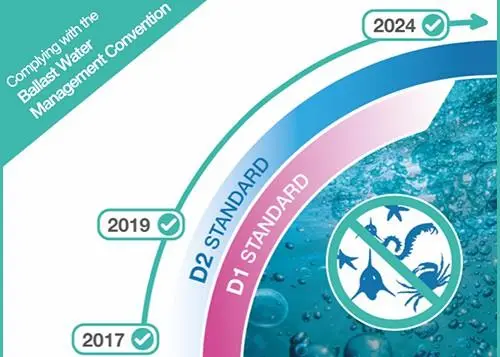
The D-2 standard came into force on 13 October 2019 and expands on the original convention adopted in 2017. The amendments, which will be phased-in up to September 2024, formalise an implementation schedule to ensure ships manage their ballast water so that viable organisms are not released into new sea areas, and make mandatory the Code for Approval of Ballast Water Management Systems, which sets out how such systems are assessed and approved.
The BWM Convention requirements
Since the convention came into force in September 2017, ships have been required to manage their ballast water to avoid the transfer of potentially invasive aquatic species. All ships must have a ship-specific ballast water management plan and keep a ballast water record book. Ships are also required to manage their ballast water to meet either the D-1 ballast water exchange standard or the D-2 performance standard. The October amendments formalise the implementation schedule for the transition from the D-1 to the D‑2 standard.
Implementation of the BWM Convention contributes to achieving a number of the United Nations Sustainable Development Goals (SDGs), in particular SDG 14 on life below water which calls for sustainable use of the oceans and SDG 15, which includes targets relating to biodiversity and curtailing the spread of invasive species.
Related Articles
 METHANOL
 MONITORING, CONTROL & DIGITALISATION
 MONITORING, CONTROL & DIGITALISATION