



CII REVIEW FOCUSES ON REDUCTION FACTORS AND FORMULA BASIS
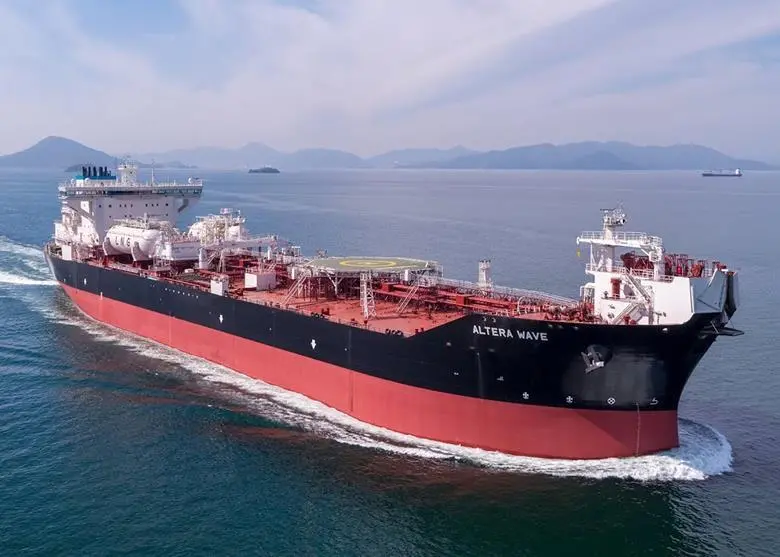
The CII rating scheme is scheduled to take effect on 1 January 2023 and will result in a rating system (A-E) that indicates how efficiently a ship transports goods or passengers (grams of CO2 emitted per cargo-carrying capacity and nautical mile). The scheme will apply to all cargo, RoPax and cruise vessels above 5,000gt that trade internationally.
The rating thresholds will become increasingly stringent. Reduction factors applied to the mid-point of the C rating will lead to an annual reduction of 2% from 2023. By the end of 2026, this will represent a 11% reduction compared to the reference line of 2019. Owners of ships rated D or E will need to update their Ship Energy Efficiency Management Plan (SEEMP) as a way of improving their rating in the future.
A key topic of debate is whether the CII should be based on the Energy Efficiency Operational Index (EEOI) rather than the Annual Efficiency Ratio (AER) that has been adopted by IMO. The AER is based on the vessel’s deadweight as depicted by their deadweight or gross tonnage. The EEOI, which is already in use in the European MRV system, would instead be based on the actual weight of the cargo carried. This gives a more realistic assessment of the operational efficiency, says John Kokarakis, Technical Director Technology & Business Development Hellenic, Black Sea and Adriatic Zone at Bureau Veritas (BV). However, using the EEOI would lead to high variability on the CII numbers. “No metric is perfect: while AER reduces the variability problem, it produces less realistic results.”

Kokarakis notes that some shipowners are concerned about the use of AER for vessel types that are “volume intensive”, meaning that their cargo has a big volume but is relatively light. This is the case of gas carriers and ro-ro vessels, for example, who would prefer using tonnage, or cubic capacity, instead of weight, because their lower deadweight works against them in CII calculations.
Reduction factors
Prior to MEPC76, Dr Bryan Comer, Marine Program Lead at the International Council on Clean Transportation, noted that the IMO’s initial GHG strategy calls for emissions to peak as soon as possible, to fall at least 50% by 2050 compared to 2008, and for at least a 40% reduction in the carbon intensity of international shipping by 2030 relative to 2008. He is concerned that achieving a 40% reduction on either metric allows emissions to continue to grow this decade, which makes it harder to achieve IMO’s 2050 target and is incompatible with the Paris Agreement temperature goals.
Under the EEOI metric, ships had already reduced their carbon intensity 32% relative to 2008 as of 2018, according to the Fourth IMO Greenhouse Gas Study. “That means we only need a small annual fleetwide efficiency improvement from 2018 to 2030 to get to the IMO’s minimum 40% reduction target. Reducing the carbon intensity is great, but because demand for shipping is growing faster than efficiency is improving, we can expect total emissions from the global fleet of ships to continue to grow.”
Using the AER, shipping’s carbon intensity in 2018 was 22% better than 2008, according to the Fourth IMO Greenhouse Gas study. To achieve the minimum 40% reduction from 2008 levels by 2030, shipping’s carbon intensity has to fall about 2% annually starting in 2019. Using AER, he expects emissions to grow 5% by 2030 compared to 2018. “So, aiming for a 40% reduction in AER doesn’t even peak emissions.”
MEPC76’s agreement to achieve an 11% reduction in AER by 2026 relative to 2019 works out to about a 1.5% reduction in carbon intensity each year. “That’s what we already expect to happen naturally as ships get larger and are designed and operated more efficiently over time,” Comer says.
His analysis indicates:
To keep emissions below the 2008 peak: the IMO should require at least a 3% annual reduction in carbon intensity per year, equal to a 33% reduction from 2019–2030.
To be aligned with IMO’s 2050 target: the IMO should require at least a 4% reduction in carbon intensity per year, equal to a 44% reduction from 2019–2030.
To be aligned with a 1.5°C pathway: the IMO should require at least a 6-7% reduction in carbon intensity per year, equal to a 66% to 77% reduction from 2019–2030.

“In reality, only a portion of the fleet will be covered by the policy, due to proposed exemptions and correction factors, as well as data limitations. Ships reporting to the IMO’s Data Collection System (DCS), which covers ships greater than 5,000 gross tonnes, emitted 614 million tonnes (Mt) of CO2 in 2019, which is only about two-thirds of the 919 Mt CO2 emitted by international shipping in 2018, as estimated in the Fourth IMO Greenhouse Gas Study. The DCS will probably be used to ensure compliance with the regulation. If the policy ends up covering at best two-thirds of the emissions, then policymakers need to err on the side of higher ambition to ensure that emissions fall this decade, instead of rising.”
RightShip notes in a position paper that the requirements may be too lenient and slow to enforce change. “For example, a vessel nearing the end of its lifecycle might not meet the CII requirements, but the operator may continue to take chartering opportunities with limited consequences.” RightShip already offers a similar rating – it’s A-G GHG Rating through which, it says, charterers usually remove F and G rated ships from their supply chain. To avoid confusion, RightShip will alter the GHG Rating to match the CII prior to 2023. Still, the position paper notes that the CII is a great example of how the cooperation between a charterer and vessel owner is crucial to optimal outcomes. “To achieve the CII requirements, the charterer and shipowner should work together to minimise ballast legs, optimise vessel speed and in turn reduce fuel use.”
Correction factors
Correction factors for specific vessel types are not on the agenda for discussion at MEPC77 in November, but they are expected to be finalised at MEPC78 in June 2022. The aim of these correction factors is to adjust the CII result so that operators are not penalised for situations in which vessels have no choice but to emit carbon due to operational reasons. “Nothing has been voted or adopted yet, but we have seen proposals to account for bad weather or heavy ice conditions, as well as to adjust for vessels that must use more energy because they carry refrigerated containers or it is necessary that they heat the cargo they carry,” says Kokarakis of BV.
“The main challenge is to find the right balance and avoid over-correcting or under-correcting. This will require a precise assessment of the amount of additional energy that is due to extreme weather or to cargo refrigeration, for example.

“Another challenge would come at the end of the decade, when calculations will be made to determine if the 40% target has been achieved, as we would be comparing corrected data with uncorrected data from 2008. One possible solution would be to use the CII without any correction factors to make these comparisons, while using corrected data for the CII rating of individual vessels.”
Tore Longva, principal consultant at DNV, notes that there are divergent views in the IMO on which correction factors to be applied, so it is not clear yet what the outcome of IMO deliberations will be. One segment that is concerned is the cruise industry. Cruise ships spend a long time in port and have a high hotel load whilst there. “Shipowners are very concerned that the CII is based on emissions per nautical mile, as they only benefit when they’re vessels are actually moving. Ships that undertake a lot of short voyages are similarly affected as they also spend a relatively long time in port as are vessels such as shuttle tankers that spend a lot of time in dynamic positioning mode.”
To make the CII work, it’s important that it’s perceived as fair and that it is respected in the industry, says Longva. Still, he notes that a tanker is not going to be compared to a cruise ship. “As long as the same type of vessels are treated equally, at least shipowners will know that their competitors are also having to think along the same lines when it comes to strategies such as reducing speed.”
Longva believes that other options, such as increased use of biofuels, pending if IMO agrees on a method on how to account for biofuels, can also be taken up as shipowners ponder how much they want to invest in new technologies for older ships. Will older vessels get pushed out of the market? “If the CII becomes the de facto standard for shipping, it’s going to make it much easier for financers, charters, and others to put requirements on ships. However, the impact of that depends on demand in particular shipping segments. If there is little demand, then I think we will see a preference for the newer and the more efficient vessels with a good CII rating. Conversely, if it’s a very good market and all ships are needed, they will not be pushed out.”
Pooling CII ratings
A 2021 study by CE Delft evaluated whether the business case for a zero-carbon ship would be improved if the costs of meeting the CII were pooled. So, rather than requiring all of a company’s ships to meet the CII requirements individually, they could comply at a fleet level. “This means that the money which would otherwise have been spent on improving the CII of all non-compliant ships can be used to let ships sail on low- and zero-carbon fuels in such a way that the total emissions would not exceed the emissions of a compliant fleet.” The study concluded that about half the additional costs of low- and zero-carbon fuels could be met by pooling compliance without compromising the environmental outcome.
The study also examined the potential for ships to improve carbon intensity by reducing speed, and it evaluated the speed reduction that would be needed to upgrade a D or E ship to a C ship, along with the potential revenue lost. For the E-rated reference ships evaluated, including a small and large bulk carrier, tanker and container ship, the speed reductions ranged between 15 and 20%. The study estimates that the yearly loss in revenue for upgrading an E ship to a C ship using speed reduction is $520,000 for small bulk ships and up to $3,808,000 for large container ships. For D-rated reference ships the speed reductions ranged between 6 and 8%. The yearly loss in revenue ranged from $172,000 for small bulk ships to $1,787,000 for large container ships.
Looking ahead
Class societies and other service providers are assisting shipowners with their preparations for 2023. Foreship is helping owners plan how to meet targets now and in the future by examining strategies such as itinerary and speed changes, improving hydrodynamics, reducing hotel load, changing fuels or using less efficient ships on less demanding routes.
ClassNK has been distributing a tool to simulate CII and is developing the more holistic solution to be released this year. The new “ClassNK ZETA (Zero Emission Transition Accelerator)” is the platform for data utilization linked with the society’s tool for regulatory reporting of CO2 emissions. ZETA will enable users to monitor CO2 emissions at an individual ship/fleet level without additional input burden. It is designed to facilitate collaboration, enabling the Poseidon Principles and the Sea Cargo Charter to share emission reports of ships as necessary.
Meanwhile, ongoing work on the issues is being undertaken through a Correspondence Group that will report to MEPC78 in 2022. The reduction factor from 2027 until 2030 has not yet been determined and will depend on the progress that will have been achieved towards the IMO target of reducing the carbon intensity of ships by at least 40% by 2030.
Related Articles
 METHANOL
 MONITORING, CONTROL & DIGITALISATION
 MONITORING, CONTROL & DIGITALISATION