



UK Naval/Commercial Tanker Interaction
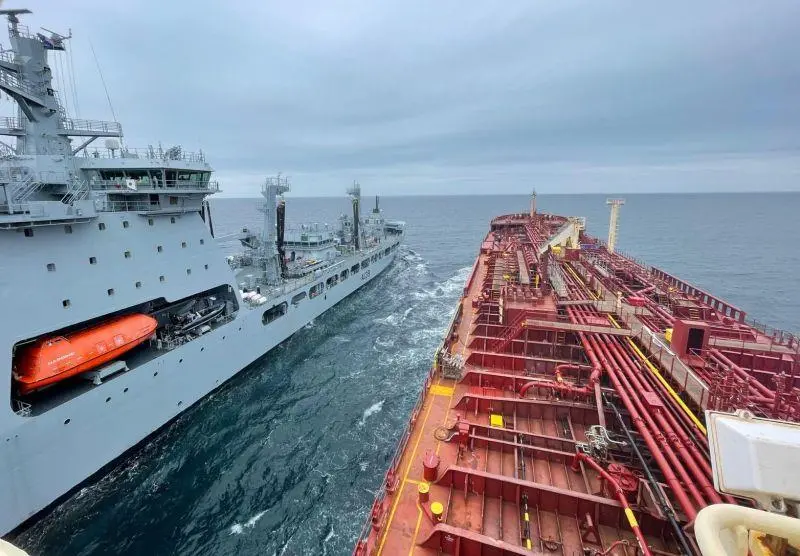
Underway RAS is fundamental to naval logistics, but is a rare event between merchant ships and RFA vessels, and is then usually accomplished using the astern method of cargo transference. In the latest exercise, the exchanges were carried out in abeam mode with the ships manoeuvring close together while sailing at speed.
The Royal Navy said the trials were initiated “to see how an RFA tanker could provide a wider range of service to the commercial world and vice-versa”. However, the primary motivation for the project is implicit in the RN’s investigations into the development of replenishment operations between commercial tankers and RFA vessels to sustain warships and naval task groups at sea for longer periods, or if port access is denied or very distant.
Prior to the at-sea cargo exchanges with the Tideforce, the crew of Raleigh Fisher were given instruction and advice from the RFA as to procedures with RAS equipment, and a ‘dry run’ in slow time leading to a series of hook-ups was conducted alongside in Portland Harbour.
Once the two ships were at sea, and a number of approaches had been made to ensure the confidence of personnel on both sides, the first passing of gun line, jackstay and fuelling hose for the actual replenishment task was made. Trials included course and speed changes while connected. Fuel deliveries in both directions were accomplished safely with the ships under way and just 35m apart.
The RN views the trials as “a significant stepping stone towards greater collaboration with the British merchant fleet.” Last year, in the English Channel, one of the sisterships to the Tideforce, the Tidesurge, undertook her first abeam RAS with a Danish-owned 38,000dwt commercial tanker leased to US Military Sealift Command. Some serving RFA personnel have experience of such support operations going back to the Falklands War of 1982.
The 2005-built Raleigh Fisher is the largest tanker deployed by the James Fisher Group, having been purchased in 2019 after the company won a five-year charter contract from the Ministry of Defence. The vessel is mainly used to transport fuel between depots and bases.
Tideforce is the last of four 27-knot Military Afloat Reach and Sustainability (MARS) tankers constructed by DSME in South Korea and brought into commission between 2017 and 2019. Employing a CODLOD (combined diesel-electric or diesel) propulsion system, the design incorporates three abeam RAS stations catering for the transference of diesel oil, aviation fuel and potable water, plus provision for astern RAS and for solid RAS reception. In addition, the flight deck aft allows for vertical replenishment (VERTREP) by helicopter.
Related Articles
 ALTERNATIVE FUELS & LUBRICANTS
 GENERAL NEWS
 GENERAL NEWS