



Composites make for propeller efficiency
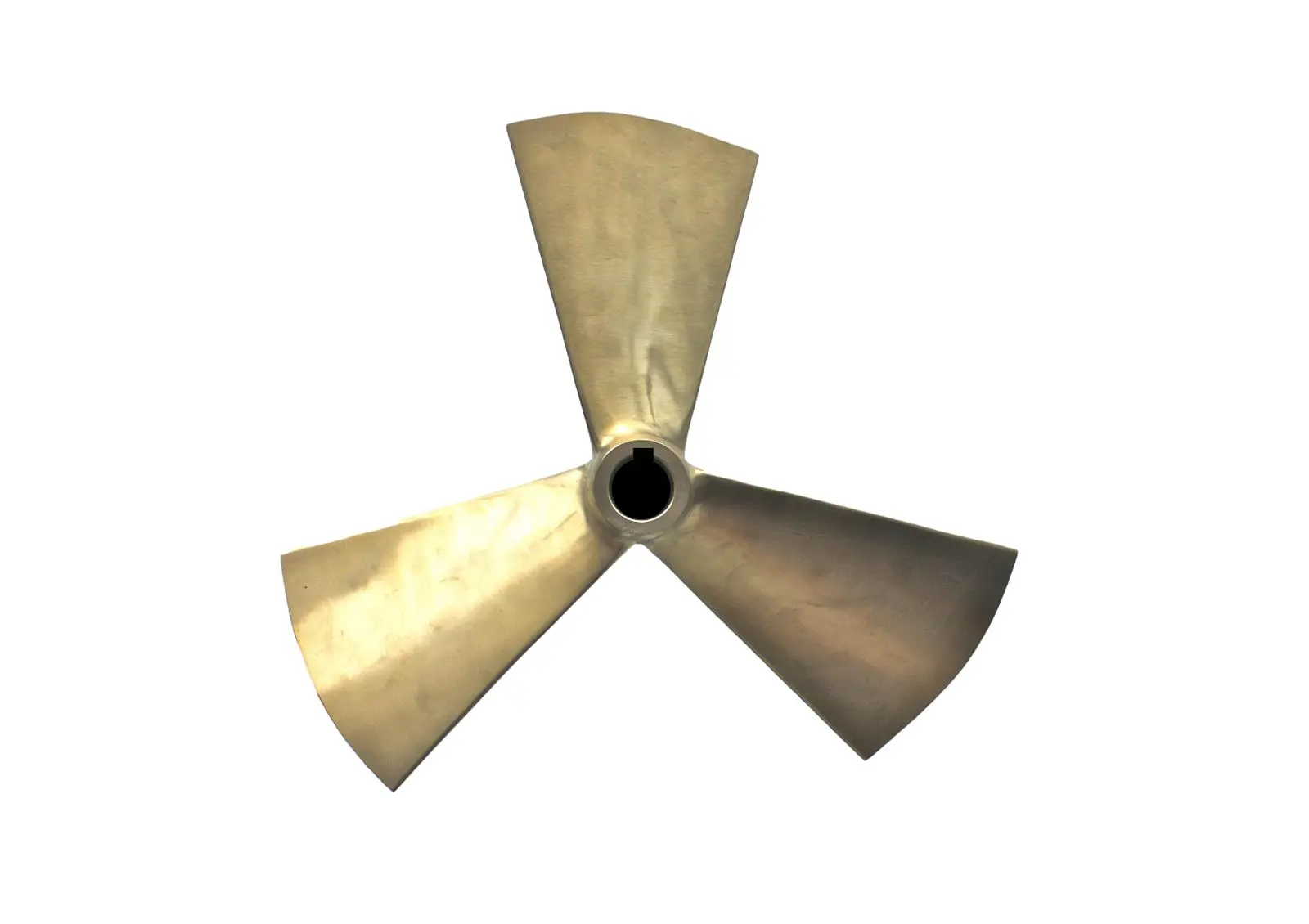
The Axiom propeller, claimed to be unique because there is no twist with regards to pitch and the propelled race is cylindrical in its form in direct contrast with the marine screw, was first launched to the inland recreational boat market, with over 700 sold. The latest DWS-type propeller is said to be suitable for commercial vessels up to about 50m in length. Cavitation tunnel testing has been carried out at the Emerson facility, Newcastle University and sea trials are currently ongoing.
Results so far are claimed to be “phenomenal”: one of the DWS test craft, Plymouth Pilot Bumbly II showing significantly lower wash and wake with acceleration and top speed improved compared to a typical Archimedean screw. Slow speed manoeuvrability is also better with a tighter turning circle and improved astern performance, while bollard pull is said to be around 8% better. The designers claim that devices used in conjunction with screw propellers such as ducts, spoilers and rudder-bulb fins which straighten out the water flow are not needed when fitting an Axiom propeller.
Designer David Watts explains: “A marine screw moves 15% more water than it needs to due to induced rotation, which is pure waste. Due to its blade shape, with no pitch, the four quadrant data of the DWS is uniform, resulting in equal, smooth thrust leaving the blades, removing the need to fit energy saving devices that straighten out the water flow before and after the propeller. Slip has been reduced giving improved and more economic passage times. Less wash is produced and there are enhanced handling and stopping characteristics.”
The propellers are made, in the main, from AB2 (a form of NiAIBr). They are designed to fit conventional shaft and pod arrangements, with CP, feathering and folding types in development. The Axiom DWS is available in two, three and four blade forms, offering increased speed reduced propeller slip, allowing fuel usage to be cut by 5-8%.
Related Articles
 PROPULSION
 GENERAL NEWS
 GENERAL NEWS