



CONCERTED BID FOR QUIETER SEAS
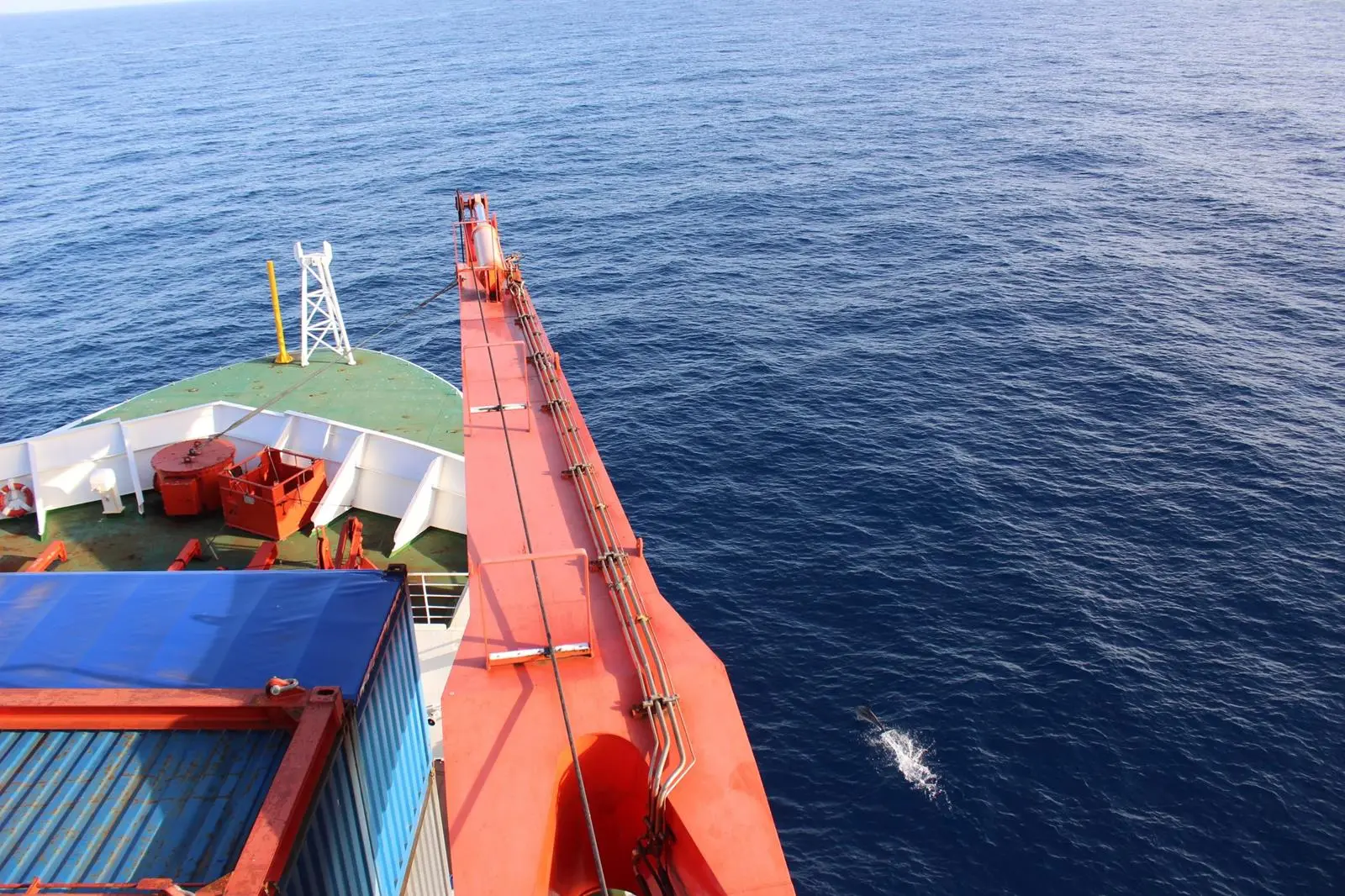
The aim of the SATURN endeavour is to identify how noise from shipping impacts on the marine environment, to model the way that it is propagated, and uncover the relationship between vessel design and underwater noise production.
The ultimate goal is effective abatement through ship design and engineering solutions and regional noise management policies.
The research budget is being wholly underwritten by the EU to the tune of EUR 9 million (US$11m) by way of the Horizon 2020 programme. Funding will be distributed among 20 partners located in 10 countries and representing all the various technical and academic disciplines. The Dutch maritime cluster has a particularly strong standing, which includes the Dutch affiliate of ship propulsion and marine technology group Wärtsilä. The entire SATURN undertaking will be coordinated by the Energy, Climate and Marine Research Centre (MaREI) at University College Cork in Ireland.
Work is to be implemented at the beginning of February 2021, and the stipulated completion date for the project is 31 January 2025.
The remit for the research consortium has three primary elements, as follows:
- To identify the sounds that are most detrimental to aquatic species and how these are produced and transmitted;
- To investigate both the short-term and cumulative long-term negative impacts of noise from ships on invertebrates, fish and marine mammals;
- To identify the most promising design and technical options for measuring and reducing the components of ship noise that have the greatest effect on underwater life, and that can be applied to current as well as future vessels.
Denmark’s Aarhus University, the recipient of the single largest slice of the EU grant, will provide a key reference point for the project by attaching small packages of advanced measuring equipment on seals, porpoise and pilot whales. The instrumentation will record the noise to which the animals are exposed and will register their movements using GPS, depth gauges and motion sensors. Data will subsequently be compared with measurements of ship noise, to identify correlations between exposure and behaviour.
The volume of the noise is important, but it is acknowledged that other characteristics such as frequency and the variability of noise over time may also have a significant bearing on sea life.
Critical characteristics of noise analysed by academic participants will be passed on to other project partners involved in the development and testing of propellers, hull forms and damping systems to reduce noise and vibration. Besides Wärtsilä, this echelon includes the Naval Group of France, and Dutch and Italian research organisations MARIN and Cetena, respectively. DNV GL’s depth of experience in the field through the provision of technical advisory services stance, and its early move to include noise and vibration within the ship classification concept, will also be brought to bear on SATURN’s findings and proposals.
There has been a host of collaborative research schemes sponsored by the EU over the past 10 years looking into ship-generated noise in an environmental context. Previous initiatives have clearly advanced knowledge in relevant themes, but are considered by project coordinator MaREI to have worked mostly in isolation.
Cross-fertilisation is fundamental to the new project. According to MaREI, “SATURN benefits from a uniquely integrated and interdisciplinary approach with acousticians, marine biologists, maritime engineers and standards bodies working side-by-side and in tandem with a large, well-structured group of international stakeholders, to create and test innovative solutions for reducing the most harmful effects of underwater noise.”
The development and contribution to the establishment of standards for terminology and methodology to be used across all disciplines working on underwater radiated noise will underpin the upcoming four-year joint research.
Related Articles
 ALTERNATIVE FUELS & LUBRICANTS
 GENERAL NEWS
 GENERAL NEWS