



Consortium to develop 16,000cbm LH2 containment system
The overall goal of the LH2CRAFT project is to develop a sustainable, commercially attractive, and safe long-term storage solution suitable for long-distance transportation of LH2 for commercial vessels. It aims at developing a membrane-type containment system for high-capacity storage at a temperature of -253 deg C and to demonstrate and validate the technology on a 10-ton (180m3) prototype.
Storage of hydrogen is challenging: in gas form hydrogen is difficult to contain, and in liquid form it requires extremely low temperatures. The new design solution will address the challenges of liquid storage at dimensions similar to those of existing LNG carriers, but the ability to scale the concepts up or down to support modularity and scalability will also be important. A life cycle assessment will consider different new design or retrofit strategies and evaluate the cradle to grave environmental impact including sustainability and recyclability and determining the environmental benefits.
LH2CRAFT will also develop a preliminary integrated ship design and carry out the corresponding cost estimation, achieving reduced boil-off rates of 0.5% per day.
Along with TWI, project partners include HD Korea Shipbuilding & Marine Engineering (KSOE), ABS, RINA, BV, engineering company Hydrus Engineering, Technical University of Dresden and Technical University of Athens.
TWI participation
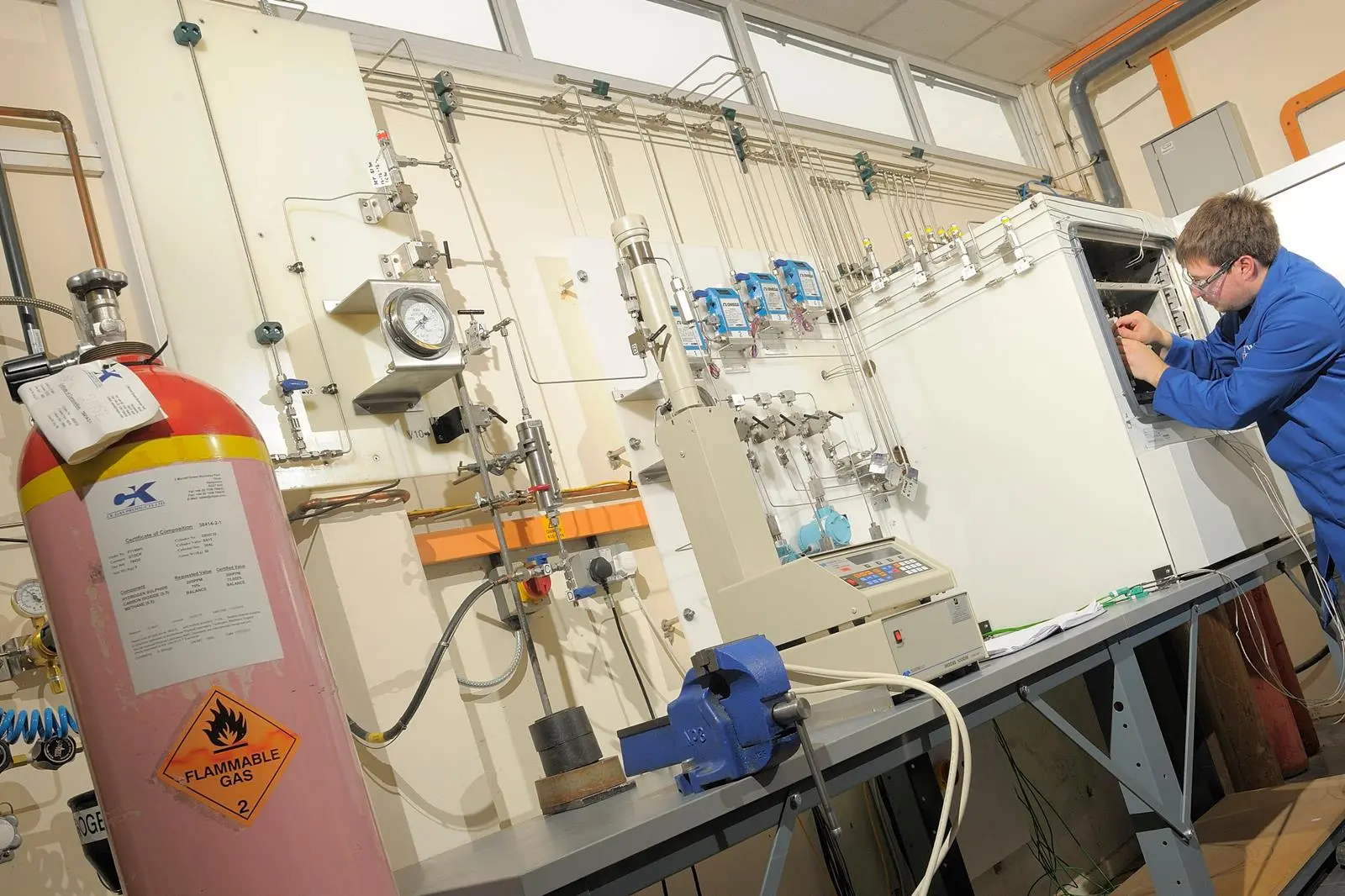
As a technology provider, TWI focuses on two aspects of the LH2CRAFT project. The first is to contribute to the risk and safety assessment of LH2 as cargo, which includes performing the safety and risk evaluation of the design systems (e.g. HAZID, HAZOP, FMEA, etc.), providing design recommendations and contributing to safety assessment guidelines.
KSOE participation
KSOE plans to lead the conceptual design and basic design of the LH2 cargo hold based on its liquefied gas cargo hold design capabilities accumulated by winning orders for the largest number of gas carriers in the world. The company received DNV classification certification for a hydrogen carrier system using the Himsen engine, and it plans to complete the establishment of a hydrogen ecosystem by developing a complete hydrogen engine by 2025.
KSOE will base its research efforts at the HD European Research Center it established in Germany last year. The company plans to invest 15 million euros (approximately KRW 22 billion) over the next five years on the Center and plans to actively discover and promote mid- to long-term large-scale projects with local partners.
A longer feature on the LH2CRAFT project will be included in September’s issue of The Motorship.
Related Articles
 ALTERNATIVE FUELS & LUBRICANTS
 GENERAL NEWS
 GENERAL NEWS