



Digital sound tool for engine anomaly detection
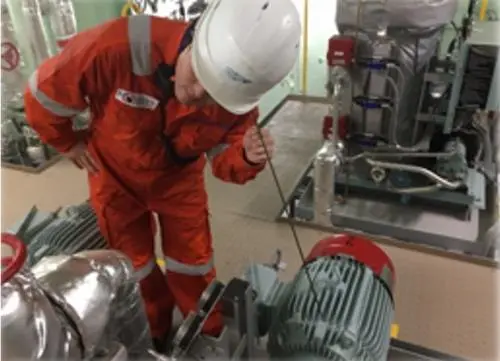
The tool, Kirari MUSE, can compare operational sounds from plants as data and use it to diagnose ship-equipment conditions, contributing to the effectiveness of predictive maintenance solutions.
The tool extends the functionality of traditional listening rods, which have been used extensively for equipment condition diagnostics, in the maritime sector as well as in manufacturing. Traditionally, insights from the use of listening rods could not be quantified, preventing its aggregation as data.
Kirari MUSE comprises an electric listening rod, a dedicated smartphone as an operation device, and PC software. The electric rod has a recording function, and the PC software enables the recording, analysis, and sharing of sounds by seafarers during patrols as chart and graph data. An alarm appears on the software if the sound data deviates from the set reference data. The dedicated smartphone is utilised for operations such as selecting the device to be inspected, recording memos during inspection, and transferring the data to the software.
By accumulating sound as data, Kirari MUSE helps us to compare the sound data with threshold and past data without being affected by the experience and knowledge of individual seafarers, leading to early anomaly detection.
In addition, Kirari MUSE enables us to share the accumulated big data with ships and shore, such as operating companies, ship-management companies, classification societies, and equipment manufacturers to enhance support for diagnosis and repairs from the shore.
Related Articles
 ALTERNATIVE FUELS & LUBRICANTS
 GENERAL NEWS
 GENERAL NEWS