



DNV GL brings digital twin back to life
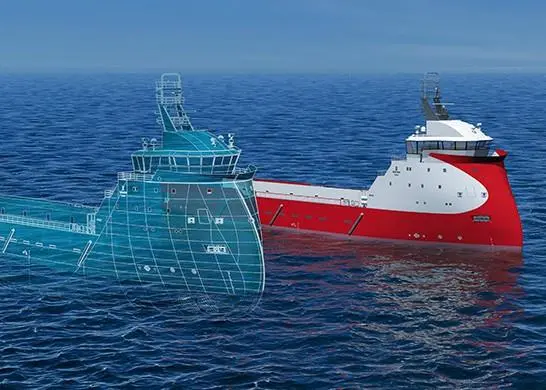
When combined with wave, position and sensor monitoring, DNV GL believes this approach can vastly enhance the value of predictive and preventative maintenance.
“Design models, which are also sometimes referred to as digital twins, die at birth,” explained Dr Gaute Storhaug, principal specialist at DNV GL Maritime Advisory. “It is our ambition to bring these models back to life during the operational phase of an asset.”
Through its Nerves of Steel Extraordinary Innovation project, DNV GL – Maritime is investigating new ways of calculating the risk of wave-induced damage and believes that continued use of the virtual model is an effective way to visualise key components, perform analyses and calculations and understand the long-term effects of operation on the ship’s structure and function.
Additionally, a digital twin can be useful for inspection and maintenance planning, extending the ship’s lifetime through pre-emptive actions to avoid hull damages.
The importance of sensors
Using sensor technology is common practice in the industry but DNV GL aims to go one step further by combining sensor data with the ship’s digital twin to extend the range of accessible details for monitoring thereby making predictions more meaningful and accurate.
Ultimately the ambition is to enable owners to monitor their assets in real time, either through technology built into their own systems or by using DNV GL’s Nerves of Steel interface, which will be available on the Veracity platform.
“Amazingly as little as 1% of the data available on board has been used for shore-side decision support,” said Dr Storhaug. “We encourage owners to make better use of this valuable resource.”
Related Articles
 ALTERNATIVE FUELS & LUBRICANTS
 GENERAL NEWS
 GENERAL NEWS