



DNV GL tests drone inspection at Remontowa
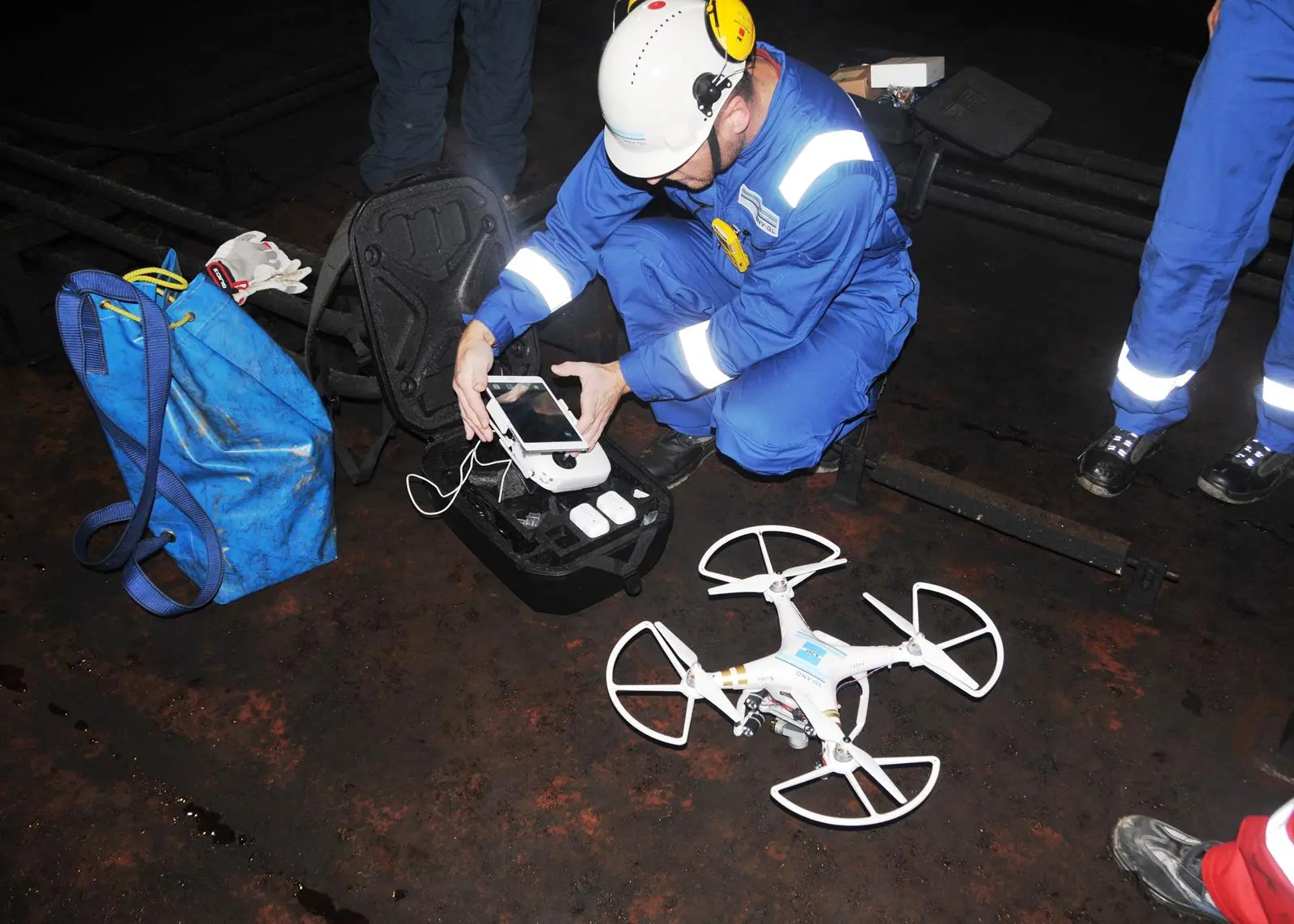
The drones can visually check the condition of remote structural components and have the potential to significantly reduce survey times and staging costs.
Cezary Galinski, manager of the DNV GL’s maritime classification flying squad, said: “Camera equipped drones are now much more widely available and affordable, and by using them for a first screening we can identify areas that require closer inspection quickly and without extensive staging, which can be both costly and time-consuming.”
The tests used a camera-equipped drone to visually evaluate structural components through video streamed to a tablet.
One operated the drone while a second checked the video feed in real time. The video feed was also recorded for review and documentation purposes.
The drone was equipped with a powerful headlight and produced a video with enough quality for initial inspection purposes.
Mr Galinski, continued: “Because there are currently no drones formally certified as explosion-proof commercially available, we performed a risk assessment. Of course, before the drone operation started, we also ensured that the cargo tank was gas-free and certified for safe entry.”
“Our next step is to work with a more advanced tailor-made drone in early 2016.”
In the event of damage being detected by the drone, a traditional close-up survey may still be required.
“We are also developing a special guideline for performing drone-based surveys. This could open the way to remote or even autonomous inspections being carried out as part of our survey scheme in the near future,” Mr Galinski concluded.
Related Articles
 ALTERNATIVE FUELS & LUBRICANTS
 GENERAL NEWS
 GENERAL NEWS