



DNV GL to introduce remote surveys
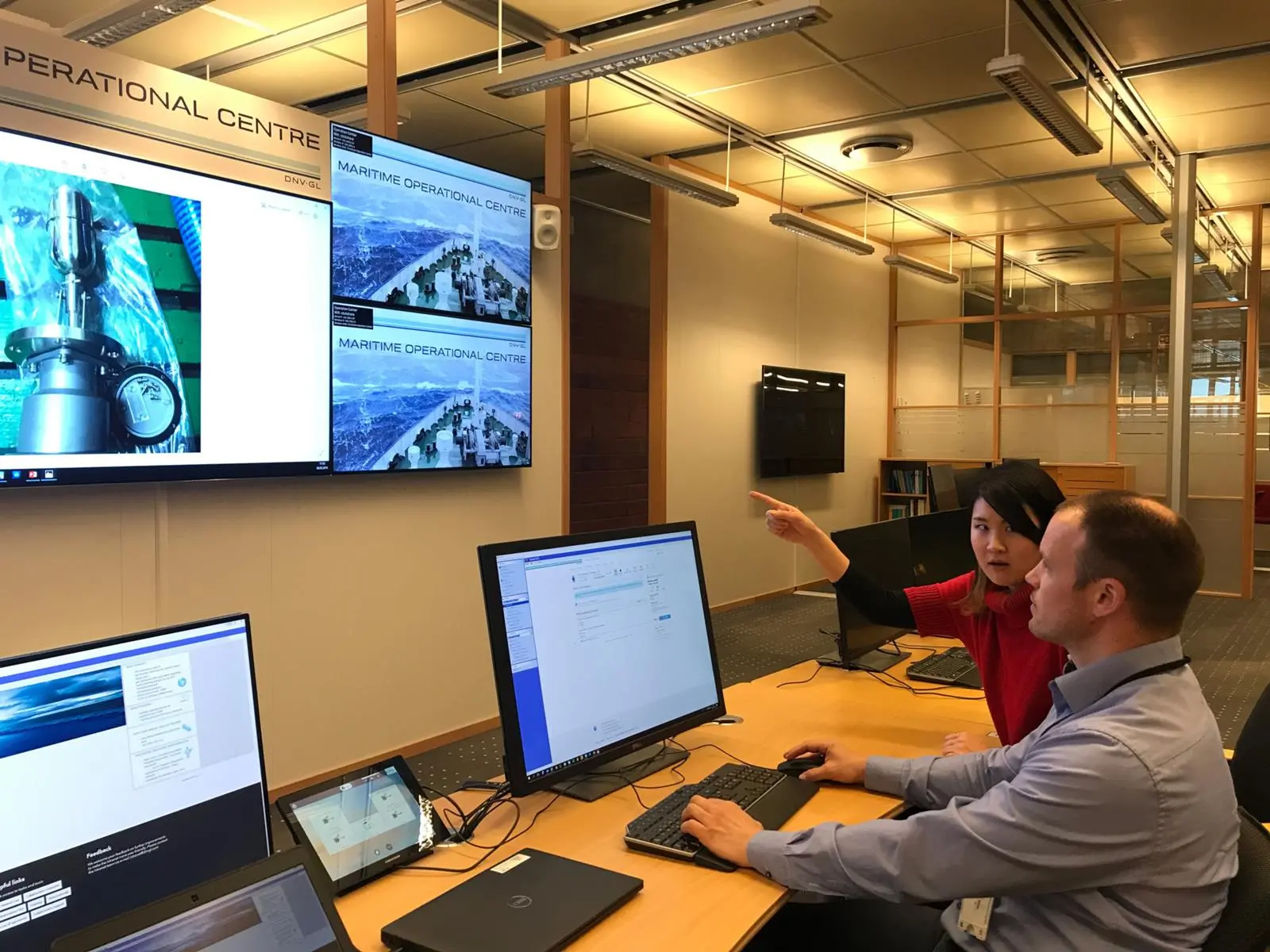
This means that for a range of surveys, a DNV GL surveyor will not be required to travel to the vessel. All customer requests for such surveys are then evaluated by a surveyor to make sure that the survey can be offered remotely. The remote survey regime has been constructed to ensure that the level of assurance is equivalent to an onboard survey.
Examples of potential remote surveys include occasional surveys that fall between periodical surveys, documentation-based surveys, testing and witnessing systems during normal operation, and surveys not ordered together with annual surveys.
Periodical surveys like the annual survey of a vessel require the presence of a surveyor onboard and do not form part of the remote survey programme.
For eligible surveys, a dedicated team of remote surveyors can provide support to vessels anywhere in the world with documentation, images, video (streaming or recordings), and input provided by the customer and crew, simply by using an online connection or video streaming link.
“This is another big step forward in using the power of digitalization and increased connectivity to deliver smarter and more efficient services,” said Knut Ørbeck-Nilssen, CEO of DNV GL – Maritime.
More than 1,000 remote surveys were completed in the pilot and scaling up phase by the Direct Access to Technical Experts (DATE) units based in the Maritime Operational Centre in Høvik, alongside units in Hamburg, Singapore, Houston and Piraeus. Technology testing began in 2017, with the first production pilots in June 2018, and now the entire DNV GL fleet is able to take advantage of the service.
The Scorpio Group was one of the first remote survey users: “We saw this as a way to utilize the extensive competence within DNV GL,” said Scorpio Group managing director Francesco Bellusci. “Now we can apply DNV GL’s competence wherever we are, while also involving our own expertise in the process. Remote surveying makes both the process and the expertise mobile.”
“We are running the remote surveys through our popular DATE hubs,” said Knut Ørbeck-Nilssen. “This gives us consistency in how the surveys are handled and the ability to offer around the clock service anywhere in the world at exceptional quality levels. In addition, the introduction of electronic certificates for all vessels, which allows us to publish and transmit the survey results immediately, has been pivotal to our successful launch of remote surveys.”
Related Articles
 METHANOL
 MONITORING, CONTROL & DIGITALISATION
 MONITORING, CONTROL & DIGITALISATION