



Dual-fuel four-strokes provide clean alternative
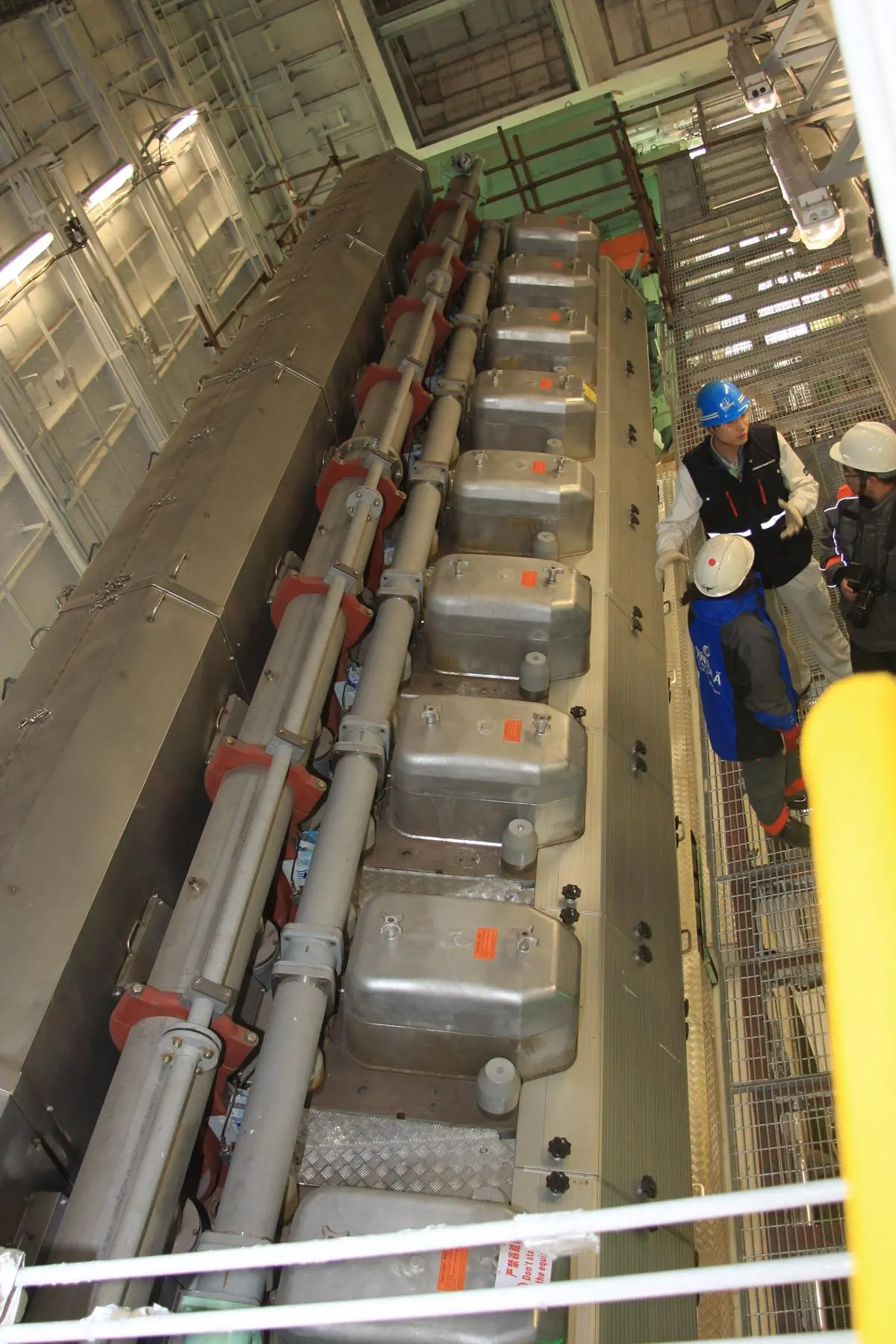
Wärtsilä has announced that it has been contracted to supply a complete dual-fuel propulsion package for two new Liquefied Ethylene Gas (LEG)/Liquefied Petroleum Gas (LPG) tankers being built for Anthony Veder, the Netherlands based shipping company specialising in gas transportation. The ships are being built by AVIC-International Shanghai at the Avic-Dingheng Shipbuilding yard, and are intended for operation in the North Sea area, one of the designated emission control areas (ECAs).
The propulsion package, which includes the main and auxiliary engines, gear boxes and controllable pitch propellers, is to be delivered in June 2013, and the tankers are scheduled for delivery in mid 2014. Each vessel will be equipped with a 6L34DF main engine, two 6L20DF auxiliary gensets, plus gears and CP propellers supplied by Wärtsilä.
The dual-fuel main and auxiliary engines will allow the ships to operate on LNG to minimise their environmental footprint. The flexibility offered by dual-fuel technology means that conventional marine diesel fuels can be used if required. The switch between fuel types is made seamlessly without loss of power or speed. The technology will enable the tankers to sail without restrictions in ECAs, and Wärtsilä claims that natural gas is the most environmentally sound marine fuel currently available, as it fulfils all current, and known future, marine emissions legislation, including that coming into force in 2016.
“We are delighted to supply these new tankers with Wärtsilä’s dual-fuel engine technology, which will enable them to operate safely, economically, and sustainably on LNG fuel. This order strengthens our position as the market leader in terms of LNG fuelled propulsion machinery,” said Mr Bresnahan.
At the higher end of the dual fuel engine output range is a new P-63 FPSO vessel which features Wärtsilä 50DF dual-fuel engines. This is said to be the first such ship using gas engines to produce more than 100MWe of power, and it has recently completed all the required full 100% load tests at the Cosco shipyard in Dalian, China before commencing operations in Brazil’s offshore oil fields.
The P-63’s dual-fuel engines are capable of being run on treated well gas or treated crude, as well as MDO, which should significantly reduce operating costs. The gas-fired power solution will have significantly lower levels of CO2 emissions compared to conventional technologies, estimated to represent a reduction in real terms of up to 93,000t/year.
Wärtsilä was contracted by the Brazilian industrial group Quip to provide a turnkey package for the FPSO, which comprises three main power modules, each with two 18V50DF engines, alternators and all required auxiliary equipment, as well as commissioning, start-up, and operational supervision.
“This validation of the Wärtsilä technology represents a milestone event, and one that demonstrates Wärtsilä’s capability to execute complex integration projects for the oil and gas industry with a solution that contributes notably to successful client operations. The Wärtsilä turnkey project model is an effective means to enhance project completion targets. We have enjoyed working closely with our client, QUIP, and look forward to the final tests when the FPSO is on location at Brazil’s offshore Papa-Terra field,” said Magnus Miemois, vice president, solutions, offshore, Wärtsilä Ship Power.
Wärtsilä says that it has sold more than 2,000 gas fuelled engines, which together have accumulated more than 7 million operational running hours in both land-based and marine applications.
Related Articles
 PROPULSION
 GENERAL NEWS
 GENERAL NEWS