



Dual-fuel marine two-strokes attract first orders
First, the US shipping company TOTE signed a contract with its compatriot shipyard NASSCO for the construction of two new container ships with an option for three more vessels for primarily domestic services. The vessels will each be powered by an 8L70ME-GI dual-fuel engine, powered primarily by liquefied natural gas (LNG).
These two 3,100TEU vessels are claimed to be the most environmentally friendly container ships yet ordered, and will operate between Florida and Puerto Rico. The ships will be built at the NASSCO shipyard in San Diego and will be designed by Korean company DSEC, which is part of Daewoo Shipbuilding & Marine Engineering (DSME). Construction for the first ship is scheduled to begin in the first quarter of 2014, with delivery to occur by the fourth quarter of 2015; the second ship will be delivered in the first quarter of 2016.
TOTE is one of the leading US transportation groups, its maritime subsidiaries including TOTE Shipholdings, Totem Ocean Trailer Express and Sea Star Line, which provide regular marine transportation for general cargo between the continental US and Alaska and Puerto Rico. TOTE is a wholly-owned company within Saltchuk Resources, a privately-owned, Seattle, Washington-based holding company of freight transportation and petroleum distribution companies. NASSCO is part of the US aerospace and defence General Dynamics Corporation, which has been involved in design and building of ships in San Diego since 1960, with locations on both the US west and east coasts. It specialises in design, construction and repair of auxiliary and support ships for the US Navy, as well as oil tankers and dry cargo carriers for commercial markets.
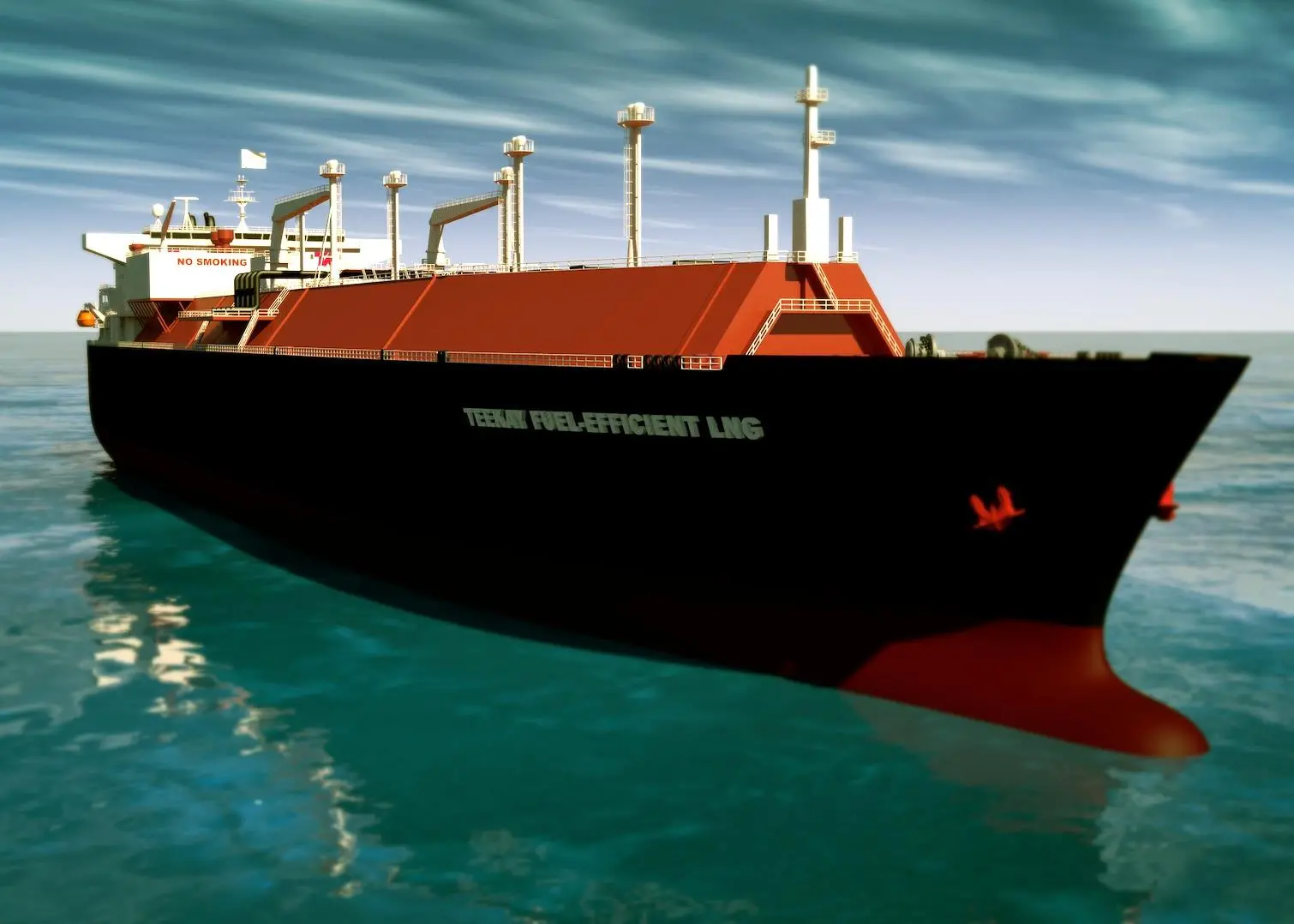
The announcement of the TOTE contract was followed by a further order, from Teekay LNG Partners, a subsidiary of international shipping group Teekay. This project involves two LNG carriers each powered by twin 5G70ME-GI engines, including an option for three further ships. The propulsion solution Teekay has chosen is said to be the most fuel-efficient, low-emission method available on the market.
Teekay CEO Peter Eversen said: “The newbuildings will be constructed with M-type, electronically controlled, gas injection (ME-GI) twin engines, which are expected to be significantly more fuel-efficient and have lower emission levels than other engines currently being utilised in LNG shipping.”
He continued: “MAN’s ME-GI engine is highly suited to the LNG carrier market and is recognised as the most fuel-efficient gas-burning engine on the market. We are confident that the quality and fuel-efficiency of these engines will be very attractive to our customers.”
The Teekay engines are based on the new ultra-long-stroke G-type concept, intended to deliver an even higher overall propulsion plant efficiency. MAN B&W points out that since its announcement, the G-type engine has achieved the fastest market acceptance of any engine in the company’s portfolio.
The ships are to be constructed by DSME in South Korea. Teekay LNG Partners intends to secure long-term contract employment for both 173,400m³ LNG carriers prior to their delivery in the first half of 2016.
Ole Grøne, senior vice president low speed sales and promotions, MAN Diesel & Turbo, said: “Our experience with two-stroke, dual-fuel engines stretches back to the 1990s. With the current developments in fuel prices and multiple customer requests for a solution, the momentum towards the development of a commercial, low-speed dual-fuel engine became unstoppable. We see these orders as a natural culmination, and see the ME-GI as the beginning of a significant new era.”
Even before these new orders were placed, licensee Hyundai revealed the first commercial MAN B&W ME-GI engine. Hyundai’s ME-GI version is a gas-injection, dual-fuel, low-speed diesel engine that, when acting as main propulsion in LNG carriers or other types of merchant marine vessel, can burn gas or fuel-oil at any ratio, depending on the energy source available on board and the relative cost of combustibles as well as owner preference. The ME-GI type was successfully demonstrated in Korea during November 2012, achieving 100% load when powered by gas with a minimal amount of pilot oil for ignition. The engine subsequently successfully passed its Type Approval test.
Originally unveiled by MAN Diesel & Turbo on the research engine at its Copenhagen Diesel Research Centre in May 2011, and shown to delegates at the Motorship Propulsion and Emissions conference a few weeks before, MAN says that the ME-GI concept represents the culmination of many years’ work. The company’s first dual-fuel two-stroke, the prototype MC-GI dual-fuel engine, entered service at a power plant in Chiba, near Tokyo, Japan in 1994.
According to MAN, the ME-GI engine gives shipowners and operators the option of using either HFO or gas – predominantly natural gas but also, eventually, LPG – with the final choice depending on relative price and availability, as well as environmental considerations. The company sees significant opportunities arising for gas-fuelled tonnage as fuel prices rise and modern exhaust-emission limits tighten. MAN adds that its previous research indicates that the ME-GI engine delivers significant reductions in CO2, NOx and SOx emissions, while exhibiting no methane slip, and is therefore a very environmentally friendly technology.
The company predicts a broad potential market for the ME-GI, extending from LNG and LPG carriers to other oceangoing vessel segments such as container ships as well as ships that ply a fixed trade. As such, the ME-GI concept is claimed to offer an efficient, flexible, propulsion plant solution that can be retrofitted to any existing ME-series engine.
TOTE Inc. is one of the United States leading marine transportation companies. TOTE Inc.’s maritime subsidiaries include the well-known TOTE Shipholdings Inc., Totem Ocean Trailer Express and Sea Star Line, which provide regular marine transportation for general cargo between the continental United States and Alaska and Puerto Rico. TOTE Inc. is a wholly-owned subsidiary of Saltchuk Resources, Inc., a family owned, Seattle, Washington-based holding company of freight transportation and petroleum distribution companies.
Related Articles
 PROPULSION
 GENERAL NEWS
 GENERAL NEWS