



Efficiency drives two-stroke developments
Times have been hard in the two-stroke propulsion market, as highlighted in Wärtsilä’s 2012 annual report. The company’s market share in two-stroke engines remained stable, at 18% against MAN Diesel & Turbo’s 80%. This, however, is in a market that had fallen by 35% from the previous year.
The major payers are, therefore, being forced to look at other, closely related, strategies to ensure the survival of their low-speed offerings. Wärtsilä is in a particularly fortunate position, in that it considers itself as the main player in the complete systems solution market. It sees strong opportunities resulting from tightening environmental legislation and increasing fuel costs. Gas-fuelled engines and exhaust gas treatment both provide expected boosts to the company’s portfolio, as does the service side.
MAN too is focusing strongly on gas as a fuel for its two-stroke engines, the two designers favouring different strategies. Whereas Wärtsilä is developing a low-pressure gas system, which is expected to be ready for production in 2014 and will meet IMO Tier III while running on gas, MAN and two of its major licensees – HHI and Mitsui – have developed a high-pressure gas system, which is claimed to offer superior efficiency and fuel economy, though after-treatment will be needed to meet Tier III. The MAN ME-GI has already attracted its first orders.
Lubrication issues
Lubrication continues to prove a controversial issue for two-stroke engines running on low sulphur fuels. The industry is divided as to whether or not a single grade of cylinder oil can cover all applications of varying fuel sulphur content and slow steaming. Trials carried out by several prominent shipowners suggest that slow steaming, in particular, may have less of an impact on lubricant as first feared, at least as long as a good-quality oil is selected.
Castrol is convinced that the ‘one size fits all’ solution is not the best for the particular demands posed by large marine engines on lubricants. Concerns over corrosive wear risk in cross-head engines have led the company to question the scavenge drain oil analysis (SDA ) techniques which are widely used in evaluating lubricants.
Catstrol believes that factors influencing scavenge drain oil characteristics include fuel sulphur level, cylinder oil BN level, system oil contamination and operating profile. Accuracy is critical in SDA interpretation, not least because it supports feed-rate assumptions that are critical to cylinder oil performance, says Castrol.
“It is not possible to analyse results accurately without comprehensive knowledge of the fuel oil, the new and used system oil, feed rates and operational data collected from the engine at the time of sampling,” says Paul Harrold, Castrol marine technology manager. “Our view is that there are potential shortcomings in ship-based magnetic analyser type SDA approaches because they cannot identify corrosive wear.”
According to Castrol, cylinder wear could be assumed to be under control due to a low response on
ferro-magnetic analysers where, in fact, corrosion is taking place. Mr Harrold says: “This demands attention as evidence grows supporting our position that corrosive wear risk is going unacknowledged when cylinder oils of insufficient BN are used in slow steaming.”
MAN Diesel revised guidance to customers on mid-range BN cylinder oils at the end of 2012, with a recommendation to use “cylinder lube oil with 70BN or higher” in the latest series 9 engines when running on higher sulphur fuel (above 1.5%-2%). The OEM says it “cannot recommend” cylinder oils “with a BN level between 50 and 60” for its latest engines.
Castrol points out that other lubricant suppliers, promoting mid-range BNs for slow steaming, have argued that Series 9 engines represent only a small part of the current fleet. However, Castrol notes that mid-range cylinder oils were initially claimed as a complete solution for all conditions.
“We make no apology for renewing counselling caution on SDA methodology as the full consequences of lubricant selection when slow steaming continue to emerge,” says Mr Harrold. “Onboard SDA does not cover the full picture on cylinder oil feed rate optimisation. Normal corrosive wear patterns generate iron compounds which are predominantly non-magnetic and are thus not detected by onboard analysers. We have seen cases where magnetic iron levels appeared satisfactory, but our inductively coupled plasma (ICP) laboratory results showed an increased iron content. Corrosive wear in excess of acceptable limits was present and required a lubricant change as well as optimised feed rates. Only the ICP methodology used by OEMs displays the full extent of corrosive wear present in installations.”
Mr Harrold adds: “We want our customers to take well-informed decisions based on the predominant operating conditions their ships face and the accurate technical picture, rather than adopting cylinder lubrication choices for reasons driven by the commercial position of the supplier.”
He adds that in 2011, the CIMAC working group marine lubricants confirmed that laboratory-based tests provided the most reliable sources for SDA. It warned that tests using onboard equipment could not be considered exhaustive.
Market consolidation
The marine lubricant market has undergone marked consolidation in past years – from over a dozen suppliers at the turn of the millennium to just five players dominating the scene today. That is the view of Lukoil Marine Lubricants, which was founded in 2008, as a subsidiary of Russian oil giant Lukoil. The company claims to have increased its sales revenue in 2012 by 74% percent to around $200 million. CEO Victor Zhuravskiy says: “Having full support from the parent company we’ve managed to build a truly global, efficient organisation which is now the fastest growing company in the industry. There are five operational offices in Russia, Germany, United Arab Emirates, Singapore and USA and a number of highly experienced marine professionals all over the world.”
Stefan Claussen, Lukoil’s marine lubricants technical and marketing director, based at the Hamburg office, sees two main drivers behind the company’s growth. “By contrast with our competitors, we are persistently expanding our global network. Our lubricants are now more readily available in many ports than those of other suppliers. In addition, we focused at an early stage on the development of new high-grade oils for ship’s engines, which reduce both consumption and wear and tear,” he explains.
The company chose Hamburg as its centre of operational and technical expertise, for its closeness to major customers, with Germany and Hamburg among the most important shipping centres . “The combination of Russian raw materials, world leading additive technology and German engineering has been an important factor in our success,” says Mr Claussen
Turbocharging development
ABB Turbocharging says that its latest A200-L generation of single-stage turbochargers for low-speed two-stroke engines represents a quantum leap in technological development of turbochargers. The A200-L’s compressor stage has been optimised to enable significantly more volume flow, some 30% more than previous models. The company equates this to a difference of one frame size, which it describes as “representing a quantum leap never before seen in the turbocharging industry.”
“Our latest technical findings from development are very promising,” said David Ruch, head of technological development for the A200-L. “This model represents a real departure from the past model because it’s allowing us to ensure greater volume flow without making the concessions on efficiency that we used to have to make.”
Michael Lok, general manager low speed, adds, “We are even looking at a model that potentially makes no compromises on the three key variables – that is, efficiency, pressure ratio, and volume flow – used to measure performance in a turbocharger. No one’s ever been able to do that, at least as far as I know. That’s a puzzle that engineers have had to wrestle with for as long as there have been turbochargers. If we’re able to achieve that with the A200-L, we will have made a hugely important contribution to the turbocharging industry as a whole.”
The power density of A200-L is claimed to be significantly higher than other models. As turbochargers are usuallyt one of the heavier serviceable components on ships, the A200-L’s lighter design should makes it easier to maintain.
The increased volume flow makes it possible to use a smaller turbocharger on a range of two-stroke engines. For customers, the weight and space considerations will have a positive impact in the form of lower service costs, lower first cost and total cost of ownership reduced by some 25%. With less material used to make the A200-L, the impact to the environment is reduced.
The A200-L has begin production and has attracted its first orders, with the first examples scheduled for testing on engines at the beginning of May.
Propeller helps efficiency
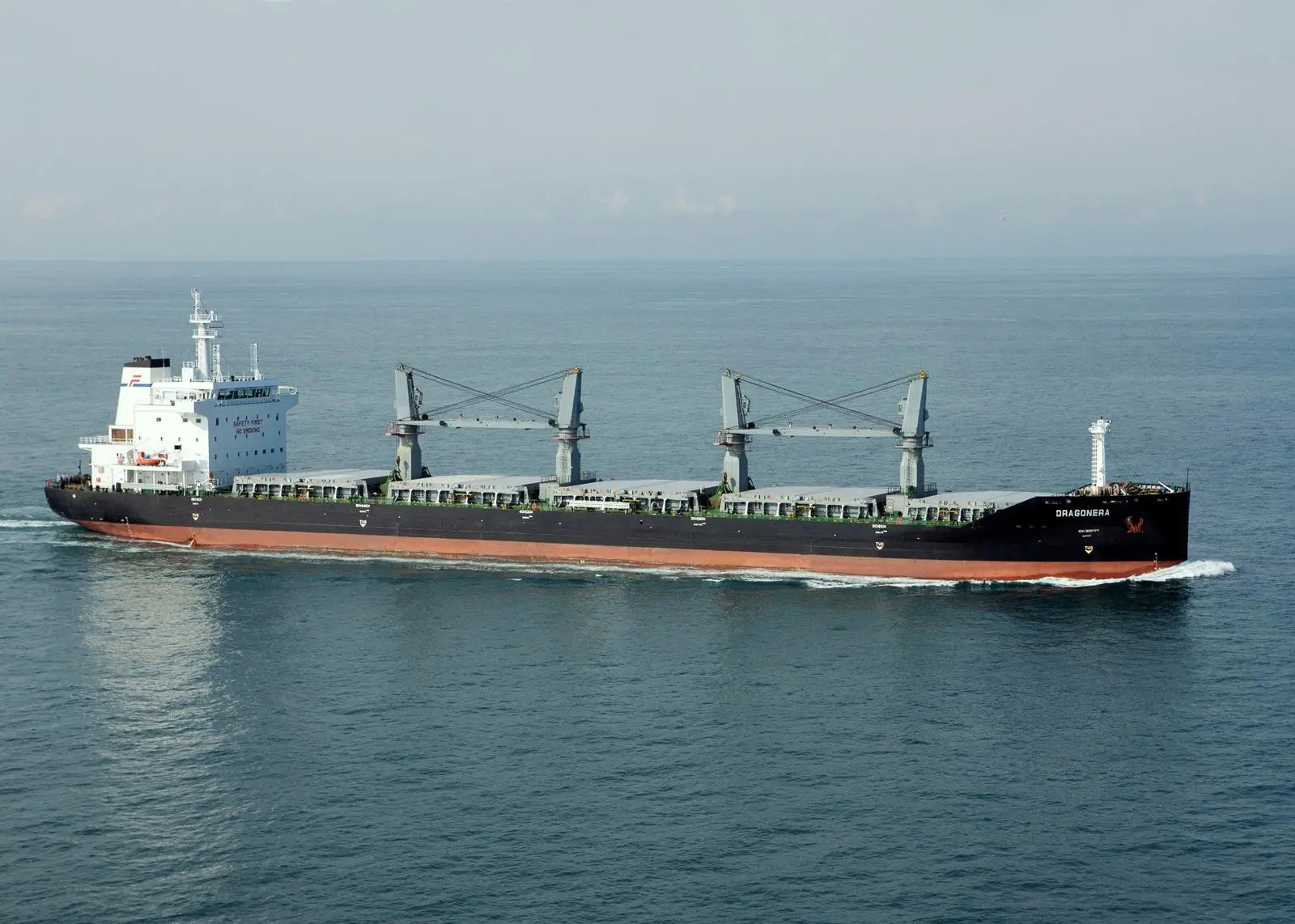
Stone Marine Propulsion says its NPT propeller helps the recently-launched Seahorse 35000 bulk carrier design exceed the specified efficiency. Designer Grontmij/Schmidt Maritime, Becker Marine and builder Yangzhou Guoyu have achieved 8% improvement in efficiency for the actual ship compared with contract requirements.
Powered by a Wärtsilä engine, of MCR 6,350kW at 99 rpm, and fitted with a 5.9m NPT propeller and Becker Mewis duct, model tests conducted at Force Technology in Denmark and SVA Potsdam Germany indicated that the power required to achieve 14 knots would be 5,440kW, compared with the original contract requirement for 14 knots at 5,700kW in 10.1m draught conditions. An analysis of the sea trials results shows that the actual power demand to achieve 14 knots was 5,252kW, 3.5% better than the model tests and 8% better than the contract power requirement.
Stone Marine claims significant benefits in retrofit applications for slow steaming as well as newbuilds with efficiency-optimised designs. Generally, it says, an NPT costs no more than a conventional propeller, but lower weight and inertia lead to reduced noise and vibration. The owner of the trial ship, Nordic Hamburg, now has three more of the class on order, all with NPT propellers. The NPT has been specified for 20 ships to the Seahorse 35000 design.
Related Articles
 PROPULSION
 GENERAL NEWS
 GENERAL NEWS