



EGCSA welcomes MEPC 59 go-ahead for scrubbers
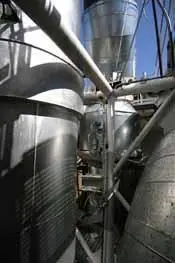
The Exhaust Gas Cleaning Systems Association (EGCSA) has announced that following the recent International Maritime Organisation (IMO) MEPC 59 meeting and its formal adoption of the recommended guidelines for exhaust gas cleaning systems, the industry is now ready for the widespread implementation of scrubbing technologies. The EGCSA, representing its members at IMO, was able to demonstrate the rigorous process that has been taken in developing the guidelines, which led to the support of IMO nations, and their ultimate adoption.
The EGCSA worked closely in conjunction with IMarEST (The Institute of Marine Engineering, Science and Technology) to develop the paper that was proposed at IMO and formed the basis of the guidelines. Further support was delivered from the International Association of Classification Societies, the Cruise Lines International Association, research group Beluga Shipping as well as the US and UK delegations and other nations.
Commenting on the adoption of the guidelines, Don Gregory, Director, EGCSA, said:
“The adoption of these guidelines provides real validity for the industry-wide implementation of scrubbings technologies. Our challenge now is to build confidence within the industry.
“The commercial and environmental benefits in reducing SOx, NOx and Particulate Matter emissions are clear, but we now have to show statistical evidence that proves the technology positively contributes to the continual sustainability of aquatic waters. Members of the EGCSA are in the process of developing this operational and performance data, which we look forward to announcing shortly.”
Chris Leigh-Jones, Managing Director of Krystallon Ltd, one of the founder members of the EGCSA, commented: “There is no doubt there is a huge market requirement for marine exhaust gas technology, but we as a group of manufacturers understand that we must have a fully warranted and comprehensive offering in order to assure the market that we can provide the right solutions to reducing marine emissions.”
The EGCSA firmly believes that central to the success of exhaust gas cleaning systems is the development of clear standards, as well as a code of conduct and verification that sets a benchmark and framework for scrubber manufacturers to work within. This will create the necessary transparency and integrity that will see the industry embrace the technologies as a viable solution to dealing with impending environmental legislation. The EGCSA has begun work on this code of conduct, which will be published over the course of the coming months.
Related Articles
 ALTERNATIVE FUELS & LUBRICANTS
 GENERAL NEWS
 GENERAL NEWS