



Electric power for Italian coastguard
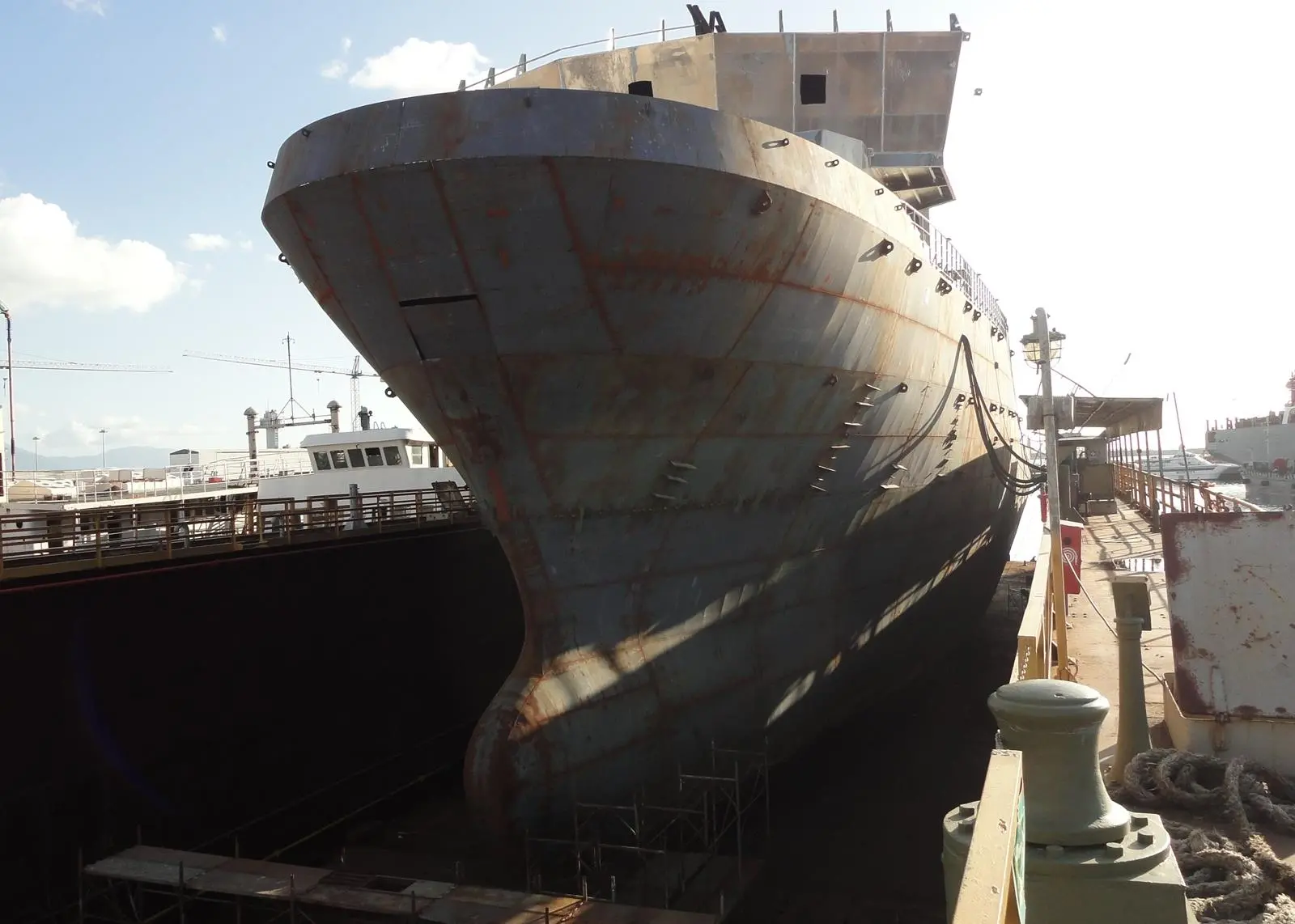
An offshore patrol vessel under construction at an Italian shipyard will be equipped for operating under electric power as well as conventional diesel engines. The vessel is under construction at the Cantieri Navali Megaride yard in Naples and is designed along offshore supply vessel lines with the superstructure forward and a long aft working deck.
The electrical propulsion system on board this vessel has been designed and produced by Siemens of Germany, and there are two 180kW electric motors that are connected into the main gearboxes. When using just these two electric motors for propulsion the vessel can operate very efficiently and Siemens claims that it is more efficient operating on these two electric engines when only slow speed is required that operating on the main engines.
The electrical power can be provided by the ship’s generators rather than the main engines and this contributes to the efficiency. During the coastguard operations of this vessel it is anticipated that it will operate for much of the time at low speed on patrol and this is where the electrical propulsion will be effective. It is anticipated that a speed of between 5 knots and 6 knots will be achieved under electric power alone.
The main diesel engines are a pair of Caterpillar 3512 diesels offering a total of around 2,500bhp. With these at maximum power, the speed will be in the region of 15 knots. The vessel is designed for extended patrol duties and will operate several RIB tenders for interception duties with both crane and davit launching.
Siemens provided the full hybrid control system for the electric motors. The motors operate at 400V AC and are controlled by frequency modulation. The compact motors and their control systems occupy very little space in the engine room.
It is anticipated that by using this electric propulsion option the life of the main engines will be extended considerably. The electric motors could also offer much more subtle manoeuvring in harbour, with the motors capable of highly efficient operation at very low rpm when required, unlike a diesel engine. CO2 emissions should also be reduced because the generators can be constantly running at an efficiency-optimised speed.
Related Articles
 PROPULSION
 GENERAL NEWS
 GENERAL NEWS