



Electric RoPax ferry argument gains ground
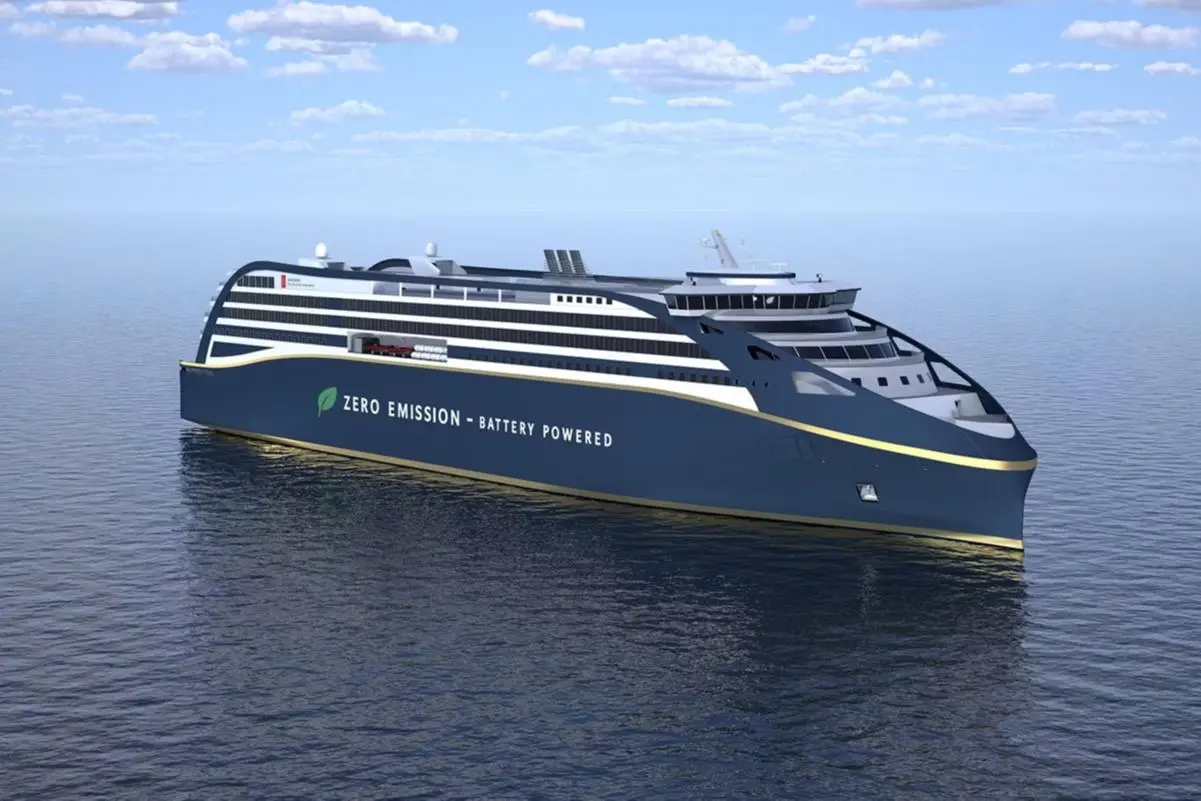
Its recent study highlights growing momentum for vessel electrification across short sea shipping routes in Northern Europe, including Dover–Calais, Tallinn–Helsinki and several Scandinavian and Baltic connections.
“Just a few years ago, diesel RoPax vessels held a clear economic advantage. That is no longer the case,” said Oskar Levander, vice president business development – emerging solutions at Kongsberg Maritime.
”Battery-electric ships are now not only feasible but commercially compelling on a growing number of high-frequency routes.”
Reshaped economics
According to Kongsberg Maritime, advances in battery technology, declining energy-storage costs and tightening EU ETS and FuelEU Maritime regulations are reshaping the economics of zero-emission ferry operations between 2030 and 2040.
The analysis found that fully electric RoPax ferries could achieve lifetime costs between 8% and 15% lower than conventional diesel-powered vessels, despite higher initial capital expenditure.
Operational savings of between 20% and 27% are projected through reduced fuel costs and the elimination of emissions-related charges.
To support the transition towards vessel electrification, Kongsberg Maritime has developed two fully electric RoPax ferry concepts.
One design is cargo-focused and optimised for lower-speed operations, while the second targets higher-speed passenger services linked to tourism and public transport demand.
Both concepts exceed 200 metres in length and incorporate modular battery rooms, intelligent energy-management systems, auto docking and auto crossing technologies, alongside electric podded propulsion systems intended to improve energy efficiency and reduce operational complexity.
Mr Levander added that the industry focus has shifted from whether electrification will happen to when fully electric operations become commercially deployable on major short sea shipping routes.
Related Articles
 ELECTRIFICATION AND BATTERY HYBRIDS
 ELECTRIFICATION AND BATTERY HYBRIDS
 ELECTRIFICATION AND BATTERY HYBRIDS