



Electrolytic BWMS developed in Japan
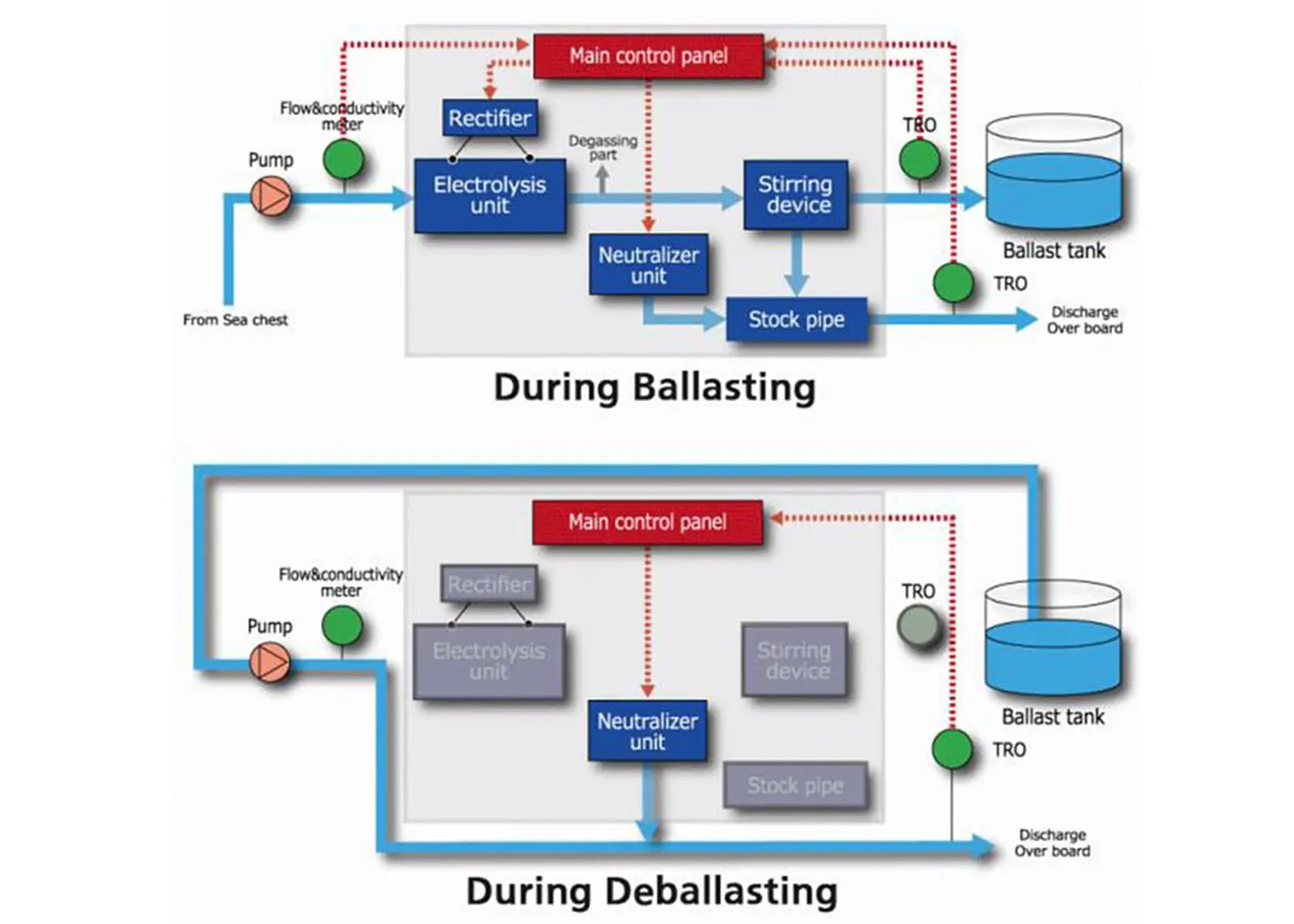
The system, known as ‘ATPS-Blue sys’, includes an electrolysis unit in the main ballast water pipe. The unit generates hypochlorous acid to disinfect micro-organisms. It employs the company’s ‘stirring device’ to enhance the efficacy of the sterilisation, ensuring compliance with IMO standards without using filters.
The absence of filters avoids the need for backwashing and changing filter cloths. According to Panasonic, the unit is scalable according to the volume of the ballast water to be treated as well as the ship’s internal layout, so can be customised to best fit limited space on board.
Panasonic says that it submitted an application to IMO for G9 Basic Approval (G9BA) in September 2013 and has now started testing for G9 Final Approval (G9FA) and land-based tests according to G8 Guidelines. After obtaining G9FA and approval from Japan’s Ministry of Land, Infrastructure, Transport and Tourism, Panasonic is aiming to release ATPS-Blue sys for sale in the fiscal year starting April 2015 through its Tokyo-based agent Exeno Yamamizu Corporation.
The company says that this is the first BWMS in Japan to use in-line electrolysis to disinfect micro-organisms. Conventional methods need pre-treatment filters to remove large organisms, and it is necessary to clean or replace these filters. With its newly developed processing method, an electrolysis device in the main pipe generates hypochlorous acid, which, in conjunction with the ‘stirring device’, has been found to satisfy IMO standards without filtration. This avoids problems such as clogging, pressure loss or wear, while simplified maintenance and the absence of consumable items reduces running costs.
Related Articles
 ALTERNATIVE FUELS & LUBRICANTS
 GENERAL NEWS
 GENERAL NEWS