



Engine monitoring for Maersk supply ship
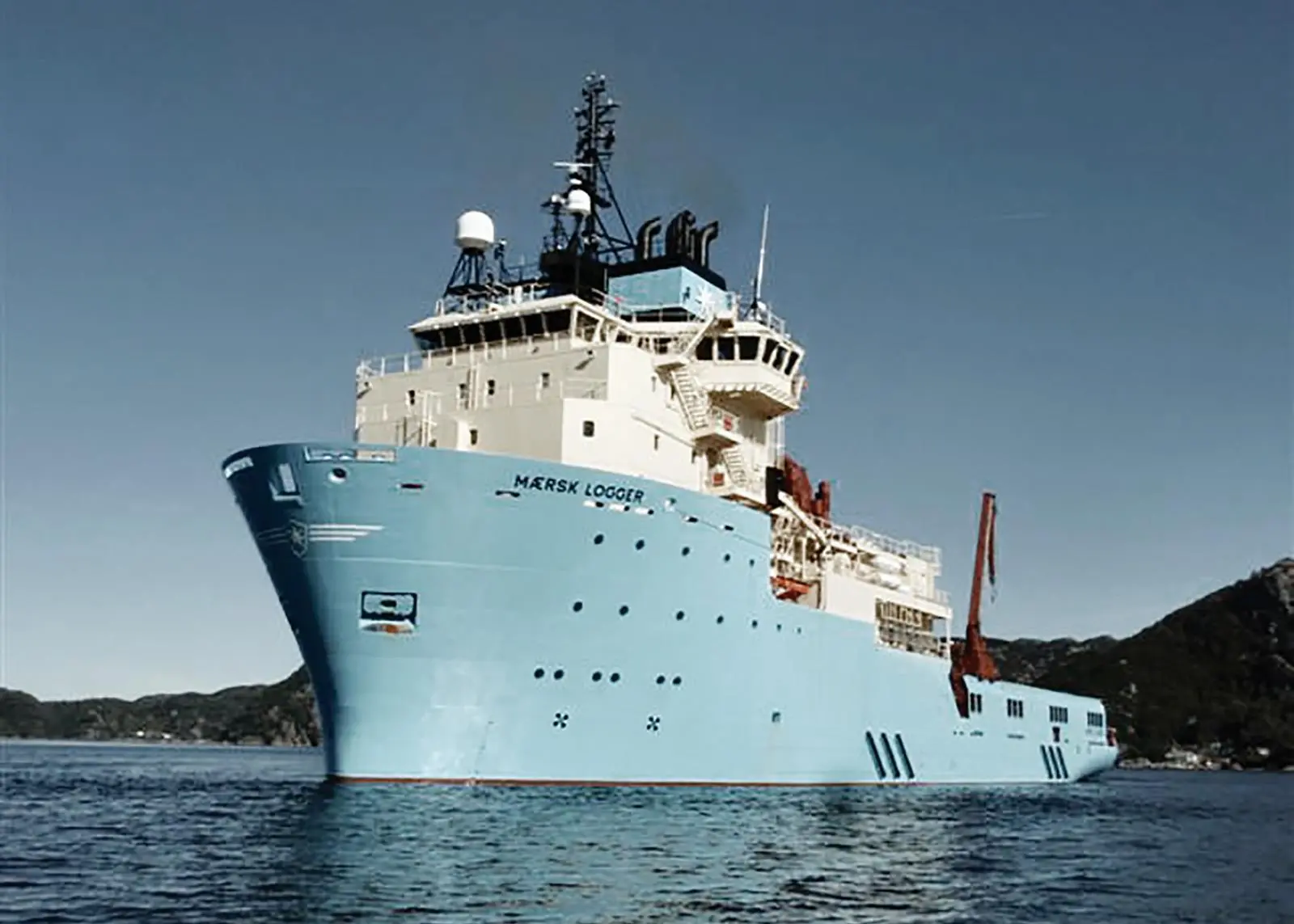
The Enginei system onboard Maersk Logger is intended to monitor fuel consumption during all phases of the ship’s operation. The 90m ship was built in 2009 under the Clean Design class notation. Since the vessel’s charterer is also the fuel owner, it made economic sense to invest in a system for the continuous monitoring of its bunker consumption. By gaining a detailed understanding of how fuel consumption changes according to how the ship is being worked, it is expected that fuel economies can be achieved by modifying patterns of engine use.
The Enginei system is linked to existing fuel flow meters that monitor the fuel being consumed by each of the Maersk Logger’s four MAK 9M32C main engines. With additional meters fitted on the auxiliary engines the system is able to provide a complete picture of how much, and in what way, fuel is being consumed by the ship. This information is presented on two separate touch screen displays located fore and aft on the bridge and on the ship’s PC in the engine control room. The information is relayed ashore where technical staff can view the same information, as well as a route projection on a Google Earth display that tracks the vessel’s movements and creates an easily interpreted graphic presentation of fuel consumption at all points along its passage. This, says Royston, permits a more detailed analysis of the engines’ use while also influencing management decisions taken and instructions given which can have as much bearing upon a ship’s fuel economy as the master’s choice of engine power.
Bespoke software was developed by Royston for the Maersk Logger system so that personnel on the vessel and ashore can log how much fuel is being consumed in each of its operating modes. These have been defined as dynamic positioning, standby, transit and anchor handling, all of which have distinctive engine use characteristics. The ship’s operator, Maersk Supply Service, now has a complete and accurate picture of fuel consumption in all of the Maersk Logger’s operating modes and the master can use this information to optimise fuel consumption, especially while in DP mode when altering position depending on the weather conditions can have a significant impact.
The bridge displays enable the master to see how efficiently the engines are being used so he can make any adjustments that he considers appropriate. The presentation shows the options available for running the engines more economically, and with reduced CO2 output which can be a vital component of the ship’s mandatory Ship Energy Efficiency Management Plan (SEEMP).
“It has been very satisfying for us to be working with Maersk Supply Service,” said Lawrence Brown, managing director of Royston. “It is a blue-chip company that has an enviable reputation for the quality of its service, training, the professionalism of its personnel and for its approach to environmental issues. It is, therefore, particularly gratifying to know that it has recognised the benefits of the Royston Enginei system and that we were able to develop useful new features for our product so that it meets their needs. We will naturally be very pleased to work with the company again whenever the opportunity arises.”
As well as engine monitoring, Royston offers an engine management and maintenance service that can take responsibility for every diesel engine in a company’s fleet, said to be particularly helpful when a variety of engine types are involved. Royston says it can overhaul any make or age of diesel engine which can ensure that fleets with older, discontinued products can still keep them fully operational. In addition, it is the UK service centre for Napier turbochargers.
Related Articles
 PROPULSION
 GENERAL NEWS
 GENERAL NEWS