



EU SRR: just one small problem…
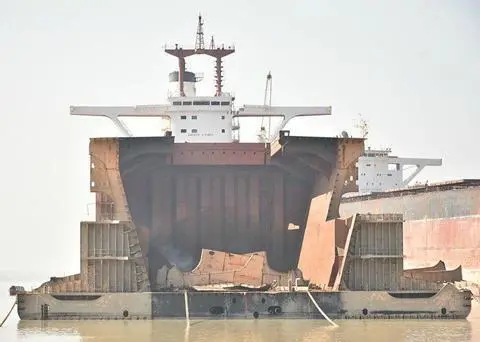
In the run-up to new IMO carbon efficiency regulations in January, many experts had predicted an upturn in recycling volumes through the early months of 2023, including a significant number of older container feeders. In January, Alphaliner predicted that some 350,000teu of container tonnage would be scrapped this year. However, according to that analyst’s own data, what began as a fairly buoyant recycling market has dipped to almost nothing, and barely 50,000teu has been sold for breaking as May approaches.
There are a number of reasons for this. Owners of ships affected by the IMO’s carbon intensity indicator (CII) must now collect emissions data and file it with their chosen verifiers, but even so, no action will be needed until the middle of 2024, prompting the possibility of squeezing a few months’ extra revenue out of those vessels, giving owners the opportunity to make the most of freight rates which, for whatever reason, are not cratering as they were expected to.
Meanwhile in India, Bangladesh and Pakistan, the main scrapping nations and biggest in the world by volume, weak currencies and financial issues have prevented many purchases– Pakistan, in particular, is battling inflation of 35% – with central banks holding back on issuing credit to scrap buyers. Ships with heavy lightweights have been out of the question. This has led to cash intermediaries, such as GMS, being forced to hold onto vessels at the end of their lives for much longer than they normally would.
These bottlenecks in India, Bangladesh and Pakistan do not augur well for the medium-term profitability of the container fleet, which will soon take delivery of a deluge of vast new ships. It may, however, be an early taste of a longer-term problem that is to come.
From Brussels with love
Many of the world’s largest and most profitable ships are operated by European owners, and at the end of their lives, scrapped on beaches in the Indian subcontinent. The history of practices at these facilities has not been a proud one. Run up the beaches, vessels have been effectively dismantled from underneath, by workers who earned in a day what Europeans are paid in half an hour. Recycling of steel and other materials is extraordinarily efficient, based not on high-minded ‘green’ ideals, but on the inexorable logic of necessity and desperation.
In recent times, positive moves have been made to address these problems. Advocates of the IMO Hong Kong Convention, global maritime regulation’s answer to lax and dangerous conditions in the vessel scrapping industry, insist that it is driving progress, despite the fact that it is yet to be ratified. But as it often has, the European Commission has prefigured IMO with its own ruling, the EU Ship Recycling Regulation (SRR). Citing such treacherous working conditions as these, the EC has sought to prevent European shipowners from selling their tonnage for scrapping in the East, which operates “under conditions that are often harmful to workers’ health and the environment.”
In fact, the EU SRR does not recognise any shipyard in India, Pakistan, or Bangladesh – limiting itself to 38 yards across Europe, six in Turkey, and one in the US. Europe’s guidelines vary somewhat in their implementation but there are several constants. Hulls should be dismantled from alongside on quays or in drydocks, not clambered onto from underneath and hacked up with welding torches and explosives as they are on the beaches in Bangladesh; each ship should have an inventory of hazardous wastes including asbestos and heavy metals, which should be disposed of with due care; cranes and other equipment should be on hand to haul scrap metal around.
Rakesh Bhargava, chief executive of Singapore-based Sea Sentinels, said in March last year that offering South Asian recycling yards the opportunity to join the EU SRR scheme would be important “…to incentivise continued improvements in health, safety and environmental standards at these yards…in the absence of a globally enforced recycling regulation.”
But EU SRR’s critics argue that a deliberate attempt is being made to exclude non-EU scrapyards which the IMO’s own regulation would otherwise approve. Scrapyards in India, in particular, have invested some resources in cleaning up their act, improving on-site emergency medical provision, as well as making positive changes to hazardous waste disposal methods, and many feel they have earned EU SRR approval. A significant number of these yards have been inspected by international classification societies and certified as IMO Hong Kong Convention compliant.
John Stawpert, ICS Senior Manager of Environment and Trade, told The Motorship: “In order to meet demand going forward, it is essential that the EU recognises the huge improvements made in the recycling industry in the Indian subcontinent, and admits compliant facilities outside the OECD onto the EU list.”
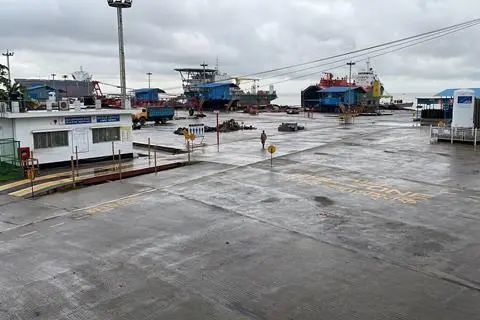
European countries are not messing around, either. In 2020, shipowner Georg Eide was given a prison term, and NOK2m confiscated from his company Eide Marine Eidendom AS, after selling LASH carrier Eide Carrier to Wirana, a cash buyer. His intention was to scrap the ship at Pakistan’s Gadani beach, in contravention of the Basel Convention, which bans exports of hazardous waste from OECD to non-OECD nations.
“Eide has been charged with complicity in violation of international waste law,” said Ingvild Jenssen, Executive Director and Founder of the NGO Shipbreaking Platform, at the time. “The judgement acts as a stark warning that dodgy deals with cash buyers aimed at scrapping vessels on South Asian beaches, where there is no capacity and infrastructure to recycle and dispose of hazardous waste in a safe and environmentally sound manner, are a serious crime. It also cautions that due diligence is a must for not only shipowners, but also insurers and Marine Warranty Surveyors, to avoid any business relationship with companies that have terrible track records.”
Hostile to shipowners’ attempts to circumvent EU rules on scrapping, NGO Shipbreaking Platform wants to end the practice of re-flagging ships that are about to be scrapped, noting that the flags of St Kitts and Nevis, Comoros, Palau and Tuvalu, in particular, are “…hardly used during the operational life of ships, but are particularly popular for the last voyages to the scrap yards.” The decision of where to scrap ships should be based on the location of shipping company head offices alone, Shipbreaking Platform argues, sidestepping the flags of convenience debate entirely.
The changing world of ship demolitions
Ship demolitions remain a low value-added process, relying upon the low cost of manual labour in South Asia and elsewhere. Unlike advanced shipbuilding in Asia, there is a minimal level of roboticization and automation in the sector. As a result, non-ferrous metals were typically undifferentiated from steel scrap, with copper wiring and other ‘contaminants’ lowering the unit cost of the scrap for steel buyers, but reducing the cost of demolition.
It is unclear whether the introduction of up-to-date IHM information will lead to an increase in recycling rates for non-ferrous materials, but the introduction of increasingly complex vessels with expensive energy storage systems and cabling is likely to increase the amount of critical raw materials that can be retrieved from a vessel.
It is the potential for increasing recovery of critical raw materials that is attracting the attention of circular economy advocates within the European Commission. They point to the likelihood of higher steel prices in the future (reflecting electricity input prices in EAFs) as well as structural factors within the global supply chain such as regulations (i.e. the EU’s carbon border adjustment mechanism), green steel technologies and the disruptive effect of the war in Ukraine and sanctions on Russian exports on trade patterns.
Reviving European steel production supply chains remains challenging, to say the least, without a sustained rise in throughput. European steel production capacity has declined precipitously since the early 1990s, with ship plate focused mills cutting production and closing in line with the yards they once supported.
The end-user market for large volume scrap buyers has seen Turkey’s scrap-based steelmaking sector compete against US and European buyers. Until recently the market has relied upon opaque scrap stock assessments and price differentials against low cost metallic substitutes from Ukraine, Russia and to a lesser extent China. Here too, increasingly stringent EU environmental regulations may create a premium for ‘recycled’ scrap over metallics.
Too big to sail
But another minor snag with the EU SRR is that none of the yards on its list, including those in Turkey, have sufficient capacity to dismantle even the current fleet of very large ships. VLCCs are out, as well as capesize and panamax bulk carriers, and ultra-large container vessels, of which there are now a great many – and rather a lot more on the way, too.
“The EU list of Ship Recycling Facilities remains insufficient to meet the needs of the European fleet,” ICS’ Stawpert said. “This inadequacy will only get worse in the coming years as shipping moves towards a greener fleet to meet decarbonisation targets, with older tonnage getting taken out of service.”
In mid-March, the European Commission launched a consultation period of the SRR, due to come to an end in June.
Stawpert also added that there will be no ignoring the preferential scrap prices that south Asian yards can offer compared with yards in the west. Indeed, southeast Asian yards have typically held a strong hand in this regard, combining cheap labour and overheads, an abundance of space, and close proximity to busy scrap steel markets eager to receive recycled materials and resilient enough to receive periodic influxes of scrap metal – in stark contrast to steel markets in the EU.
“A Financial Incentive Mechanism will not improve compliance with the EU Ship Recycling Regulation,” Stawpert warned, “…as it will not be able to account for differentials in the price of steel between the European and Asian recycling markets, and will penalise certain types of shipping unfairly.”
Related Articles
 ALTERNATIVE FUELS & LUBRICANTS
 GENERAL NEWS
 GENERAL NEWS