



Europeans head up battle against underwater litter
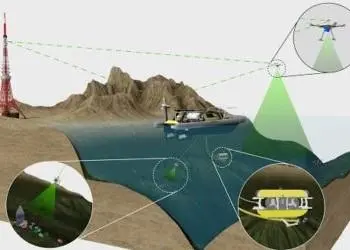
The SeaClear project is being co-ordinated by the Technical University of Delft in the Netherlands and by Professor Bart De Schutter at the Delft Centre for Systems and Control. It also involves European partners in Croatia, Germany, France and Romania.
The project began at the start of the year and runs until the end of 2023 with funding of some €5 million from the EU’s Horizon 2020 research and innovation programme.
SeaClear (Search, identification, and Collection of marine Litter with Autonomous Robots) is aimed at creating unmanned underwater, surface and aerial vehicles – UUVs, USVs and UAVs – to find and collect litter from the seabed and from the water column.
Project officials report that litter accumulation and disposal is one of the fastest growing threats to the marine environment. They say that some 26-66 million tons of waste are in the oceans with about 94% of it on the seabed. Plastic is said to be the most common type of litter, but it also includes glass, metal, wood and clothing, the experts say.
So far, collections have focused mostly on surface waste, with only a few local efforts undertaken to gather underwater waste – and always using human divers.
“No solution exists that exploits autonomous robots for underwater litter collection; the SeaClear project will develop the first”, project officials said.
The project is focusing on coastal areas where waste inflow is concentrated. UAVs and inspection UUVs will map the waste and attempt to establish correlations between surface and underwater litter. UUV’s will than classify and collect the litter, using combined suction-gripper manipulators for both small and large waste.The UUVs will be tethered to offload power and computation to the USVs.
SeaClear officials say “our objective is to operate the robots autonomously, without remote human intervention, and to that end we plan novel developments in debris mapping, classification, and robot control”. When fully operational, it is hoped that the SeaClear system will be able to detect and classify 80% of all underwater litter, collect 90% of it and do it at a cost which is 70% below that for divers.
It is hoped that two case studies will demonstrate these features and involve two end-user groups which are part of SeaClear . One is a port cleaning study involving Hamburg Port Authority and the other a tourist study by Croatian regional development co-ordinator Dunea.
Related Articles
 OTHER EQUIPMENT
 LNG
LNG
 GENERAL NEWS