



Exclusive: Methanol gains ground in net zero race
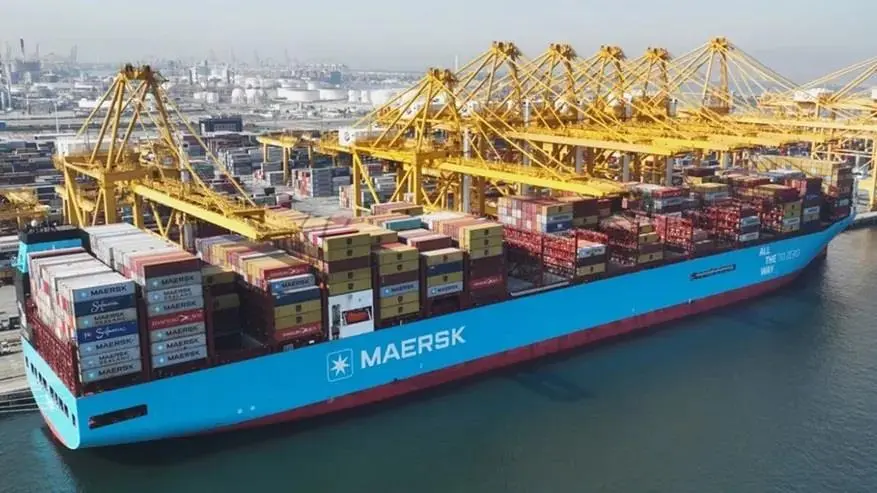
According to the Methanol Institute, there are no obstacles to using methanol fuel in most types of ship. Converting Diesel engines is technically feasible, and given proper handling, the fuel is safe. Compared with heavy fuel oil, methanol can reduce emissions of SOx by 99%, NOx by up to 80%, and particulate matter by 95%.
Methanol can be produced in a variety of ways; typically using natural gas, but if renewable feedstocks such as agricultural, industrial or municipal waste can be used, in conjunction with renewable electricity and captured CO2, greenhouse gas (GHG) emissions can be virtually eliminated on a well-to- wake basis. It is simpler to store, bunker and transfer than many other alternative fuels. On the other hand, its corrosiveness, toxicity and low flashpoint means additional safety provisions are needed, and because of its lower energy density, larger storage tanks are needed than for conventional marine fuels.
Methanol was identified as a potential low-emission alternative in 2015, when the ferry Stena Germanica was converted to run on methanol fuel, the first large vessel to be capable of burning methanol in its four Sulzer (Wärtsilä) 8ZAL40S medium-speed engines.
In 2016, Waterfront Shipping, a joint venture between Canadian methanol producer Methanex and Mitsui OSK Lines (MOL) of Japan, began operating some tankers on methanol, and now over half of the company’s 32-strong fleet have dual-fuel methanol-capable engines. These were the first ocean-going ships to use the fuel, being equipped with MAN B&W ME-LGI two-stroke dual fuel engines.
Since then, the methanol-capable fleet has steadily expanded, culminating in the launch of Maersk’s 16,000 TEU methanol-fuelled container vessels, 18 of which have been ordered for 2024/5 delivery.
Methanol for four-stroke
MAN Energy Solutions says it has sold over 200 methanol-ready dual-fuel engines to date. As well as its ME-LGI two-stroke, MAN ES sees a bright future for methanol-fuelled medium speed engines. Its recently-introduced MAN L27/38DF-M and 21/31DF-M four-strokes are aimed at propulsion of coastal and short-sea ships as well as methanol-fuelled auxiliaries on larger ME-LGI powered vessels. This is underlined by a recent order for three 6L21/31DF-M-powered gensets which will be prime movers for an electrically-powered bunker tanker to provide methanol fuel to vessels in the Port of Singapore.
Bjarne Foldager, MAN ES country manager, Denmark said: “Seeing our trusted MAN L21/31 gensets go into these ships as a methanol-fuelled version shows that maritime decarbonisation is a prominent consideration for shipowners in all vessel segments and sizes. It also clearly illustrates, regardless of the market one serves as shipowner, that our broad, dual-fuel portfolio enables everyone to take part in the green transition.”
The high speed engine sector is now embracing methanol fuel; shipbuilder Ulstein Verft has ordered two shipsets of three methanol-ready MAN 12V175D-MEV engines to power new Commissioning Service Operation Vessels (CSOVs) ordered by operator Bernard Schulte Offshore.
Florian Keiler, head of high speed, MAN ES said: “This first order for MAN 175D DNV-approved, fuel-ready engines proves MAN Energy Solutions’ commitment to support the marine industry transition into sustainable fuels.”
In addition, MAN is working with towage company Svitzer to develop the methanol-fuelled version of its 175D high speed engine for tug applications.
Fuel supply systems
According to Alfa Laval, methanol will demand new technologies and a different way of looking at the energy balance on board. The company’s FCM Methanol is a low-flashpoint fuel supply system (LFSS) that can be adapted to any kind of marine engine and vessel design. The technology has been operating on methanol fuelled vessels since 2016, and the company has delivered close to 100 FCM Methanol supply systems.
The company’s latest development is a joint agreement with MAN Energy Solutions to develop a methanol fuel-supply solution for MAN four-stroke engines. This comes as a result of MAN ES developing a retrofit solution for its four-stroke engines, meaning that as from 2025 four-stroke engine types will be capable of converting to methanol operation. MAN ES and Alfa Laval previously collaborated on developing methanol fuel systems for two-stroke marine, and Alfa Laval claims over 150,000 hours of operation for its LFSS at sea.
Viktor Friberg, Alfa Laval head of marine separation and fuel supply systems, said: “Alfa Laval supports all types of customer at all stages of the fuel transition by adapting our technology to support their choice of engine and fuel. We are proud to cooperate with MAN Energy Solutions in developing this new solution, which follows our long-standing and successful relationship within two-stroke marine engines.”
WinGD’S methanol-fuelled two-stroke engines rely too on the Alfa Laval LFSS. Dominik Schneiter, CEO, WinGD said: “Many of the vessels purchased today will be sailing in 2050, so the engine solutions for carbon-neutral methanol cannot wait. To bring reliable solutions quickly to WinGD customers, we need a knowledgeable partner in the fuel supply application. We are confident in the expertise Alfa Laval will bring to this collaboration.”
Alfa Laval’s experience with methanol fuel systems has allowed it to adapt the LFSS design for the latest generation of low-emission WinGD engines. As well as the LFSS itself, Alfa Laval is providing WinGD with the control system, fuel valve train and auxiliary functions like the purging system.
Auramarine of Finland was contracted by Meyer Turku shipyard for a methanol fuel supply system and associated equipment for the Mein Schiff 7 cruise vessel currently being completed for TUI Cruises. This is believed to be the first methanol-fuelled cruise ship, and aligns with TUI Cruises’ strategy of offering climate-neutral cruises by 2030. Auramarine’s methanol fuel supply system ensures the safe delivery of methanol from the service tank to the master fuel valve, regulating the flow, pressure and temperature to meet the specific requirements of the engine. The system actively maintains the supply pressure during load changes and filters the fuel to eliminate impurities. As part of the order, Auramarine is supplying the methanol bunker and transfer systems including automation and safety systems that ensure safe and reliable operations. A gas detection system and a methanol bilge system are included.
Japanese company Mitsui E&S, a licensee for both MAN B&W and WinGD engine designs, has developed its own methanol fuel supply system, which has gained approval in principle (AiP) from ClassNK, signifying that the system meets the requirements of guidelines published by IMO and ClassNK.
Danish company Eltronic FuelTech has signed a contract with CSSC Marine Power Zhenjiang of China for the delivery of two sets of fuel systems to be installed on the first ro-ro PCTC newbuilds to operate on green methanol. The vessels will have dual-fuel main and auxiliary engines, and the Eltronic systems have been developed in conjunction with MAN ES Holeby for the vessels’ MAN L21/31DF-M methanol genset engines.
Fuel cells use eMethanol
Green methanol can play its part in fuel cell technology, which is seen as offering potential for auxiliary power in large vessels. US company Advent Technologies, with collaborative partners including Meyer Neptun, Siemens and Lloyd’s Register, has received funding for its RiverCell 3 project, which aims to develop a maritime fuel cell system with a total capacity exceeding 500kW. This will be based on Advent’s modular 50kW eMethanol-powered systems, known as Serene, incorporating Advent’s Ion-Pair membrane electrode assembly (MEA) technology. The Ion Pair MEA technology is expected to enable extending the expected lifespan of fuel cells by at least three times and doubling the power density compared to earlier systems.
Morten Sørensen, SVP Advent Technologies said: “The growing adoption of eMethanol as an environmentally friendly fuel in maritime settings stems from its notable energy density, convenient handling, and minimal emissions. As the maritime sector intensifies its endeavours to cut carbon footprints and comply with environmental regulations, Advent’s eMethanol fuel cells stand out as the preferred choice, providing a compelling substitute for conventional diesel generators and engines that can be easily embraced today.”
Methanol storage
Although methanol is relatively easy to store, compared with other alternative fuels, its lower energy density means that it takes twice as much in terms of volume to generate the same energy as traditional marine fuels. This can be a major issue onboard, taking up space that could be used for cargo. Although methanol tanks can generally be incorporated in new vessel designs, the extra volume could prove a major stumbling block in converting to methanol fuel. The problem is exacerbated by fire risks which can mean storing low flashpoint fuel tanks like methanol require cofferdams at least 600mm in thickness.
An Estonian company says it has found a solution. SRC Group’s Methanol Superstorage uses proven SPS (Sandwich Plate System) technology instead of cofferdams, meaning that a 25mm thick SPS protective barrier performs the same function as a 600mm cofferdam. This, says SRC, offers an increase of up to 85% in effective methanol storage capacity, as well as being simpler to instal and maintain. The SPS composite material comprises a polymer core between two steel plates, which has, according to the company, been used over a long period in various offshore and maritime applications. The material has an A60 fire rating, and the design concept has been granted AiP from Lloyd’s Register, showing that there are no major conceptual issues that would prevent gaining full classification and regulatory compliance.
The concept is now being brought to market through a collaborative agreement between SRC Group and Danish advisory and project management company Green Marine.
Hannes Lilp, CEO, SRC Group said: “Following the huge initial impact made by Methanol Superstorage, SRC and Green Marine will work together to provide comprehensive technical coverage for methanol integration. With Green Marine’s extensive experience in methanol projects and overall technical knowledge of the entire process, combined with SRC’s expertise in methanol storage and over 23 years of experience in ship refits and conversions, we are well-placed to onboard Methanol Superstorage for both retrofit and new build vessels, and establish a mature sales framework to enable global adoption.”
Training for crews
Operating sophisticated methanol dual fuel vessels requires qualified and well-trained seafarers and offers different challenges from conventional fuels. As well as training offered by engine and equipment suppliers such as MAN PrimeServ, and on simulators in training academies, specialist training providers are offering courses for ships’ crews in handling and using alternative fuels.
Green Marine is one such provider, having developed a comprehensive methanol dual fuel training curriculum, to educate seafarers, superintendents, technical managers and others needing to supplement the mandatory Basic and Advanced IGF Code training. The courses are based on actual onboard operational experience from methanol dual-fuel vessels, focusing on all the components and systems involved in operating methanol dual-fuel technology, and the rules and regulations concerning safety systems. Green Marine is working with Maersk to provide methanol training for its crews.
Fire safety
Survival technology company Survitec has carried out comparative fire tests on dual-fuel marine engines using diesel oil and methanol, and found that methanol, with a much lower flashpoint of 12°C, burns in a completely different way from hydrocarbon fuels. Clear test protocols for alcohol-based fuels such as methanol have yet to be developed.
Michał Sadzyński, product manager, Water Mist Systems, Survitec said: “Our tests confirm that traditional water mist fire suppression mechanisms do not perform as expected on methanol pool fires and methanol spray fires. A completely different approach is required if these ships are to remain safe.”
The test findings indicate that if existing vessels are retrofitted to run on methanol, they would need to completely redesign fixed fire-fighting arrangements.
Maciej Nieścioruk, product manager, foam systems, Survitec said: “We are seeing a significant uptake in orders for methanol-fuelled vessels. With more methanol-powered ships being built every year, the industry must act now to prevent dangerous gaps in fire safety We encourage all stakeholders to come together to address methanol’s unique fire risks and create clear standards, new testing protocols and updated safety rules for methanol.”
Related Articles
 METHANOL
 METHANOL
 2-STROKE & 4-STROKE