



Facing the future of engine design
It has been a transformative year for two-stroke engine designer WinGD. In June the company, which can trace its roots back to the Sulzer Brothers in 1898, ended its 19-year association with Wärtsilä to become a fully owned subsidiary of China State Shipbuilding Corporation (CSSC).
The move, heralded last year when CSSC took a 70% stake in the business, could have been a challenging one. The upkeep of existing Wärtsilä-brand low-speed engines, now handled by WinGD through a service agreement with its former parent company, was not a particular issue. More complicated is what ownership by a ship builder, let alone a Chinese state-owned ship builder, means for WinGD in the future.
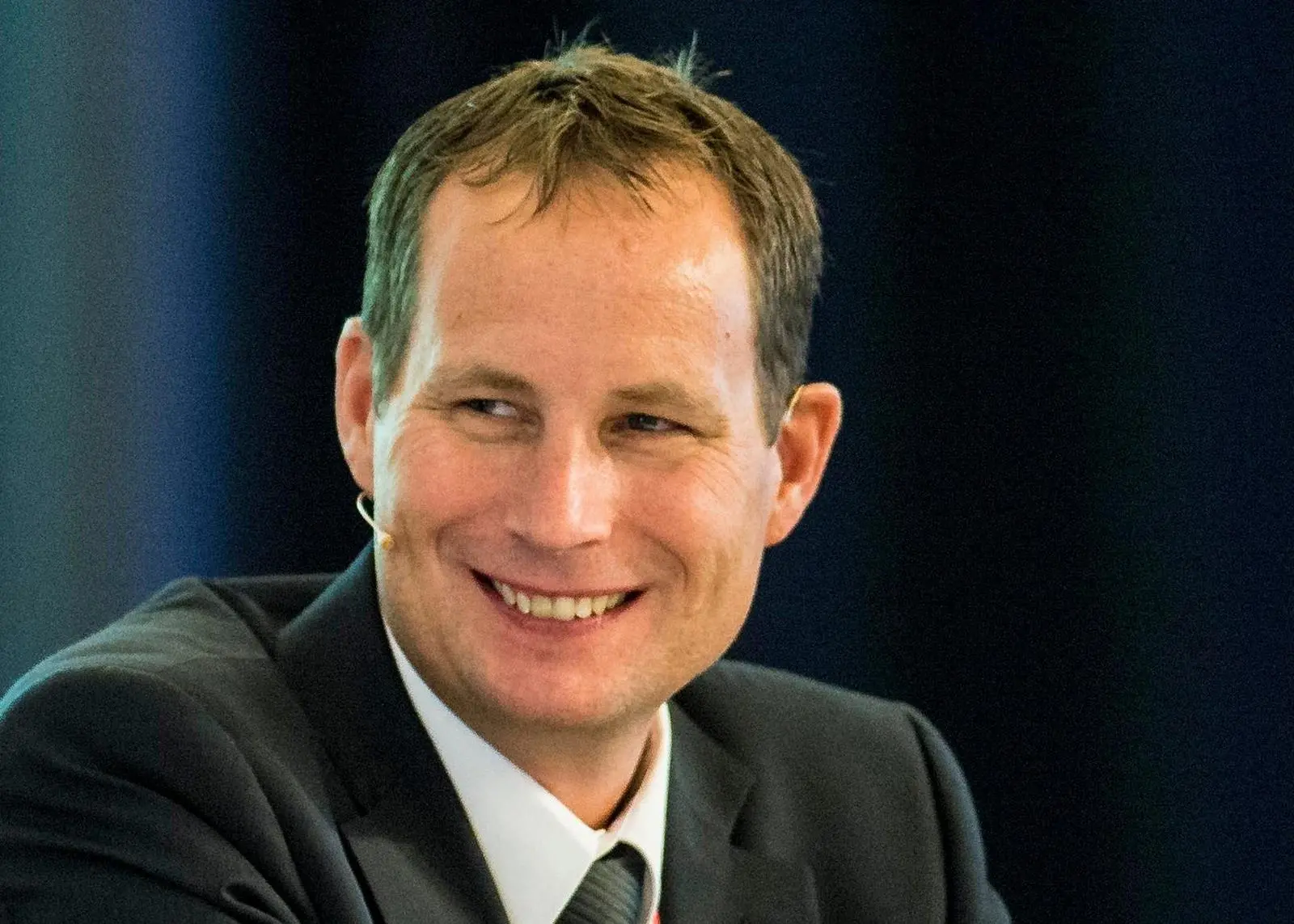
According to Schneiter, WinGD’s relationship with CSSC means that it has the best of both worlds: The significant backing afforded by a conglomerate of that size (with revenue of CNY25.5 billion/US$3.1 billion last year) and – by virtue of its separate corporate structure and retained headquarters in Switzerland – a high level of independence.
As an indicator of that independence, Schneiter notes that WinGD remains very active with customers in Korea and Japan – many of whom are competitors to CSSC – as well as many European ship designers. And the parent company’s size and ownership affords it a long-term perspective that is particularly helpful in a difficult market.
Schneiter says: “This is not quarter-to-quarter thinking, but five-year planning, which makes it very sustainable. That’s a big benefit for us, as is our location in Switzerland. It means we have stability and can focus on things, and that is very attractive at the moment.”
If one thing has changed since the company left the Wärtsilä umbrella it is its greater openness to joint projects, says Schneiter. “When customers see areas where things can be improved, we are very open to it. To whatever extent, whether it is small components or discussing entire ship designs. This is something that has changed since Wärtsilä times. We try to be more general and open to the market.”
That responsiveness will put WinGD in a strong position as it faces the engine design challenges ahead, from the completion of its X-series engine portfolio to the development of its fledgling dual-fuel concept, and beyond to greater fuel flexibility and higher levels of ‘electrification’ – the term WinGD uses to describe the increasing integration of information and communication technologies into engine design. In the interview below, Schneiter discusses how the company is evolving its engine technology to face the challenges of the future.
The first reference for WinGD’s new X-DF dual-fuel engines, Terntank’s chemical tanker Ternsund, has now entered service. Do you have any feedback so far on how she is doing?
Yes, Ternsund is the first and a second began sea trials in September. And a third reference, a dual-fuel asphalt carrier, will join these soon. The first engine is already in service and has been running on gas. It has just bunkered for the second time. Gothenburg is the home base.
The engine on Ternsund has been running on 100% gas at moderate engine load, around 45-60%. With Otto cycle engines, the higher the load the more efficient the operation, but of course you have full flexibility and can adjust timings to optimise for whatever load you are on. At high loads there is an increase on NOx but still well below Tier III level.
Has the service experience raised any issues so far?
One immediate issue relates to pipe fixing with the diesel system. This was a manufacturing issue that resulted in some broken pipes and leakages relating to fuel system. From the gas system we haven’t seen any problems. We have had a service engineer onboard and haven’t received any emergency calls.
The ship has a fuel supply system and a gas controller routing unit which regulates pressure to the engine. It is set to always deliver maximum pressure, at 16bar, but with a moderate engine load we don’t consume so much gas and use a lower pressure, 8bar. So we have had to recirculate a lot of gas from the gas fuel system which was heating up and pressurising the tanks. So boiling off some of this gas was the immediate answer.
The fuel system can actually regulate this pressure. There are frequency converters so they can run it slower, but it doesn’t have feedback from the engine. So it is a lesson learned that we have to provide feedback from the engine so that only the gas we need is delivered. We already send a signal to the gas routing unit which regulates the pressure between the fuel supply system and the engine itself, so we just need to make a parallel signal to the gas system.
You are already working on some new features for the X-DF engines, including the ability to run on LNG and diesel simultaneously. Can you explain how you are working on this mode and what the benefits will be?
Fuel sharing mode will be tested in November on a 5X72DF for an LNG carrier. The customer was asking for this mode so that depending on the amount of boil off gas they can take as much gas fuel as they want, and then add some fuel with the conventional system. That allows the operator to balance his boil-off gas with demand.
It is not a big challenge for us as we already do a similar thing, dynamic combustion control, so that when we have very low quality gas, below MN60, or adverse ambient conditions – very hot, low turbocharger efficiency, highest engine load – we add some liquid fuel to overcome these adverse conditions. This is already integrated in the automation system, so we utilise this function, fully automated by mappings for dynamic combustion control. But fuel sharing there will be a manual slide to optimise the levels of fuel used, within limits.
When you started developing the X-DF series some years ago it seemed clear that gas would be a viable solution to the emission regulations that were looming. Today, with oil at a lower price and a slow shipbuilding market, are you still as convinced that gas is the answer?
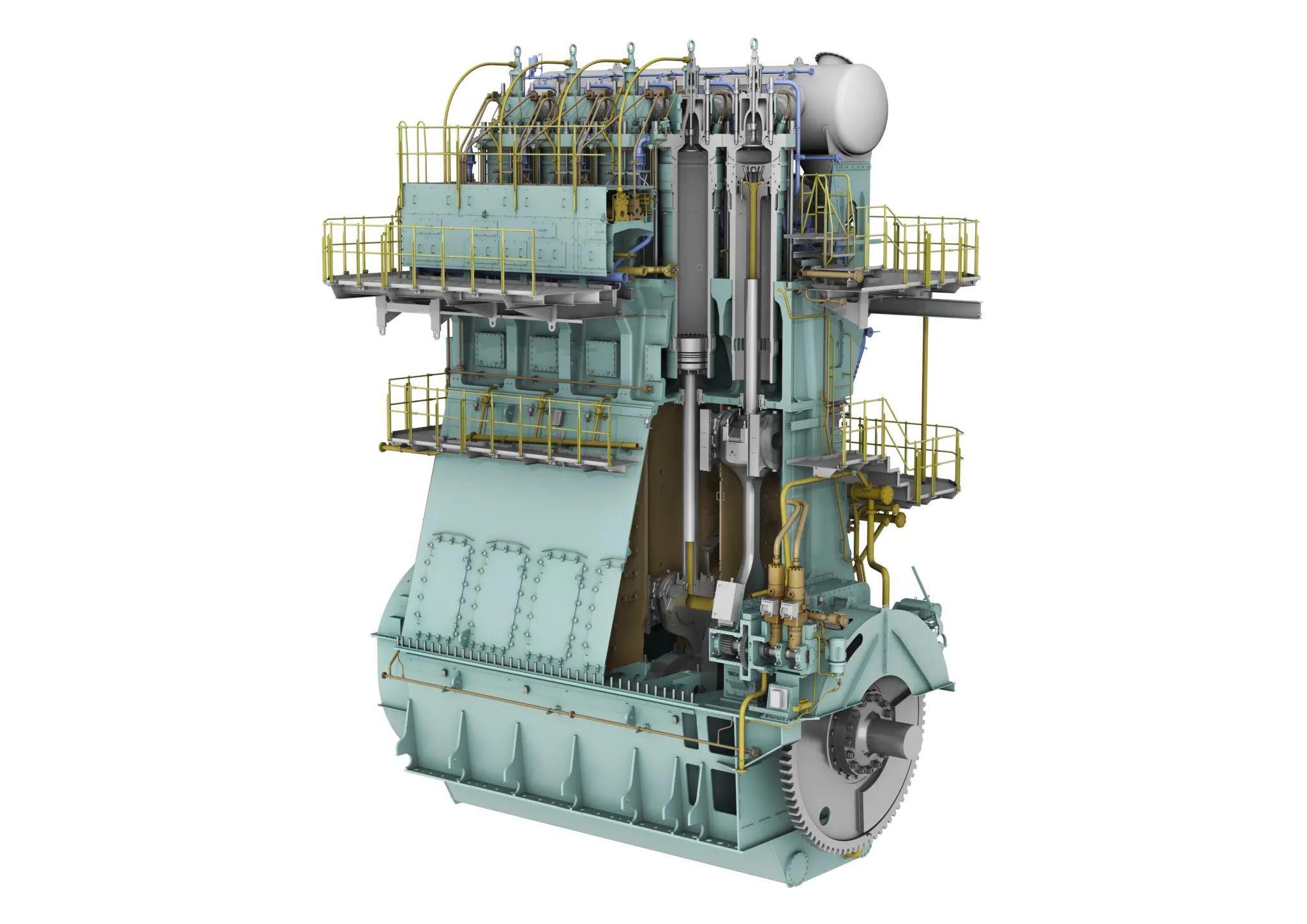
Initially the driver for dual fuel was a Tier III NOx solution that did not depend on exhaust aftertreatment. But during the process we realised that there was a huge demand from gas carriers. Five or six years ago there was a gas boom and lots of new carriers, which used mainly diesel electric propulsion. For operators coming from gas turbines this was quite a complex installation and they looked for something like the engine approach, so there was suddenly interest from there. The interest also came from North America [as a result of its shale gas reserves].
If you want to operate in deep sea on LNG, dual-fuel could be a solution. But if you only want to operate on gas for the 20% of your time that you are in emission control areas, of course you have a rather high consumption in liquid mode. One of our development ambitions is to compensate for this as soon as possible, so that we can have lower diesel consumption in a low pressure dual-fuel system. It is not easy but we have developed some ideas that are now already in concepting stage.
At the end of the day emissions regulations will not become less. There will be further emission control areas. We are convinced that the Baltic and North Sea will become a NOx ECA in 2021, then maybe the Mediterranean and we also expect Australia and New Zealand to follow. So these solutions are needed, and we also think – as many studies have predicted – that gas is definitely seen as the hybrid fuel for the next 20-30 years. So whatever we invest in now will be available for a long time.
Looking at your single-fuel engine portfolio now, where you have been developing your high-efficiency X-generation engine series gradually since 2011. What are the next steps?
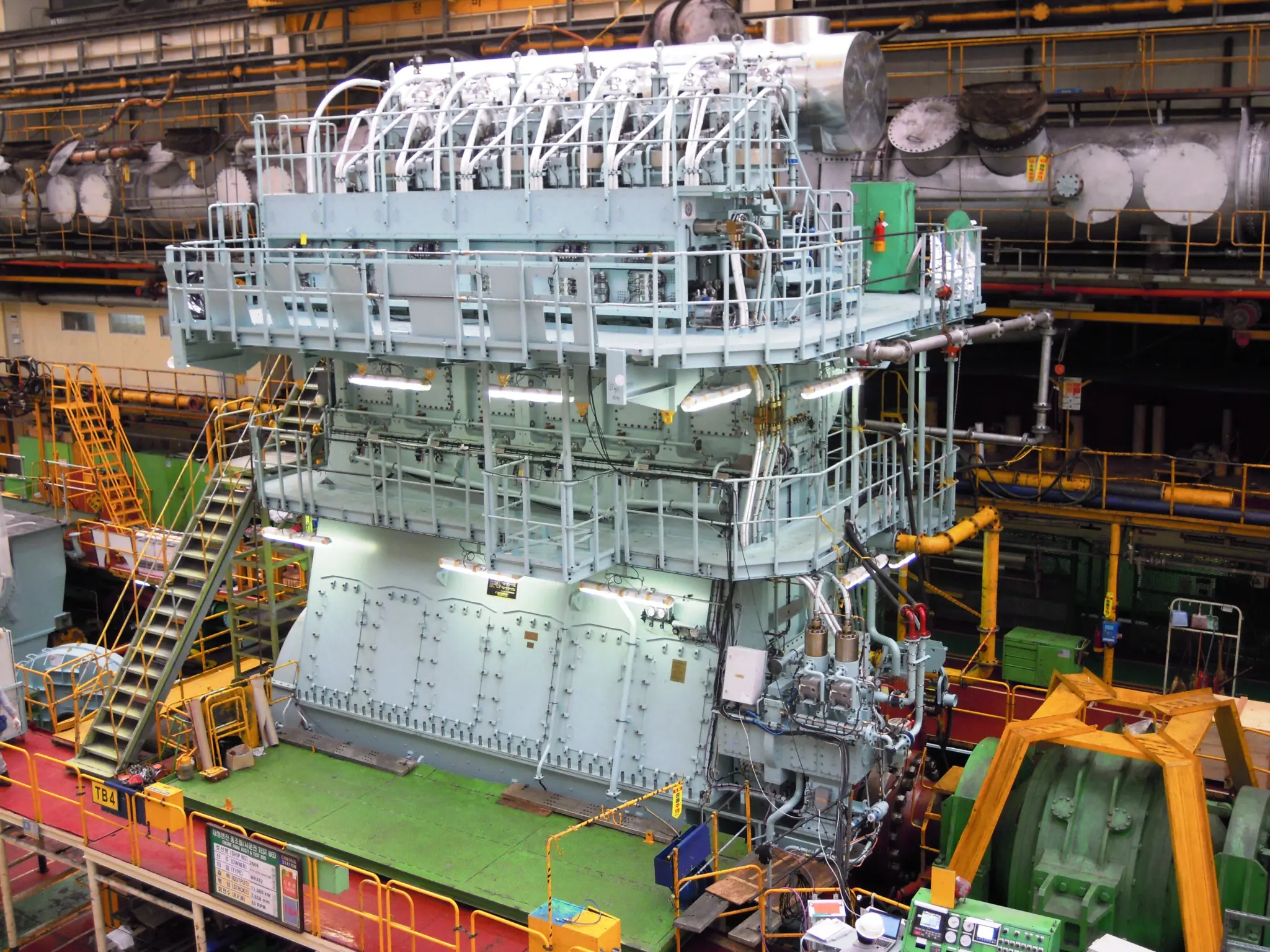
For the X series are discussing series completion. We have not announced anything, but in the portfolio we talk about currently two gaps that we see in the range of bore sizes that we are aiming to close as quickly as possible. This will enable us to have an entire engine portfolio, and once this is completed we will work on more technology developments and portfolio upgrades. The idea really is to have the technology catalogue and then whatever demand comes from the market – different fuels or different speeds for example – that we will have the technology and can fulfil the requirements very quickly.
Each customer has different ideas and demands and our aim is to be really flexible. This is a very high focus. The agreement we have between CSSC as a shipbuilding conglomerate and us as an engine builder means that we are very focused on customer needs, this is very high on the agenda.
For the X engines, you offer an interesting feature called dual rating, which allows operators to choose between optimised tunings for low-load and high-load operations. What does this involve and what are the potential applications?
When all the engines were being contracted for in the boom times, nobody worried about fuel prices. Then customers of course eventually came back and said now the fuel price is too high, what can we do? So first we introduced dual tuning, with the same engine rating but with either high-load tuning – the best fuel efficiency, complying with NOx regulations at the standard 85-90% contract load – or optimised for partial loads. This was mainly Delta tuning at that time, which had a much better fuel consumption at around 45-60% load. You optimised turbocharging for that load, and this has become standard. On the test bench you certify both ratings for classification and IMO, then the ship owner was open to modify the engine. Of course they never modified, they always went for the low-load optimised and this has not changed since.
A few years ago with an engine builder in Japan we introduced what is called dual rating. This is particularly interesting for bigger engines with more cylinders, applying three turbochargers. You have a rating point that is close to the top in case the vessel has to achieve high speeds. There you have to modify the turbocharger configuration – different injectors, complete different mapping and software. So you optimise to that point and then do the ‘slow steaming’ version, where you isolate the turbocharger, change the nozzle tips, increase compression and only use two turbochargers. It also includes a change of propeller. That’s how we deliver the vessel, and that’s how they go in service now. But in 5-10 years down the road the market changes, thsee vessels are already certified for higher ratings. You just make these few modifications.
It’s the reverse of what some shipowners have done with derating of engines and increasing propeller size, but here they are already prepared to increase their rating. Very few customers consider this at the moment – it really only works for container vessels with the market is as it is. But if the market changes these guys can adapt quickly.
Finally, what are WinGD’s research priorities for the next few years?
Efficiency, efficiency and efficiency – in that order. Of course fuel cost is important for ship owners, and for reducing fuel cost we focus on lubricants. This has not changed and has been that way for the past 100 years. And I think it is still the key.
Hybridisation is an important focus. You see it all the time on small ships today, and we cannot ignore that. Driven by the Energy Efficient Design Index ship designers are starting to discuss power take-in and take-out arrangements on the shaft. This will enable them to get some boost support, so they can maybe scale down installed power but still have enough propulsion power. We are also looking at battery storage or pneumatic energy storage to call upon stored power when you need it.
Our next focus is emissions compliance. What we have heard from owners and yards is that the biggest issue with NOx after-treatment on two stroke engines is all the space required. If we can make those systems fully integrated with and controlled by the engine, with intelligent ammonia or urea injection, then it becomes a very competitive solution. We are convinced that we can make the integrated package at a more cost effective price than two-stroke and abatement separately.
It’s also clear that we are working on different fuels. With the dual-fuel solution we have now, we can also accommodate many other fuels. But I must say many of the fuels are niche markets and if a competitor is already in them it might not be attractive for us to do the same, unless a customer asks us.
So our focuses are multi-fuel engines; emission control; performance and digitisation (we call it electrification); remote diagnostics and access. These are the four key areas. We are also trying to look in a more integrated way at ship designs because of these trends. Thirty years ago it was so easy – you had two fuels, and the rest was mechanical. The times when we could focus just on the engine are over.
Related Articles
 PROPULSION
 GENERAL NEWS
 GENERAL NEWS