



Finnøy’s silent propulsion systems in action
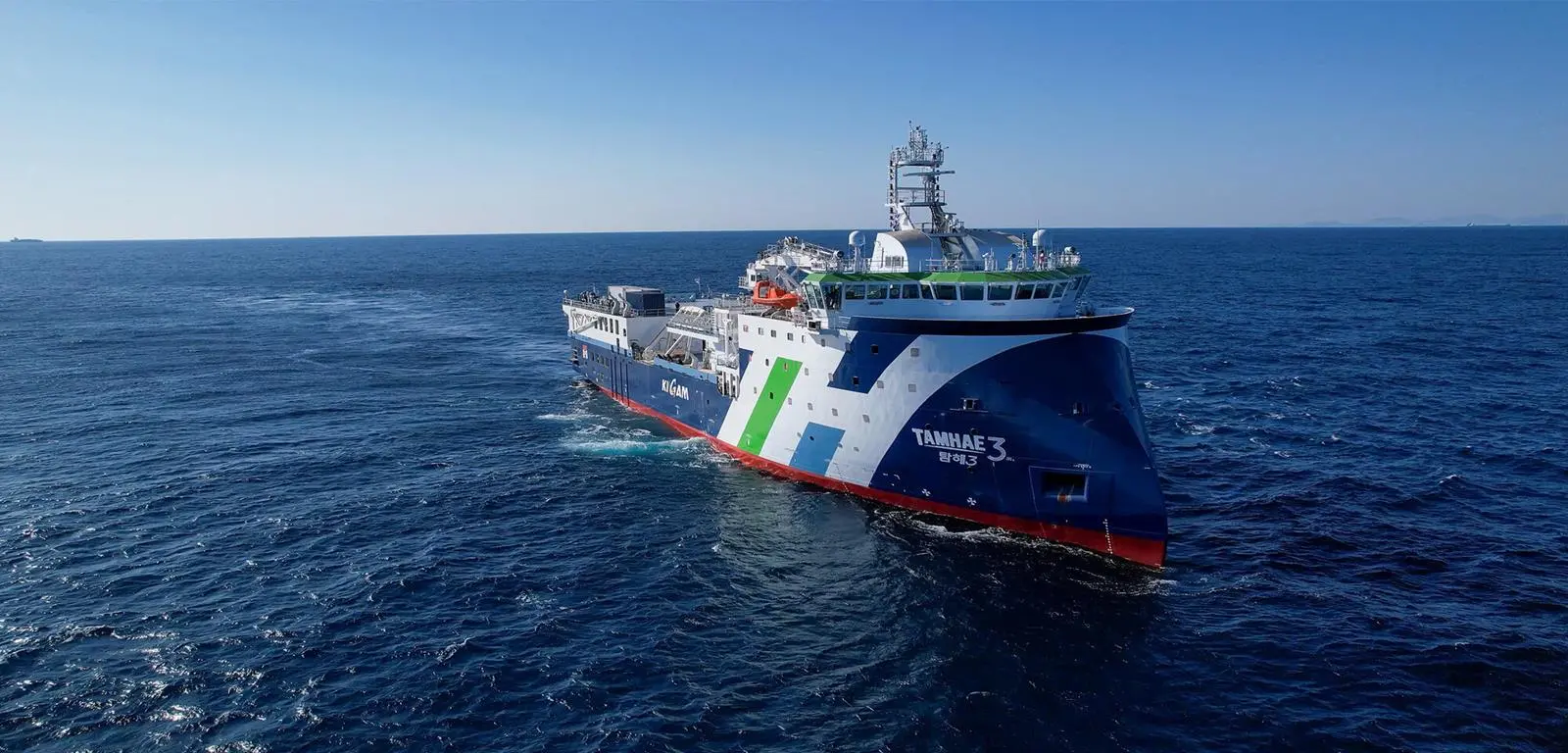
Both vessels have been engineered for minimal noise and vibrations furthering Finnøy’s goal as a provider of silent propulsion systems.
The Tamhae III, South Korea’s first multi-purpose geophysical research vessel, was built by HJ Shipbuilding & Construction in Busan, South Korea and designed by Ulstein in Norway. It is equipped with state-of-the-art 3D and 4D research apparatus, a dynamic positioning system and noise abatement mechanisms, enabling comprehensive geophysical investigations across oceans, polar regions, and continental shelves.
“The delivery of Tamhae III marks a major milestone for our shipyard, showcasing our ability to deliver top-notch research vessels. Finnøy’s technology guarantees minimal noise and vibration, crucial for KIGAM’s precise research,” said Sung-Hwan Park, senior principal design engineer at HJ Shipbuilding & Construction.
Finnøy has certifications from DNV for noise classification and parts supplied to Tamhae III include two 2G60-80E gearboxes, flexible couplings, complete shaft lines, and silent CP propellers with five blades “Super Silent” Ø 3,8 m, along with fixed nozzles of Finnøy HS profile, and a 5th generation remote control system. The propeller has undergone extensive tank tests and evaluations in cavitation tunnels. To ensure adherence to the highest standards, DNV conducted noise measurements to verify compliance with class notations ICE 1B, DNV Silent S (Seismic), and Silent R (Research)
The ICE 1B certification also validates the vessel’s ice-class hull and propulsion system, crucial for safe navigation in polar regions. Meanwhile, the SILENT-S (Seismic) classification targets seismic research vessels employing acoustic streamers, prioritising noise reduction in the low-frequency spectrum. This reduction is vital for enabling quiet operations, particularly in adverse conditions, thereby averting potential costly delays. The SILENT-R classification, the most stringent within the SILENT classes, applies to vessels that require extremely low underwater noise and acoustic levels.
The second vessel Finnøy supplied is the Kaharoa II, a newly constructed research vessel at Astilleros Armon in Spain, which signifies a technological breakthrough for the National Institute of Water and Atmospheric Research (NIWA) in New Zealand. Designed by Skipsteknisk in Norway, this vessel is also specifically engineered to operate with minimal underwater sound and acoustics.
To meet stringent certification requirements, Finnøy has supplied a specially developed five-bladed propeller, rigorously tested in tank trials and CFD. The vessel’s gearbox is of the FINNØY 2-SPEED model, utilizing low speeds to achieve the lowest possible underwater acoustic levels, which is essential for both the vessel’s performance and the integrity of its data.
“With these deliveries, we demonstrate our ability to meet the stringent demands for low noise technology, reinforcing our reputation as a reliable supplier of advanced maritime propulsion systems,” said Arne K. Nogva, sales manager at Finnøy.
Related Articles
 UNCATEGORISED
 UNCATEGORISED
 UNCATEGORISED