



First electric propulsion on bulk carrier
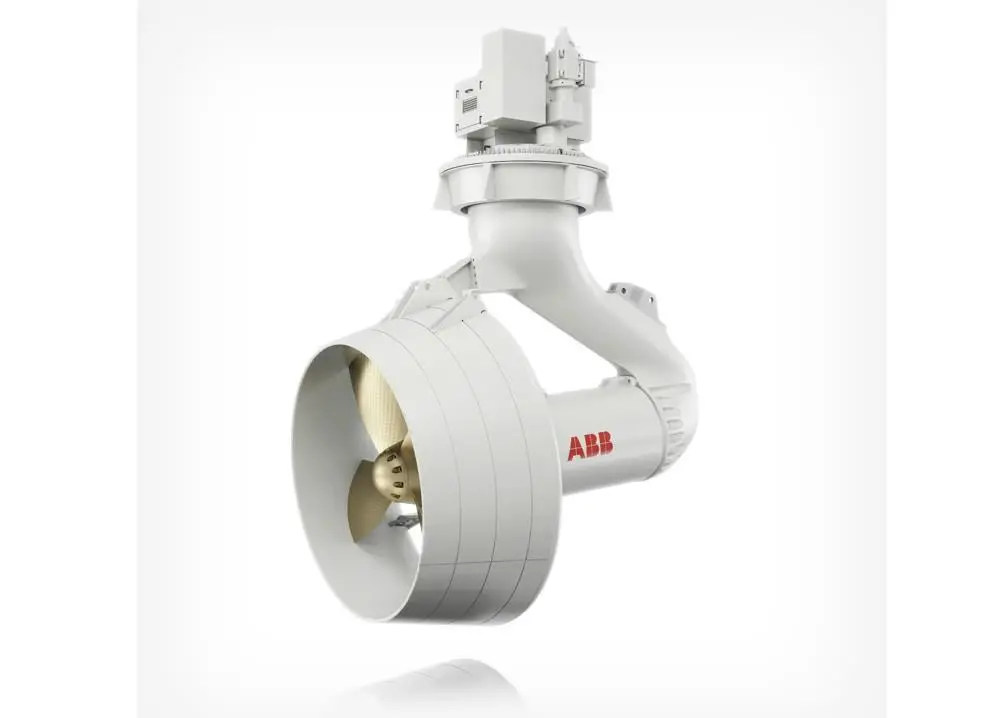
Two self-unloading dry cargo transshipment units will be the first bulk carriers in the industry to feature electric propulsion, something that some believed would never happen. Both vessels, due for delivery to Oldendorff Carriers in 2021 from the Chengxi Shipyard in China, will be equipped with a complete power and propulsion solution from ABB.
Significant breakthrough
“This is a significant breakthrough for Azipod propulsion, reaching a ship type that some suggested would always remain closed to podded propulsion,” said Juha Koskela, managing director, ABB Marine & Ports. “We are especially pleased to add Oldendorff Carriers as an Azipod propulsion reference, considering its reputation for building and operating high quality, reliable and environmentally-friendly ships.”
Each 21,500dwt vessel will feature two 1.9MW Azipod units. ABB will also supply a wide range of electric, digital and connected solutions, including main diesel-electric power plant, generators, bow thruster motors, transformers, switchboards and the power management system for propulsion and cargo handling.
“The choice of Azipod electric propulsion system has reduced the investment costs dramatically as the vessels are already equipped with high power generation required for self-unloading and loading cargo handling,” said Jan Henneberg, newbuilding manager, Oldendorff Carriers.
The newbuild vessels are developed by Shanghai-based CS Marine design company together with Oldendorff Carriers. Once in operation, the vessels will be among over 1,000 ships connected to ABB Ability Collaborative Operation Centers using the ABB Ability Remote Diagnostic System, which deploys sensor-driven onboard monitoring software that integrates with analytics ashore.
Today, the global bulk carrier fleet comprises over 11,000 vessels. According to shipping association BIMCO, the fleet is projected to grow by 3.1% in 2019 whilst global seaborne dry bulk trade is projected to reach 5.3 billion tonnes in the same year, according to shipping intelligence provider Clarksons Research.
Related Articles
 ELECTRIFICATION AND BATTERY HYBRIDS
 BATTERIES, SUPERCAPACITORS, FUEL CELLS AND OTHER ENERGY STORAGE TECHNOLOGY
 ELECTRIFICATION AND BATTERY HYBRIDS