



Fuel saving asymmetric rudder technology
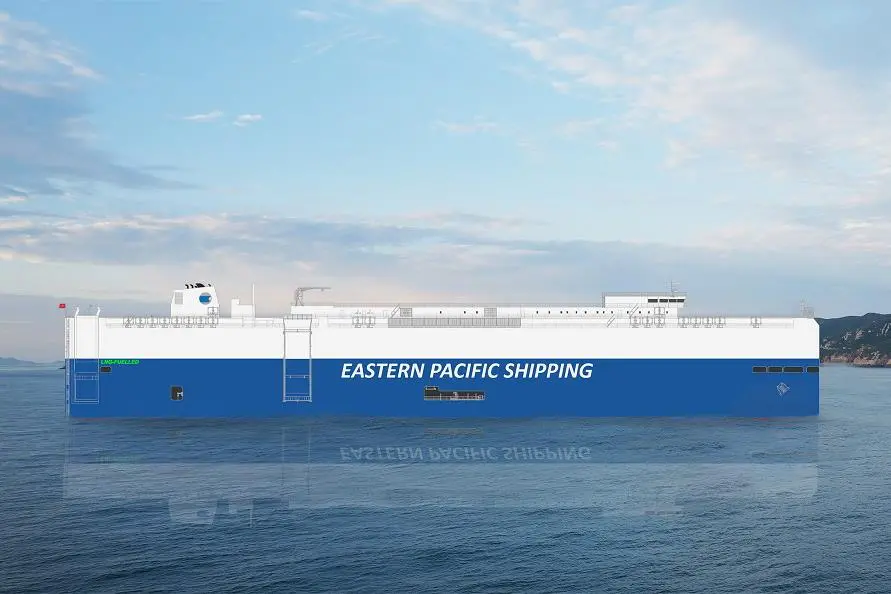
The rudders will be installed on the newbuild vessels for Eastern Pacific Shipping which will be constructed by CSC Jinling Shipyard in China.
“We are very glad to have the opportunity of using our expert knowledge in designing the rudders for top performance, fully complying with the ship’s operational profile,” said Bogdan Mocanu, area sales manager at Damen Marine Components.
Fuel saving
The new car carriers will be propelled by dual fuel diesel-LNG engines powered by a single propeller.
Running on LNG, these vessels will be able to sail with considerable reduction of emissions when compared to conventionally powered ships. For each of the five identical carriers, DMC will deliver one rudder which will contribute to fuel saving during passages thanks to their innovative design.
The customised rudders, which weigh in at 46 tonnes, excluding the horn, will provide 1450 kilonewton metre of torque.
Asymmetric Rudder Technology (ART) is based on advanced hydrodynamics. The asymmetric leading edge diverts the rotational effects of the propeller wake to enhance the flow along the rudder. This reduces drag and thus saves fuel.
ART is often applied to the leading edge of the rudder blade, yet for the five PCTC’s the horn of the rudder is also asymmetric. This further optimisation of rudder design, enhancing fuel economy, has been specially engineered for these vessels by the DMC design team.
The five PCTC’s will be built under DNV class notation and will weigh in at 72,000 gross tonnes, sport 12 cargo decks and be able to carry 7000 vehicles.
The carriers are nearly 200 metres long, 38 metres in beam and have a 8.6 metre design draft being built for a speed of 19.5 knots.
DMC will deliver the rudders for the five consecutive carriers during the course of 2023 and 2024, in time for the scheduled ship delivery from the yard.
Related Articles
 PROPULSION
 GENERAL NEWS
 GENERAL NEWS