



Fuel uncertainty complicates ship concepts

As well as setting a 2030 goal to reduce CO2 emissions per transport work by 40% and aiming at 2050 to reach net-zero GHG emissions, the strategy also includes a technology target. By 2030, it says, the uptake of zero- or near-zero GHG technologies, fuels or energy sources should represent at least 5% – “striving for 10%”, the strategy indicates – of the energy used by international shipping.
This will not be easy. “It is a total mess,” remarked Elias Boletis, who was formerly director of propellers and transmission at Wartsila Propulsion and is now chair of CIMAC’s Working Group 10 (WG 10), which brings together engine OEMs and engine users.
WG 10 has seen little activity for a number of years so Boletis was appointed after CIMAC’s conference in Busan in June 2023 to revive the group in response to the transition to new energy sources. He was recruiting shipowners and shipyards to join the group when he spoke to The Motorship in mid-November and in the New Year he expects to invite design companies to join the group.
“I am collecting the voice of the customer … to ‘smell’ what they really want to do and the best way of achieving it,” he explained. OEMs “will be invited to contribute for specific subjects,” he added.
He outlined some of the confusions that owners and designers face. At one end of the spectrum lies conventional fuel coupled with carbon capture and storage (CCS), with carbon-free ammonia and hydrogen at the other. Methanol and LNG fall in the middle but would also require CCS if they were to be considered carbon-free.
Even biofuel – which many consider to be carbon-neutral – presents a dilemma, in his view, since their CO2 emissions at the funnel are no different from those of a fossil fuel. Because the updated strategy considers a fuel’s well-to-wake emissions, “they assume that biofuels are greener [than other fuels], although you might need a significant amount of energy to create them,” he said. In addition, he pointed out they will become more expensive if supply remains limited as demand increases.
From a technical point of view, it is not enough to consider the impact of the fuel transition only on newbuilding design, he believes. Many thousands of existing vessels will need to be retrofitted to handle new fuels and continue operating until about 2035 because scrapping them would remove their capacity but there is not enough money to replace them all; “the industry will collapse,” he said.

Meanwhile, engine OEMs are not investing in retrofit projects because they are expensive and difficult, yet “they need to find a balance between newbuild and retrofit projects because they need to support their current vessels as well,” Mr Boletis said.
But he accepts that this will not be easy, especially on smaller vessels. Large operators with big ships – such as Maersk, which will be starting a series of engine retrofits to burn methanol in mid-2024 – are well placed to cover the cost and allocate the space needed to store and handle such fuels, but this is not possible on smaller ships, he said. For those, “you need to rebuild the vessel or sacrifice a large part of your cargo,” he said.
Newbuilding designers face the same dilemma if they set out to build a ship that is, for example, methanol-ready with space allocated for future upgrading that cannot be used commercially in the meantime. And calculating the size of that space should take future fuel supplies into account: with fewer bunkering locations available, designers should assume their ships will need to steam 1,000 miles more per year than for conventionally-fuelled equivalents to locate supplies.
Logistics
Such logistical questions will be critical in decisions about which fuel to use and they will therefore be influential in developing ship designs, believes Dmitry Ponkratov, who was the Technical Director at the Royal Institution of Naval Architects until early November and is now Marine Director at Siemens Digital Industries Software.
He also cited Maersk, saying that its decision to use methanol – of which it has secured a long-term supply – locks it into that fuel for decades to come. He also mentioned Royal Caribbean’s new Icon of the Seas which, at 250,800gt, is the world’s largest cruise ship. It is due to enter service in January 2024. It will burn LNG, a decision – like Maersk’s choice of methanol – will have influenced significant elements of its design and will dictate its operations through its service life.
Both are fossil fuels, which confirms that there is still too little clarity about which fuels will emerge as providing a long-term solution to the quest for net-zero carbon shipping, he said. He is confident that ship designers will develop concepts appropriate to any selected fuel – “the decision is not on us, it’s about the supply chain” – so the challenge will come from the operational side: “it is the logistics for each of these alternative fuels that will drive the design process.”
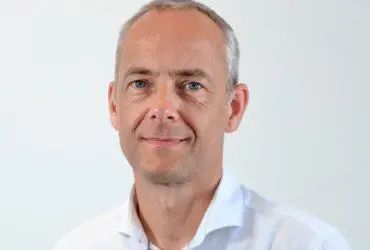
Christian Damsgaard, Senior Naval Architect at the Danish design company Knud E Hansen, said much the same. As mentioned elsewhere in this report, his team has explored design concepts based around methanol, ammonia and hydrogen fuel, along with wind-assistance concepts and a shipowner’s choice depends on where they are operating and their expectations about fuel availability and its cost, which varies from company to company, he said.
Bjorn Svenningsen, Head of Sales and Marketing at car carrier UECC, which has been a pioneer in introducing LNG fuel into that sector, agreed. When it introduced its first such ships in 2016, there was very little LNG available in European ports so it partnered with Belgian energy supplier ENGIE, UECC partner NYK Line and others to build the world’s first purpose-built LNG bunkering vessel, ENGIE Zeebrugge, which went into service in 2017 to supply the operator’s ships.
“Today, the picture is quite different,” he said, but initiatives such as that will be needed if ships are going to be designed with alternative fuels in mind to ensure a secure supply of fuel, he said.
Related Articles
 ALTERNATIVE FUELS & LUBRICANTS
 GENERAL NEWS
 GENERAL NEWS