



Gas cargo system could impact on LNG-fuelled ships
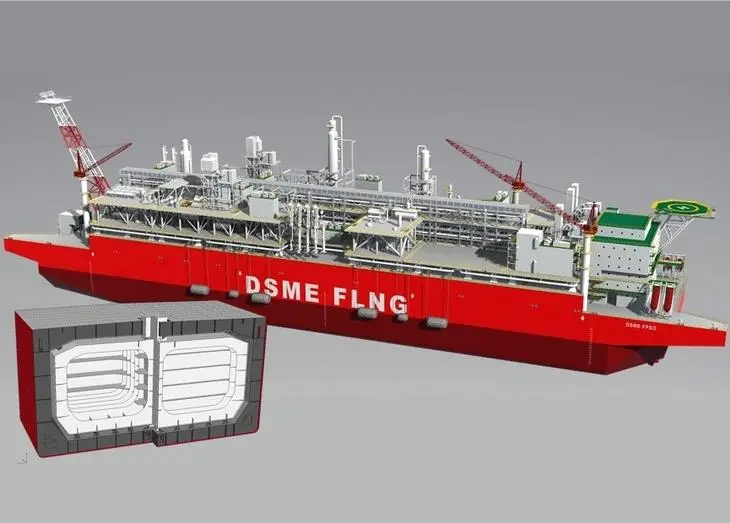
The new containment system, known as ACT-IB (aluminum cargo tank – independent type B), has the largest storage capacity of any independent type containment systems DSME will apply this technology to its LNG-FPSOs, which produce over 2 million tonnage of LNG annually, and tio LNG carriers.
This new system can contain a maximum of 210,00m³ of LNG, three times more than a conventional containment system of about 80,000m³ or 50% higher than Korea’s current daily LNG consumption of 150,000m³.
The development of the ACT-IB system means that DSME no longer has to pay a technology royalty to French or Japanese LNG containment system patent holders. The new technology can be immediately adopted for use in LNG carriers or floating facilities, which DSME says will save it a significant amount of royalty fees.
DSME believes that possession of its own effective containment system should prove a deciding factor in the choice of shipbuilder for LNG-FPSO and LNG carrier contracts. Maintaining the conditions and temperature of natural gas that is usually liquefied and stored under -163°C without interruption is a challenging task, which the company regards as a measure of a yard’s shipbuilding technological abilities.
The independent tank type LNG-FPSO design technology will be offered in addition to DSME’s conventional membrane type LNG-FPSO design. The company says that it has obtained an international certification for its safety for B-Type tank following completion of a test programme, including thermal stress analysis, fatigue analysis, and crack growth analysis. Additionally, DSME has jointly developed an insulation system with a number of other Korean companies, attaining DNV certification earlier this year. The company intends to apply the ACT-IB system to its new-generation of ‘green ship’ technologies, including LNG-fuelled ships.
Related Articles
 ALTERNATIVE FUELS & LUBRICANTS
 GENERAL NEWS
 GENERAL NEWS