



GE To Launch Smaller SeaJet Pods
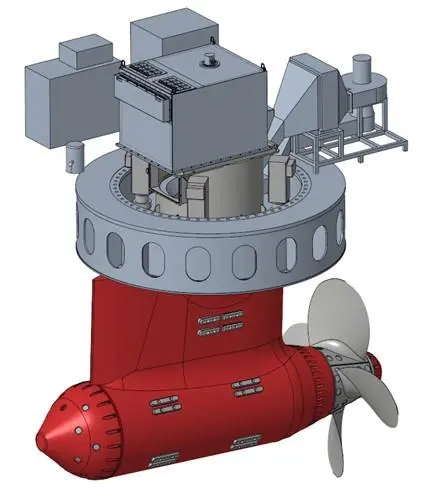
The SeaJet electric podded propulsion solutions bring high efficiency and maneuverability to ship operations in harsh sea ice conditions, improved efficiency in transit and remarkable bollard pull. The new units are designed to meet the requirements of smaller vessels, with low voltage (<1000 V).
In the SeaJet system, the electric motor is housed in the hull mounted pod and directly connected to the propellor, freeing up cargo and operational space in the ship. Manoeuvrability and efficiency are greatly improved, says GE, and total fuel consumption and exhaust emissions are reduced.
With high steering capability, SeaJet* provides very good transit and bollard pull performance. Powered by proven technology, including Power Conversion’s SeaPulse low voltage DC drive system and a high torque-density Advanced Permanent Magnet Motor (APMM), the pod eliminates the need for hydraulic systems, thanks to the integration of an electric steering system with electrical actuators and intelligent control system, enhanced cooling system, Eco-sealing technology and advanced bearing technology in a compact package. The system also embeds Power Conversion’s digital Asset Performance Management (APM) technology, helping to enhance availability, reliability and maintainability.
As a result, the solution offers increased propulsion system efficiency, reduced total installed power generation, reduced total fuel consumption and exhaust emissions, reduced noise and vibration levels and enhanced maneuverability. For shipyards, the benefits include flexibility in machinery arrangement with fewer components, a simplified hull form through the elimination of shaft lines and rudders, and reduced equipment installation time and cost.
Through integrated electrification, energy management, automation and control, power in the ship’s electric grid can simultaneously supply high-energy mission systems and electric propulsion. Energy-efficient architectures also serve as an effective way to integrate new, cleaner, energy sources as they emerge, and host digital technologies to implement more autonomous systems.
Related Articles
 ALTERNATIVE FUELS & LUBRICANTS
 GENERAL NEWS
 GENERAL NEWS