



Gensets approved for sustainable fuel use
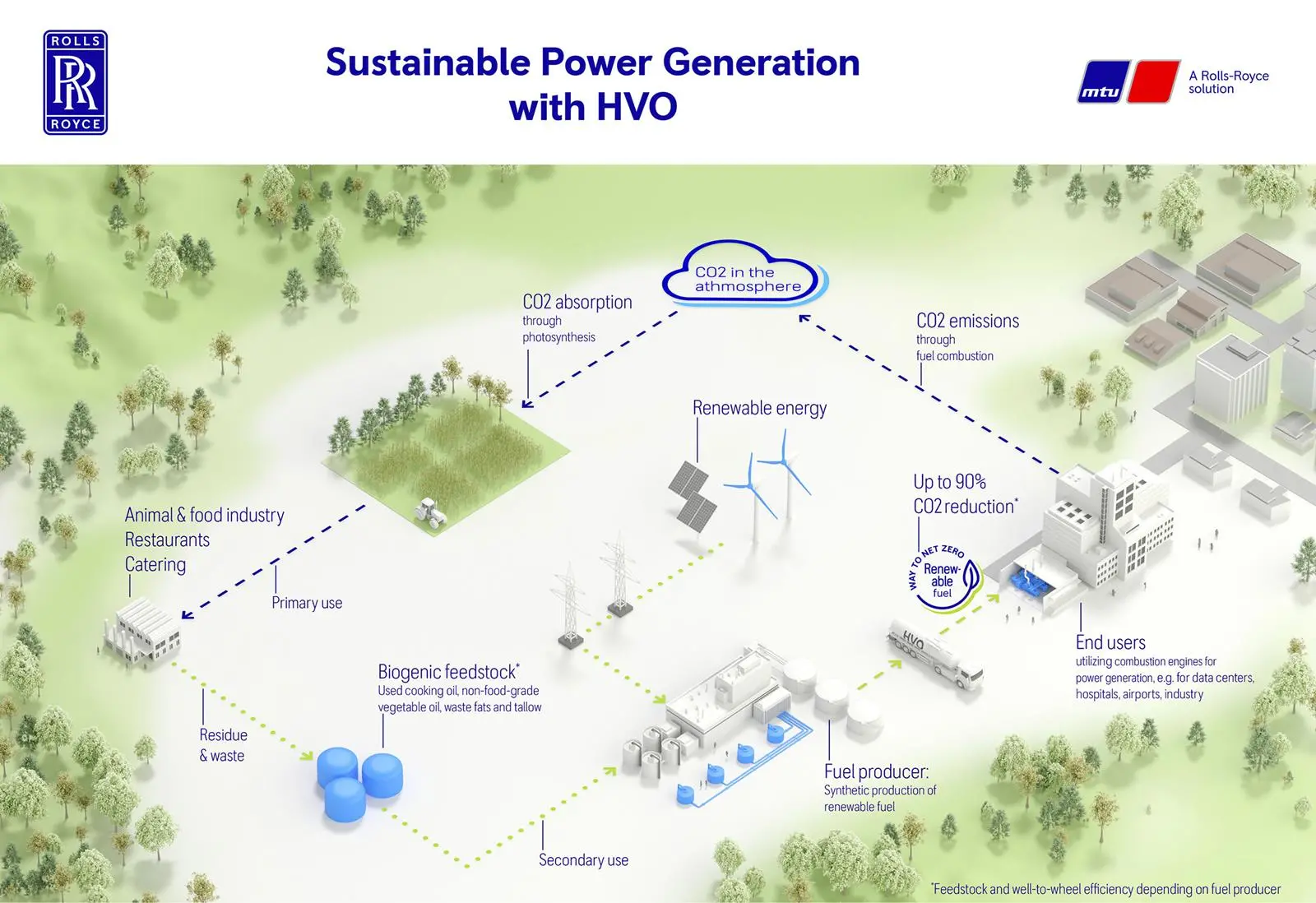
The company has taken a significant step towards meeting its net zero goals by approving its Series 4000 and Series 1600 diesel engines for use with a range of EN15940-certified synthetic diesel fuels.
“There is already a lot of interest in HVO in particular from many customers in the energy industry and data center business, who want to improve their carbon footprint,” said Tobias Ostermaier, president of the Stationary Power Solutions business unit at Rolls-Royce Power Systems.
“The results from pilot customers show a significant reduction in greenhouse gases, nitrogen oxide and particulate emissions by using HVO instead of fossil diesel in their gensets.”
Green choice
Mr Ostermaier said that the approval follows successful testing, including in the field, both types of engines can use a range of sustainable fuels including Biomass to Liquid (BtL), Hydrotreated Vegetable Oil (HVO) and Power to Liquid (PtL) fuels, such as e-diesel. They can all be used to replace conventional diesel fuel.
He said that the advantages of HVO in particular are cleaner combustion with a reduction in particulate emissions of up to 80%, nitrogen oxide emissions by an average of 8% and – provided the manufacturing process and logistics make use of renewable energy – CO2 emissions by up to 90%, compared to traditional diesel.
Tests confirmed that mtu engines using HVO perform equally as well as engines using diesel in terms of maximum power, load acceptance and fuel consumption.
HVO is a drop-in fuel, which means that there are no adaptions needed to the diesel plant infrastructure, hardware or software in order for it to be used. In addition, the storage stability of this synthetic fuel is significantly better than that of biodiesel, making it even more attractive to operators of emergency power systems.
As part of its sustainability programme, Rolls-Royce announced last year that it would realign the Power Systems product portfolio so that by 2030, new fuels and mtu technologies can save 35% greenhouse gas emissions, compared to 2019 levels.
The company is already successfully operating an mtu fuel cell system has established a clear roadmap for the introduction of hydrogen engines and is now progressively releasing further engines that can run on sustainable fuels in more applications.
Related Articles
 ALTERNATIVE FUELS & LUBRICANTS
 GENERAL NEWS
 GENERAL NEWS