



Geography trumps volatility for Gibdock
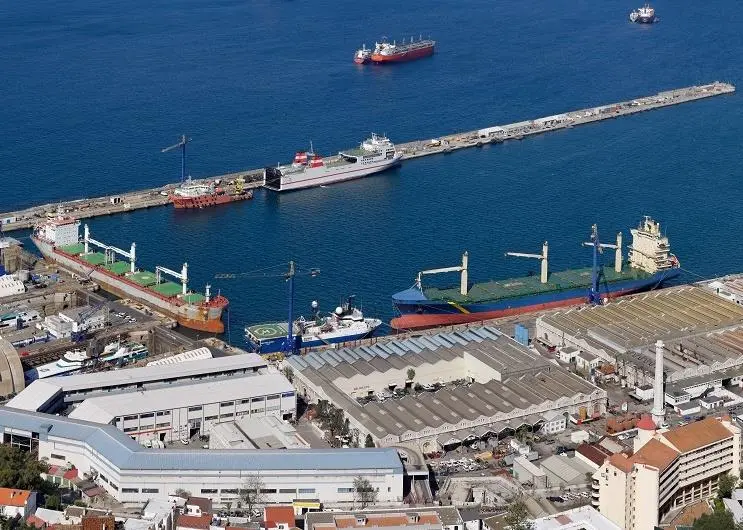
For example, Gibdock’s managing director Richard Beards says the yard’s offshore side hasn’t yet taken a hit from the drop in oil revenue, believing that its location – at the tip of Gibraltar – “will offset the impact of any continued volatility within the market”.
“Although it seems likely that 2015 will be a challenging year for the offshore sector… there may be an even greater need to minimise deviation from scheduled routing,” he adds.
The fact is, there’s a narrow set of choices for OSVs. Beards explains: “There are not so many yards that can handle the draught or even physical size of some of the heavier vessels like the subsea construction or WIV classes, in fact, there might only be two or three docks in the Mediterranean that can take this kind of work on.”
Certainly Gibdock’s panamax-sized drydock and 1,000m of deepwater wharfage puts it in the running for not just repair and maintenance or conversion work, but also to take on a certain amount of offshore superstructure builds. Still, to see it only in those terms somewhat undercuts the other characteristics specific to OSV dockings.
“Unlike other sectors, over half the value of an offshore support vessel can be high-tech gear,” says Beards. “So you can have 100 of your own team onboard, but then 70 more from the equipment contractors, and straight away you have responsibilities toward them. They are, after all, in your yard.”
Likewise those numbers mean organising oversize project teams, “because rather than one guy from the owner’s side, when you have added in the kit manufacturers and charterers representatives, there can be as many as a dozen or more project managers to mesh”.
On top of this are the new pieces of kit lining up to be installed. Beards admits that a couple of years ago it became fairly obvious that Gibdock needed a very robust ERP system: “Although technically responsibility lies with the procurement officers, again, these high value parts are in our yard. So we need to both know where they are – and the storage requirements. You can’t assume they can be left on the quay.”
So, how does Beards see the future of the yard? Gibraltar, he says, is growing as a hub: “It is part of a small-town ethos; everyone wants to make the cluster work. We also see ourselves as a staging post – and part of this is holding gear for clients.”
He explains that, because a lot of offshore support vessels are trying for as much flexibility as possible, there’s a growing need for ‘plug and play’ equipment swaps: “If an owner wants to unhitch one particular piece such as an installation tower, then we can keep it until either we can install it onto a sister vessel or hold it till we can crane it onboard a cargo ship for forward transit.”
Related Articles
 EMISSIONS REDUCTION TECHNOLOGY
 ALTERNATIVE FUELS & LUBRICANTS
 ALTERNATIVE FUELS & LUBRICANTS