



GL solutions for a cleaner maritime industry
An inside perspective came from Harald Schlotfeldt, Managing Director of shipping company F. Laeisz. Mr Schlotfeldt presented some of the systems F. Laeisz has in place to recognise and reduce the environmental impact of the company and some of the measures to be taken in the future: including the introduction of a Ships Energy Efficiency Management Plan (SEEMP) and Inventory of Hazardous Materials (IHM).
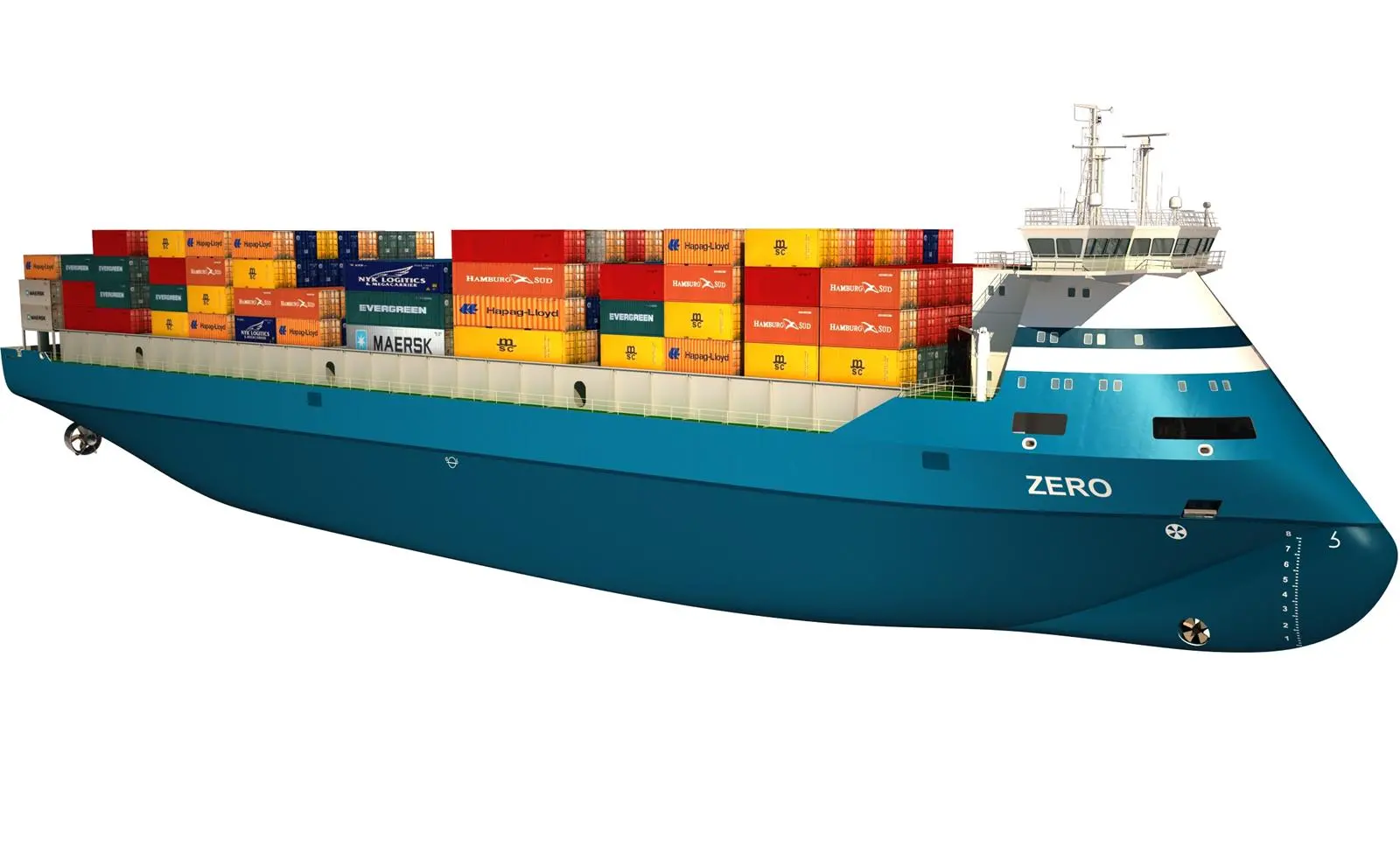
To respond to the CO2-emission challenge, breakthrough technologies need to be considered, said Dr. Pierre. C. Sames, Senior Vice President Strategic Research and Development of GL Maritime Services. He presented a design concept for a zero-emission container feeder vessel which targets Northern European feeder services and uses liquid hydrogen as fuel to generate power with a combined fuel cell and battery system. Dr. Sames explained the technology requirements of the concept and the commercial boundary conditions which would make it attractive in the future.
The design concept addresses typical feeder services with a full open-top 1,000 TEU intake and 160 reefer positions at a service speed of 15 knots. The vessel is powered by a fuel cell system which delivers up to 5 MW to two podded propulsors. A battery system provides peak power. Multiple type C tanks hold 920m3 of liquid hydrogen to facilitate a roundtrip equivalent to ten full operating days.
The concept envisages that surplus energy from an offshore wind farm would produce the liquid hydrogen (LH2). A 500MW wind farm could produce LH2 for up to 5 container feeder vessels, estimated Dr. Sames. The cost for LH2 produced offshore is several times higher than currently used marine gas oil (MGO), however, it is expected that costs for MGO could be similar to costs for LH2 after 2025 if emission surcharges are introduced.
Not only far reaching options but concrete solutions were presented by GL experts at the forum. Albrecht Grell’s presentation, GL’s Executive Vice President Maritime Solutions, laid out some of the ways in which emissions could be reduced with existing technologies, without sacrificing commercial viability. Mr Grell emphasised the importance of looking for a tailored solution to a company needs for each particular vessel and then making use of the most effective and worthwhile technologies from the tool box on offer. Ship owners and operators needed to prioritise individual systems which were easy to use, install and had short payback times, he said.
Mr Grell then highlighted some of GL’s solutions to increase ship efficiency; such as ECO Monitor, which provides easily identifiable and transparent breakdowns to help improve engine operation efficiency and ECO Assistant which provides trim optimisation for vessels.
Related Articles
 ALTERNATIVE FUELS & LUBRICANTS
 GENERAL NEWS
 GENERAL NEWS