



Green upgrades continue at Scandlines
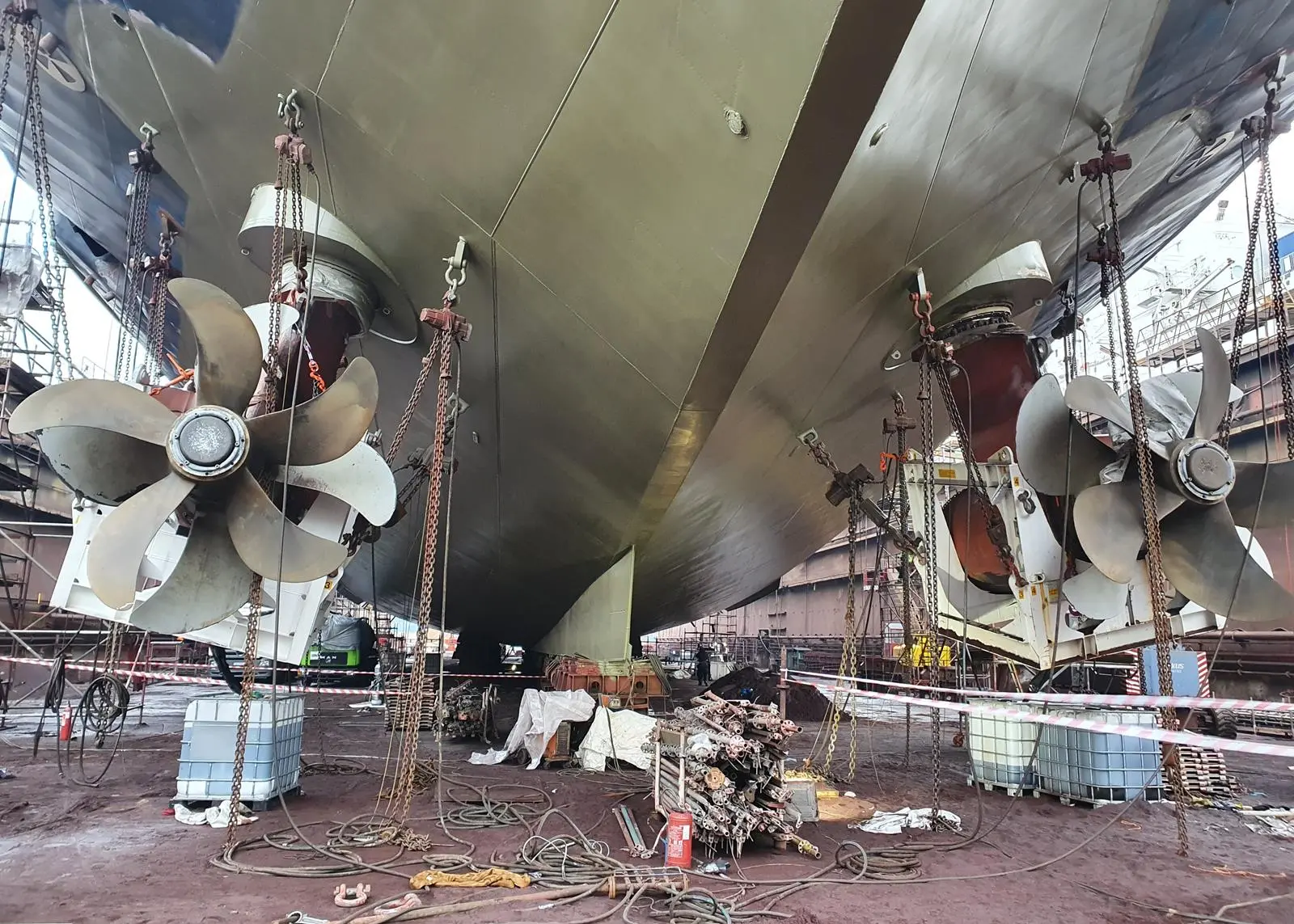
The 142m Deutschland returned to duty on the Fehmarn Belt between German homeport Puttgarden and Danish Rødby after a stay of nearly a month at the Remontowa shipyard in Gdansk.
Scandlines spokeswoman Anette Ustrup Svendsen told The Motorship four Contaz 35 azimuthing thruster drives from Kongsberg Maritime were installed.
The new thrusters have a maximum listed input power of 3,700kW and replace four 3,000kW AquaMaster CRP propulsion units. Svendsen said the ship’s drive control system was changed to Kongsberg Maritime’s new MCON system at the same time.
Deutschland is the second Scandlines hybrid ferry to get new thrusters. Sister ship Schleswig-Holstein was upgraded in October last year. The other two Scandlines hybrid ferries on the Puttgarden-Rødby route – Prinsesse Benedikte and Prins Richard – will convert next year.
Svendsen said all 16 thrusters were Contaz 35 units and represented a “green investment” of €13 million since they were expected to reduce CO2 emissions by a further 10-15%.They were “a big step in our Zero Emission strategy” which she said was to create a green alternative to rival the planned Fehmarnbelt Tunnel.
The new Contaz 35 thrusters are billed as the world’s first to be designed and built specially for merchant ships. Kongsberg said they combined the benefits of contra-rotating propellers and steerable thrusters.
The new units can operate on a vertical axis and also serve as a rudder. “In the case of the earlier (push) thrusters the drive propeller was at the rear and water had to pass the thruster before it reached the drive propeller”, Scandlines said. “We are now moving up to high-tech pull thrusters where the propeller is at the front of the thruster, providing a homogeneous water flow”. Slight changes to the shape of the hull around each thruster further optimised water flow to the drive propeller, Svendsen reported.
Scandlines said another significant factor was the weight of each new thruster – about 25 tons – and its diameter of 3.2m, which the company said reduced underwater sound and vibrations.
The issue is known to be of increasing environmental importance since some marine animals are negatively affected by underwater sound caused by navigation.
Svendsen added Deutschland’s underwater hull was painted with an algae-repellent silicone coating, which was designed to save energy compared with conventional paints.
Related Articles
 EMISSIONS REDUCTION TECHNOLOGY
 ALTERNATIVE FUELS & LUBRICANTS
 ALTERNATIVE FUELS & LUBRICANTS