



Hempel focuses on improving proven formula
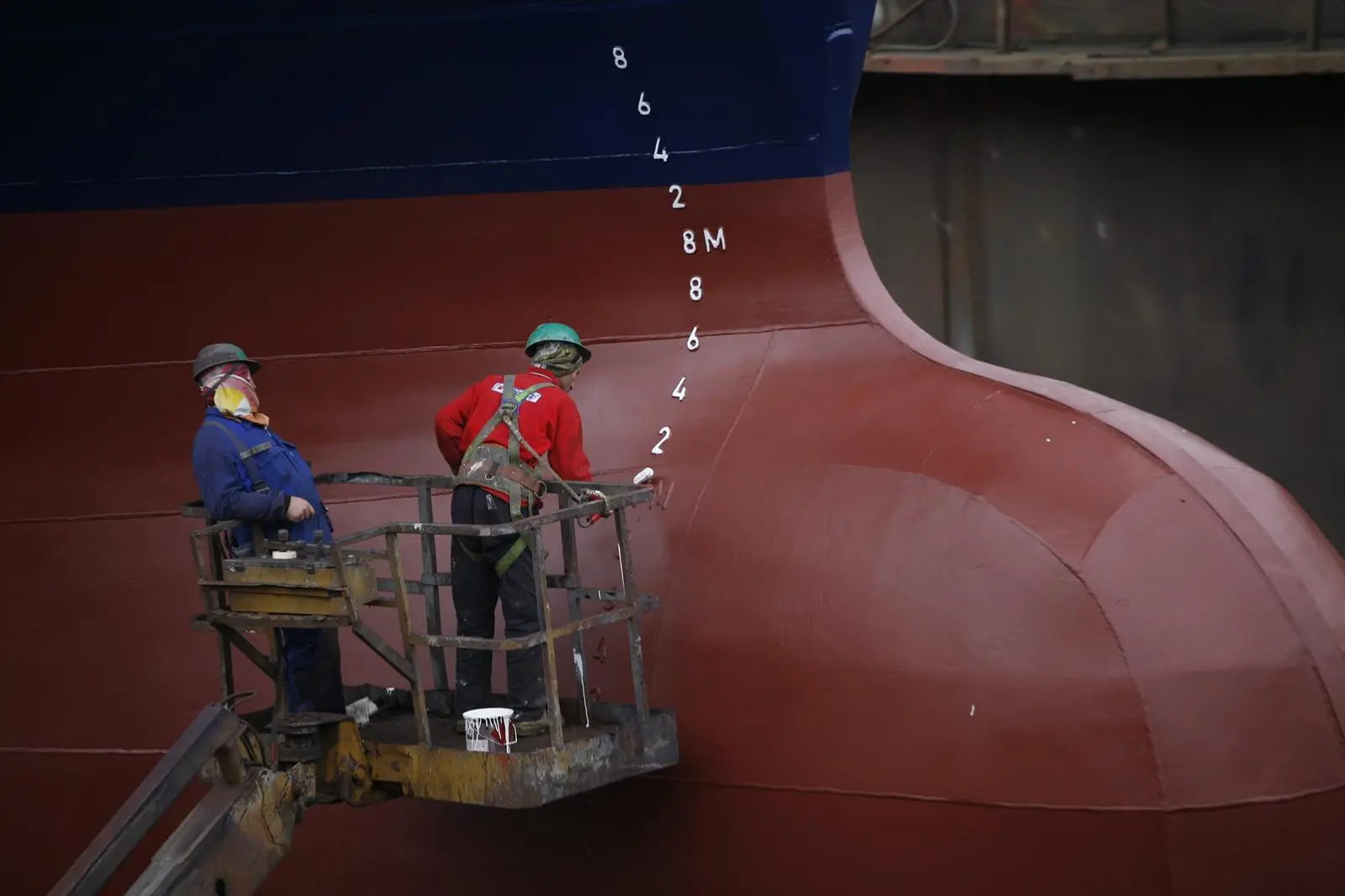
Moving goods by sea instead of by air or road is significantly more environmentally friendly on a tonne-mile basis. However, due to the large amounts of freight being carried by ships, the maritime industry is responsible for around four per cent of the world’s man-made CO2 emissions and so shipowners continue to seek solutions to reduce their environmental footprint without increasing their operational costs.
Aligning ourselves with our customers allows us to help them remain competitive in a difficult market. Fuel efficiency minimises bunker costs and limits harmful emissions – achieving this has been a priority for our research and development division for many years.
An advanced antifouling hull coating is an important factor in improving a vessel’s hydrodynamics. As large vessels burn fuel by the megaton, even a small reduction in fuel consumption can result in significantly lower emissions. Our antifouling coatings have demonstrated a drop in fuel consumption with an associated emissions reduction by four-eight per cent a year.
Whilst our research and development department is currently working on innovations relating to a ship’s hull that have the potential to improve the efficiency of a ship, we are well aware that some solutions will have a greater impact than others. Therefore, we are focusing our resources in the areas where we can make the biggest impact. So while we are inclined to look seriously at enzymatic antifouling or nano technology for example, our current primary focus is on our own patented Actiguard technology.
FUEL EFFICIENCY FOCUS
While hull coatings have greatly improved over the past decades, the biggest contributor to added drag on a ship’s hull continues to be the biofouling that accumulates during normal operations. Reducing biofouling to a minimum is probably the easiest activity that a ship operator can do to the hull in order to save fuel and minimise CO2 emissions. Maintaining a smooth hull will impact the fuel performance greatly.
Most hull coatings use either the controlled release of biocides or the friction-reducing properties of silicone to combat fouling. In both cases, the coating is carefully specified for each vessel based on its expected trading routes, speeds and activity levels. The vessel must maintain this operating level over the entire docking interval in order to achieve the promised fuel savings.
This is not always easy or ideal. A fleet operator may feel the need to switch a vessel’s trading pattern partway through the docking interval in order to accommodate changing market demand for example; or may want to use lower speeds on certain routes in order to save fuel. Therefore, when considering overall fleet efficiency, a hull coating that allows this type of flexibility without losing fuel-saving performance is extremely useful.
Our Actiguard technology, used first in our award-winning fouling defense solution Hempaguard, combines the smoothness of a silicone coating with the best long-term performance in the industry. It also controls biocide leaching so that the protection during idle time is as good as when the vessel is on passage at 15 knots.
ENHANCED APPLICATION
Now that Actiguard has a proven track record of solid performance, our primary focus has switched to overcome the challenges that some shipowners have experienced in applying the Actiguard technology. We are working to increase the speed of application in the shipyard to minimise costs, and to ensure the strength and robustness of the system that our customers have come to expect from our conventional antifouling solutions. We believe that our Actiguard technology is the best solution in the market, both for shipowners and the environment.
Ensuring the continued operational efficiency and simplicity of our Actiguard solution is the focus of our short term research. In the longer term we are researching and investigating all other coatings innovations relating to a ship’s hull. There is much interesting research being undertaken within the material and coatings sector and, as we did with Actiguard, we want to be ready to offer the next ground breaking technology.
Taking a step farther towards enhancing the environmental performance of our coatings, we have now begun to incorporate renewable raw materials into our coating formulations. As a result, our customers should soon be able to choose Hempel coatings that are both proven to reduce vessel emissions and are produced sustainably. This project is being run by our Antifouling Centre of Excellence in Polinya, Spain, and is sponsored by EEA Grants.
Coatings technology continues to evolve and we are confident that we are currently offering products that meet the stringent requirements of our customers and that we are developing the products that they will demand in the future.
Related Articles
 ALTERNATIVE FUELS & LUBRICANTS
 GENERAL NEWS
 GENERAL NEWS