



High speed PSV diesel power
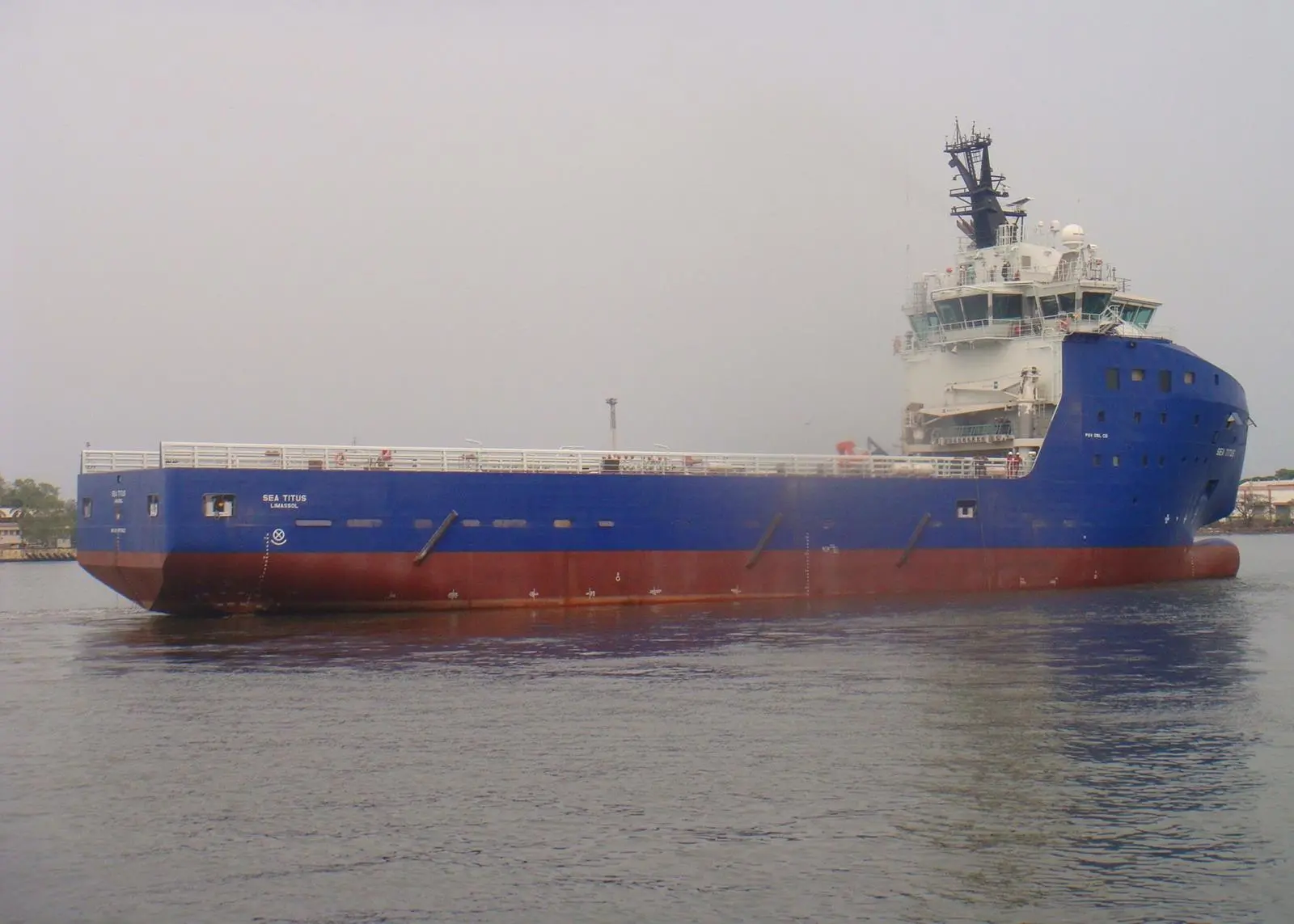
Among these is the platform supply vessel Sea Tantalus, first in a series being built at Cochin Shipyard in India, to a design by Vard Group (formerly STX Offshore). The basic design with its distinctive hull configuration is being built in various yards worldwide, and the Indian version is the first of a batch of four.
Sea Tantalus is a compact PSV, at 82.2m long and 17m wide, with 7.6m depth at the main deck. Built to DNV class, including ‘clean design’ notation, the new vessel employs a diesel-electric power plant based on four 1,635bhp Cummins KTA50-DM1-powered generating sets. These feed main switchboards providing a wide range of onboard electrical needs, as well as power for the twin 2,100mm azimuthing thrusters, each of which has a 1,600kW input requirement.
Cochin Shipyard explains that the vessel has been built to the highest levels of environmental compliance, in accordance with its DNV notation. Among the environmentally-friendly provisions is a ballast water treatment plant, making the Sea Tantalus the first ship built at Cochin to be thus equipped. The 28-person accommodation meets DNV Comfort Class requirements, signifying high comfort levels and low levels of noise and vibration. The vessel has fire fighting capability to meet Fi-Fi-1 notation, and its Oilrec notation means it an act as an oil recovery vessel in event of an oil spill. With LFL* notation, the vessel can carry low flash-point liquids such as methanol in stainless steel tanks.
The Sea Tantalus, hull number BY-089, and its three sister ships, are owned by Liberian company PSV Holding. The vessels are to the Vard PSV 05L CD design.
With a design speed of 14-knots, the Sea Tantalus has tankage for 1,000m³ of fuel, 1,050m³ of water and 250m³ of lube oil. The cargo deck has a 2100-ton capacity. Engines and engine application support was provided by Cummins Korea. The Sea Tantalus was delivered in March of 2013, and is due to be followed at short intervals by the sister vessels, named Sea Titus, Sea Tortuga and Sea Triumph, with the last delivery scheduled for the fourth quarter of 2013.
Cummins-based diesel-electric power has also been selected for two Ocean class auxiliary general purpose oceanographic research (AGOR) vessels being built at the US Dakota Creek Shipyards for the Office of Naval Research (ONR).
The ships have been designed by Seattle-based Guido Perla & Associates. The first ship set of four QSK38-DM powered gensets was delivered by Cummins Northwest in January 2013. Seattle-based Guido Perla & Associates, Inc has done the design work for the two vessels. Four Cummins QSK38-DM powered electrical generators will provide power to each of the 72.5m vessels’ two AC propulsion motors driving CP propellers. Siemens Industries developed the generator sets in conjunction with Cummins Northwest.
The gensets will also provide power to an azimuthing bow thruster and a tunnel stern thruster as well as general electrical requirements of the vessel. As on the University of Delaware’s 2005-built RV Hugh R. Sharpe, also built by Dakota Creek, at slow speeds only one or two engines may be operated rather than all four, allowing reduced seaborne noise levels.
The research ships, designated AGOR 27 and AGOR 28, are expected to be delivered in late 2014 and early 2015. The Woods Hole Oceanographic Institution will manage AGOR 27, while the Scripps Institution of Oceanography will manage AGOR 28 under charter party agreements with the ONR.
Information released by the ONR explains that: “Both ships will have the ability to sail at a sustained speed of 12 knots and will have 20 berths allotted for crew members and 24 for scientists. Some of the high-tech features planned include: acoustic navigation and tracking systems that operate at various depths; a specially designed hull that diverts bubbles from the acoustic sensor area; a centralised freshwater cooling system to provide heating, ventilation and air conditioning; and dual-controllable propellers with variable speed motors for increased efficiency.”
Secretary of the Navy Ray Mabus has announced that, when commissioned, the AGOR 27 will be officially named R/V Neil Armstrong. “Naming this class of ships and this vessel after Neil Armstrong honours the memory of an extraordinary individual, but more importantly, it reminds us all to embrace the challenges of exploration and to never stop discovering,” Mr Mabus said.
Related Articles
 PROPULSION
 GENERAL NEWS
 GENERAL NEWS