



Hong Kong Convention to enter effect following ratifications
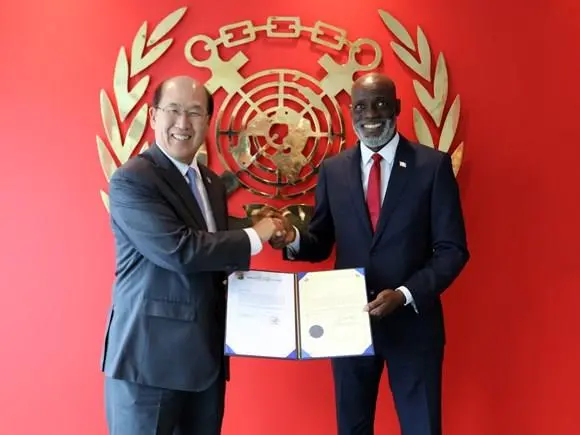
The instruments of accession were deposited with the IMO’s Secretary-General Kitack Lim on 26 June 2023 at the IMO Headquarters in London. The decision by Liberia to become a Contracting Party to the HKC means that the HKC’s threshold for merchant shipping by gross tonnage was met.
The Bangladeshi government had previously committed to ratify the ship recycling treaty in May 2023, following a visit by a high level delegation from the Norwegian authorities, the Norwegian Shipping Association, the European Community Shipowners’ Association, the International Chamber of Shipping and BIMCO.
The Convention will enter into force on 26 June 2025.
Secretary-General Kitack Lim commended Bangladesh and Liberia for the accessions.
“I congratulate Bangladesh and Liberia for depositing their instruments of accession, triggering within 24 months the entry into force of the Hong Kong Convention, and the global regime for safe and environmentally sound recycling of ships. This is a momentous day for the IMO, for the international shipping industry, for the marine environment, and specially for workers and local communities in ship recycling countries globally.”
“Bangladesh has made huge strides in recent years in improving its ship recycling regulation and standards to meet the Hong Kong Convention requirements. I take this opportunity to also thank the Government of Norway for their continued support to the IMO-implemented project on Safe and Environmentally Sound Ship Recycling in Bangladesh (SENSREC), which has helped make this accession possible. I would also like to express my deepest appreciation to Liberia. As a prominent flag state, their accession to the Hong Kong Convention will provide a major advancement to Liberia’s regulatory framework and would enable the tonnage criteria to be met,” Mr. Lim said.
“I invite other Member States, who have not yet become a party to the Hong Kong Convention, to do so as soon as possible,” he added.
The Hong Kong Convention was adopted at a diplomatic conference held in Hong Kong, China, in 2009. It is aimed at ensuring that ships, when being recycled after reaching the end of their operational lives, do not pose any unnecessary risks to human health, safety and to the environment.
It embraces the “cradle to grave” concept, addressing all environmental and safety aspects relating to ship recycling, from the ship design stage through to the end of the ship’s life, including also the responsible management and disposal of associated waste streams in a safe and environmentally sound manner.
The Convention places responsibilities and obligations on all parties concerned – including shipowners, ship building yards, ship recycling facilities, flag States, port States, recycling States.
Upon entry into force of the Hong Kong Convention, ships to be sent for recycling will be required to carry onboard an Inventory of Hazardous Materials. Ship recycling facilities authorised by Competent Authorities will be required to provide a Ship Recycling Plan, specific to each individual vessel to be recycled. Additionally, Governments will be required to ensure that recycling facilities under their jurisdiction comply with the Convention.
Hong Kong Convention status
The Hong Kong Convention now has the following contracting parties: Bangladesh, Belgium, Republic of the Congo, Croatia, Denmark, Estonia, France, Germany, Ghana, India, Japan, Liberia, Luxembourg, Malta, Kingdom of the Netherlands, Norway, Panama, Portugal, São Tomé and Príncipe, Serbia, Spain, Türkiye.
The 22 Contracting States to the Convention represent approximately 45.81% of the gross tonnage of the world’s merchant shipping. The combined annual ship recycling volume of the Contracting States during the preceding 10 years amounts to 23,848,453 gross tonnage, equivalent to 3.31% of the required recycling volume.
Related Articles
 ALTERNATIVE FUELS & LUBRICANTS
 GENERAL NEWS
 GENERAL NEWS