



IMO sets initial GHG strategy
IMO’s initial greenhouse gas (GHG) strategy adopted at the 72nd meeting of the Marine Environment Protection Committee (MEPC) outlines a target to reduce GHG emissions by at least 50% by 2050 compared to 2008, with the overall aim of eliminating GHG emissions entirely. It envisages GHG emissions peaking ‘as soon as possible’.
The initial strategy represents a framework for member states. It includes candidate short-, mid- and long-term further measures with possible timelines and their impacts on states. The strategy also identifies barriers and supportive measures including capacity building, technical cooperation and research and development.
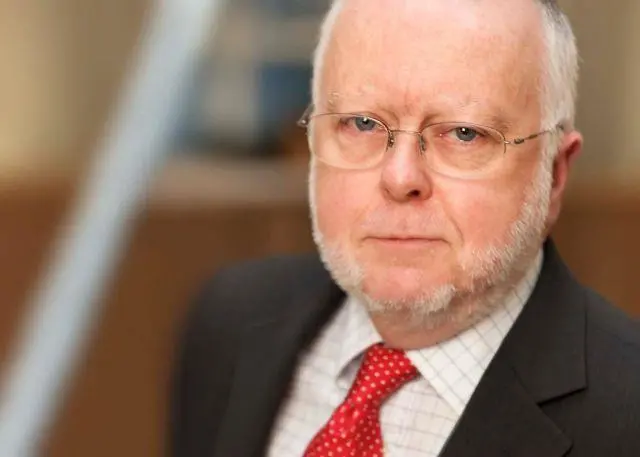
Kitack Lim, secretary general, IMO, encouraged delegates to continue developing the strategy. “I am confident in your ability to develop further actions that will soon contribute to reducing GHG emissions from ships,” he said.
‘HIGHLY AMBITIOUS’
The outcome has been largely welcomed by industry organisations. Peter Hinchliffe, secretary general of the International Chamber of Shipping, welcomed the strategy as “a Paris Agreement for shipping”. He said that some governments would have preferred to see the adoption of even more aggressive targets, but noted that the strategy agreed is highly ambitious given current projections for trade growth.
Hinchcliffe argued that a 50% total cut by 2050 can realistically only be achieved with the development and very widespread use of zero CO2 fuels. “We are confident this strategy will give the shipping industry the clear signal it needs to get on with the job of developing zero CO2 fuels, so that the entire sector will be in a position to decarbonise completely, consistent with the 1.5 degree climate change goal,” he said.
Discussions at IMO will now begin in earnest on the development of additional CO2 reduction measures, including those to be implemented before 2023. MEPC agreed to hold a fourth intersessional meeting of the working group on reduction of GHG emissions from ships later in the year. This group will develop a programme of follow-up actions to the initial strategy; further considering how to progress reduction of GHG emissions from ships in order to advise the committee; and reporting to the next session of the MEPC, which meets on 22-26 October.
STAKEHOLDER RESPONSE
“With this decision, the international shipping community clearly commits itself to the goals of the Paris Agreement. A 50% reduction in emissions is a substantial target, especially considering the complex decision-making process at the IMO. Negotiations showed that some parties were hoping for even stricter measures, however, we urge everybody to back the decision now made as we strongly believe that emissions regulation in international shipping has to be handled on a global scale to be fair and successful.”
Bjarne Foldager vice president and head of sales & promotion, MAN Diesel & Turbo
“The ambitious objectives that have been set will require adequate technological solutions. GHG emissions largely depend on the design and the technology of the constructed ships, their engines and machinery, and the fuels used for propulsion. Shipowners are the users of the ships and the technologies they feature, as made available by shipbuilders and manufacturers, and utilising the fuels made available by suppliers; another critical aspect is that very often it is the charterers who have the responsibility about how vessels are utilised.”
The International Association of Dry Cargo Shipowners (Intercargo)
“Achieving these goals will be a major task and will require massive research and development efforts, as we will eventually have to use alternative fuels resulting in zero emissions at all. With the clear reduction target in mind, the shipping industry is ready to work towards the goal, and Danish Shipping will particularly engage in the development of alternative fuels.”
Maria Skipper Schwenn, executive director, Danish Shipping
“The move will send a signal through the industry that rapid innovation is now needed. Ships may have to operate more slowly to burn less fuel. New designs for vessels will be more streamlined and engines will have to be cleaner, maybe powered by hydrogen or batteries, or even by the wind.”
Maersk Line (via LinkedIn)
“While it may not be enough to give my country the certainty it wanted, it makes it clear that international shipping will now urgently reduce
emissions and play its part in giving my country a pathway to survival. This deal helps make every country a little safer, but even with a landmark sectoral cap and clear targets to reduce emissions consistent with the Paris Agreement, we will need to improve it over time in line with the latest science.”
Dr Hilda C. Heine, president, Republic of the Marshall Islands
“A fifty percent reduction in CO2 emissions sounds good, but 50% of what? Presumably we have a figure for that. In fact we have two, in the IMO’s third GHG study. One ‘bottom up’ figure and one ‘top down’. They are miles apart. [Regarding] the target of a “reduction in CO2 emissions per transport work of least 40% by 2030” – again, the base year is 2008, but do we actually have relevant date for this year we can measure against? I have not seen them.
Finally did anyone notice the small peculiarity on this item? CO2 emissions, not CO2 equivalents or GHG. No, let’s leave the methane issue out of this target. Was that a deliberate move?”
Poul Woodall, director environment and sustainability, DFDS (further comments on LinkedIn)
“The next extremely important step must be to define concrete abatement measures, and to establish a clear roadmap. A clean-shipping future must be based on the combining various solutions [including] cleaner fuels, efficient vessel designs, hybrid propulsion technologies, and intelligent vessels. We should look beyond just vessel-level emissions. To be truly effective, we need to target everything involved in moving goods and passengers.”
Jaakko Eskola, CEO, Wärtsilä Corp
Related Articles
 METHANOL
 MONITORING, CONTROL & DIGITALISATION
 MONITORING, CONTROL & DIGITALISATION