



Improved Sensors Offer Offer Operations, Refit and Design Benefits
Accumulating operational data can be useful to many – provided that it is shared by all relevant stakeholders.
Terje Sannerud, Chief Commercial Officer at Light Structures in Norway said that one of the primary purposes of the company’s fibre optic monitoring system is to deliver real time decision support. “Customer feedback suggests that the solution provides vital data in terms of decision making that will ensure a voyage is as smooth as possible according to the conditions. Sensfib (the name of the company’s platform) data can be analysed alongside other environmental data in order to offer accurate predictive functionality too,” he told The Motorship.
One of the company’s products, Sensfib Comfort Cruise targets the cruise industry, where the reduction of motion in heavy weather is an important matter from the passengers’ comfort point of view. Up to eight sensors provide data that the bridge team can use to adjust speed and course in order to reduce vibration and motion.
Every ship – even a sister ship – is different and while Sensfib hull stress and fatigue monitoring solutions are made from off the shelf components based on fibre optic technology, every installation is customised to the exact design of the vessel so that it is possible acquire and deliver the most dependable data.
On e.g. container ships, the system can be used to help avoid parametric rolling if the bridge crew act on the given data in the correct way. “Sensfib is also used to address the problem of LNG tank sloshing, helping to avoid damage to the containment system – fluid dynamics-free surface effect – caused by wave impacts or roll, which could lead to, in worst case scenario, the uncontrolled release of highly flammable gas to the environment. We also developed Sensfib solutions for an offshore wind farm in the Norwegian north sea, both fixed and floating turbines. The most important part is that we apply the technology to optimise data acquisition, whatever part of a structure the sensors are monitoring,” Sanderudd said.

Moving on to ice conditions, Sanderudd said the bow shoulders and midships or when the vessel is turning in ice are critical response points on the vessel, but it’s important to record data on impacts and responses plus vibration throughout the hull. All this contributes to understanding its condition, which is vital information to inform the maintenance regime and to ensure that an ice breaker is always up to the conditions it faces. “Sometimes, based on vessels design and how the vessel breaks ice, the bottom of hull might also be at risk,” he said.
Sanderudd noted that the data gathered from hull monitoring offers valuable insights into the progression of structural fatigue over time. This is a crucial key performance indicator (KPI) for long-term strategic planning and forecasting the lifespan of assets.
Data can help predicting lifespan of ship, AI to enter picture soon
An essential use case involves validating new ship designs by addressing uncertainties that only become apparent when a vessel is in operation. By continuously assessing fatigue development in various sea environments and conditions, it becomes possible to make predictions about the effective lifespan of a vessel.
“This information is of paramount importance for naval architects when developing future vessel designs and proves invaluable in the context of maintenance planning, particularly within a condition-based monitoring framework,” he said.
“It’s telling that classification societies have now started to encompass structural monitoring technologies into their Smart notations, meaning that Sensfib data can now potentially be used to extend service intervals, with the potential to save millions of dollars over the lifetime of a ship,” Sanderudd pointed out.
“Looking to 2030 and beyond, it’s likely that there will be high level integrated AI, which can tell the master and crew how to maximise utilisation of the vessel without creating unnecessary damage (as fatigue). The AI will also help to optimise fuel consumption and crew/passenger comfort, as well as weather routing,” he continued.
This kind of AI augmented decision support will most likely be a giant leap for industry, but there needs to be willingness from the generally conservative maritime industry to implement the software solutions, and regulations need to keep pace too. “So, it’s on Light Structures and other sensor, monitoring system and technology developers to demonstrate the intrinsic value of data so the industry can move forward for safer, more environmentally sustainable and cost-effective global shipping,” he concluded.
Data and models can help to plan operations, reboot ship design process
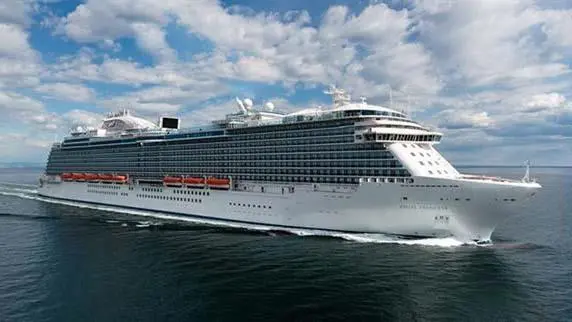
Maikel Arts, General Manager Market Innovation at Wärtsilä, said that last year, the company had announced that under its fleet decarbonisation programme, Wärtsilä created a digital model of the cruise ship Regal Princess by combining operational data from several different sources.
“Modeling capabilities and machine-learning algorithms developed by our service delivered a detailed analysis of the vessel’s operational data. The model was then used to simulate the impact of several technologies – identifying the most beneficial retrofittable solution, whilst minimising the required installation,” he said.
Esa Henttinen, Executive Vice President, NAPA Safety Solutions, said digital simulation tools would help owners to plan, benchmark and validate their day-to-day operations. “For example, using methanol as fuel can set limitations on a ship’s operations due to the additional tank capacity required. In some cases, ballast, fresh or grey water tanks will have to be converted to carry fuel,” he said.
By using the ship’s digital twin, teams can measure these impacts beforehand and realise, for example, that they might have to bunker for water more often during a voyage than they had done in the past. “Such holistic voyage planning ensures not only fuel optimization but also that safety requirements such as ship stability and safe return to port are met at all times,” he said.
Naoki Mizutani, Managing Director, NAPA Japan, told The Motorship that the green transition would require innovation at an unprecedented pace and scale, and to achieve this, one needs to reinvent the ship design process itself. This would rely on two key pillars: firstly, a more efficient design process with streamlined collaboration among different stakeholders in the maritime industry, and secondly, simulation tools that provide greater accuracy and certainty on the impact of design decisions.
For shipyards exploring newbuild concepts, digital technology helps naval architects test different configurations from the very early design stages. “For example, they can assess various configurations, fuels and propulsion systems depending on the vessel’s future route, and evaluate where new systems such as batteries or additional fuel tanks could be installed on the ship. By providing this additional clarity and granularity, we can better understand the different fuel options and their implications at sea, even before any steel has been purchased,” Mizutani said.
For retrofits, digital twins contain data on a vessel which can help calculate the impact of installing new technologies, from scrubbers to batteries, carbon capture systems and new tanks. “For example, they enable teams to test the effect of added weight on a vessel’s configuration, cargo capacity, stability and performance at sea,” he noted.
Consequently, the benefits carry on throughout the lifecycle of a vessel. “A ship’s digital twin has the potential to help maximise operational performance, optimise fleet operations and efficiency per ton-mile, minimise total fleet emissions and costs, better plan maintenance schedules, and ensure compliance with regulations such as CII,” Mizutani summarised.
“Data from a vessel’s digital twin can indicate that by switching to methanol, for example, a ship’s operations may need to also consider revising its bunkering schedule to accommodate more frequent replenishment of water. This gives owners and operators the peace of mind that they are operating as safely and efficiently as possible,” he continued.
For shipowners navigating the uncertainties of decarbonisation, digital twins remove the guesswork and offer greater clarity on the impact of their investments. “As more vessel and voyage data becomes available, shipyards can continue to further refine their 3D models and simulations to better understand the impact of their design decisions and make better informed choices throughout the process,” Mizutani stated. But this would also require data sharing and cross-industry collaboration – between shipowners, shipyards, operators and technology providers – to enable us to develop solutions that will benefit the entire industry’s green transition, he concluded.
Related Articles
 ALTERNATIVE FUELS & LUBRICANTS
 GENERAL NEWS
 GENERAL NEWS