



Industry speaks out on IMO GHG strategies
While Intercargo fully supports the ambition of net zero emission shipping by 2050, it stresses that this goal can only be achieved by providing the shipping industry with alternative zero carbon fuels.
“The responsibility for decarbonisation cannot be placed solely on the shoulders of the ship operator at the end of the line – it is a challenge that must be dealt with holistically by the entire shipping industry.” The IMO’s GHG Strategy should therefore ensure that green fuels are secured as well as the necessary infrastructure to ensure availability and bunkering in ports around the world.
“Unfortunately, these aspects are not sufficiently discussed and addressed despite their critical role.”
Intercargo’s position is that a combination of core elements of previous proposals on medium-term measures is the best way forward, and therefore welcomes the International Chamber of Shipping (ICS) revised proposal (paper ISWG-GHG 13/4/9). In the paper, the ICS proposes combining elements of proposals submitted under Phase I of the Work Plan for development in Phase III, including potential ideas for a revised International Maritime Sustainability Funding and Reward (IMSF&R) measure based on a flat rate contribution by ships rather than using the CII framework.
Intercargo believes that a flat rate contribution per tonne of CO2 emitted on a tank-to-wake (TtW) basis – and subject to the outcome of the ongoing discussions at IMO on fuel emissions’ Life-Cycle Assessment (LCA) – should be combined with an IMSF&R mechanism where ships of 5,000 GT and above will make an annual contribution per tonne of CO2. Only ships that use eligible alternative fuels would receive a reward for CO2 emissions prevented.
CII under fire
Intercargo members have expressed their belief that CII cannot be used to achieve the desired decarbonisation goals, as under real life operating conditions it will not deliver equitable, transparent and non-distorting emissions’ reductions.
Some factors that can have a significant adverse impact on a vessel’s CII rating are outside the vessel’s control. For example, adverse weather, voyage distance, port waiting times, port infrastructure, and charterers orders. Paradoxically when considering voyage distances and port waiting times, vessels with longer travel distances can produce more emissions but have a better CII rating when compared to vessels travelling shorter distances and producing less emissions.
Intercargo says that while generally supportive of the operational short-term measure, there are significant flaws that need to be addressed in order to make CII fit for purpose.
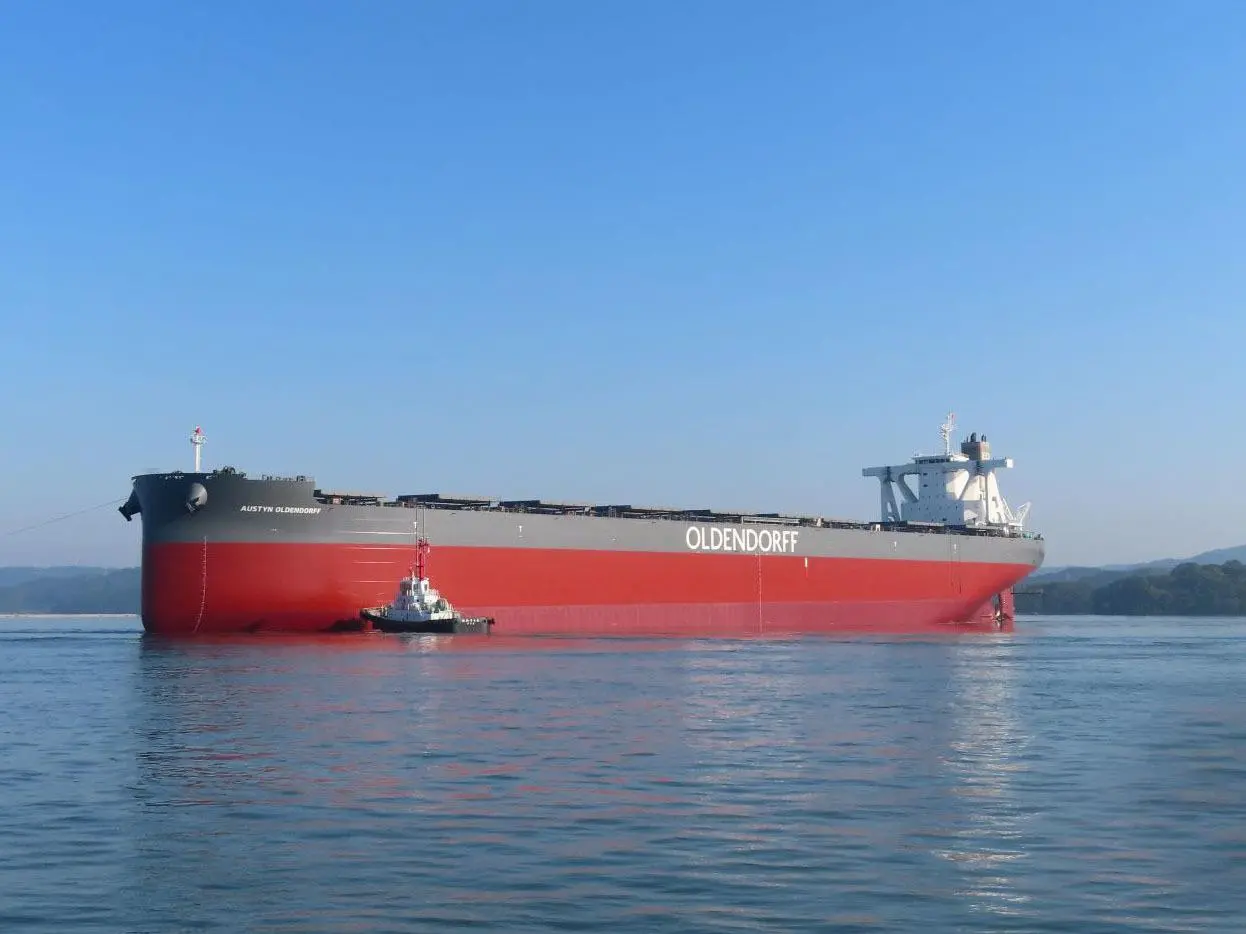
Oldendorff Carriers has also spoken out, publishing a presentation supporting its opinion that the CII will not help the environment and may in many cases lead to higher rather than lower emissions. “Our argument is that the shipping industry should not rely solely on the formulas in the regulation. Rather we need to take a holistic view and focus on reduction of absolute emissions. The CII formulas in the regulation are not holistic, can be gamed, and there are many real-world instances where strict adherence and focus on the CII rating letter grades will do more damage than good.”
Shipowners and operators are already trying to increase fleet productivity by reducing empty legs, so they can carry more cargoes per year. Even though a ship consumes more fuel during laden voyages, the improved utilisation decreases the emissions per ton carried, which is beneficial for the environment and should be the objective. However, such improved efficiency is being penalised with a bad CII rating. If an identical sister ship engages in inefficient trading and lower productivity, this leads to higher emissions per ton carried, but this vessel is being rewarded and encouraged by a good rating.
As the CII formula uses distance in the denominator, longer voyages are favoured and shorter round voyages are penalised. The likely consequence will be that less efficient ships will trend toward long voyages, emitting more, while more efficient ships stay in the shorter trades. There is no motivation to shorten trade lines in the name of reducing emissions.
Furthermore, the CII rating will be negatively affected by long waiting times or slow port operations, even though this is mostly beyond the carrier’s control. Some owners may resort to irresponsible steaming around in circles instead of waiting at anchor. This will improve their CII rating but will also increase annual GHG emissions.
The ranges between the various CII letter grades are very narrow so even small changes can impact the letter grade, says Oldendorff. Additionally, there is no incentive for consistent compliance. Owners can play the C to E to C game with no repercussions. Achieving a compliant rating every other year is acceptable under the CII regulation.
“The calendar year measurement is not logical. The consequences for being caught with congestion is more significant in December vs January. CII should be a rolling rating for the last 12 months. If a vessel gets an E for 2023 then the problem can be deferred until Q2 2025. If you get a D then it will not be a problem until the IMO revisits and likely revises the regulations in 2026. Where is the incentive for owners to comply?”
Owners chasing a rating could decide to avoid the Panama and Suez canals, knowing that waiting periods to transit and the shorter route is bad for their vessel‘s CII. (Bulkers have low priority for canal slots compared to other ship types.)
Transshipment trades using transloaders and shuttle vessels look terrible under CII (fuel consumption but very little distance), says Oldendorff, even though they significantly reduce overall emissions vs the alternative of employing many smaller ships for port-to-port loading and discharge. Additionally, the formula does not encourage upsizing which is one of the best tools for reducing emissions per metric ton carried.
Commercial contract issues
The CII is an operational score card, but it does not accurately reflect the difference between a super eco ship and an inefficient ship on a trade route with an inherently bad CII variable. “Even the most efficient vessels can receive bad CII ratings due to factors that have nothing to do with the actual technical efficiency of the vessel. On the other hand, the most inefficient vessel can achieve a good CII rating by simply ballasting with no cargo. This exemplifies why CII metrics should not be used in isolation for commercial contracts.”
Oldendorff says that charterers and owners should not take a hard stance on a specific CII letter rating. “The D and E ratings are acceptable transitional ratings during the current phase of the IMO CII regulations, provided that the improvement plan requirements (SEEMP) are adhered to. Ships rated D or E that are following this SEEMP process are compliant and should be accepted by charterers for the execution of their cargoes.
“If charterers insist on a higher CII rating, then shipowners will need to ask for indemnification from charterers for damages to the vessels CII rating caused by long port stays. Similarly, owners should not worry about how their ships are traded if they are out on time charter. This approach will solve the problem with the BIMCO clause not being workable and end the vicious cycle where all parties seek to be indemnified for theoretical damages that can’t be quantified.”
After trying for a year, Oldendorff says that BIMCO was unable provide a CII TC clause that is acceptable to both owners and charterers. “The new clause as presented assigns the burden of CII solely onto the charterer. Even if a vessel underperforms, owners have the right to interfere with voyage planning, leaving the charterers with unlimited liability for expenses and risks that cannot be quantified. This is not criticism of BIMCO who had the impossible task to clause poor legislation. However, the result as written will create massive problems for operators and charterers.
“In our experience, some voyage charterers are struggling to incorporate CII into their business and do not know what rating to ask for. Since the vessel’s rating is based on its performance during the prior calendar year, does it make sense for a voyage charter to insist on a certain rating for a cargo loading as much as a year after the rating was earned? If charterers ask for a vessel to perform their voyage a certain CII rating then that might mean more emissions for the performing vessel. Similarly, an owner may insist that a charter operate the ship at a rating higher than what the ship is capable to achieve on a given trade route. What are voyage charterers supposed to do?”
BIMCO is understood to be drafting a voyage CII clause which will is likely to mirror the essence of the current time charter clause. This clause will again pass on unlimited and unquantifiable liabilities to the charterer for the CII rating. Assuming nobody wants to accept such a clause when in fact there is no liability, defusing the CII by owners and charterers accepting compliant D and E rated vessels is Oldendorff’s suggestion.
Proposed solutions
Oldendorff believes that the most efficient way to ensure long term emission reductions is to focus on building the most modern eco ships. The EEXI represents the efficiency of the ship, and any company that wishes to improve on reducing their carbon footprint should be looking at technical efficiency metrics such as EEXI and consumption values. Should there be competition to get the more efficient vessels, this would lead to premiums which will encourage owners to modernize their vessels by either fitting them with ESDs or ordering new efficient vessels.
Cargoes will continue to move regardless of emissions regulations so the goal should be to carry the cargoes in the most efficient manner. This will encourage efficient operating and optimisation of trade flows. Focus should be on upsizing to capture economies of scale where possible. Slow steaming will be an effective short-term tool. Working together to optimize JIT principles will save fuel and reduce time in port.
“We need to continue to develop technical solutions. Despite certain claims, significant savings are not available with today’s technology. Alternative fuels will have to be developed in a larger scale to achieve the goals for 2030 and 2050. We fully support Green Corridors that involve everyone in the supply chain. This will provide better transparency of the availability and pricing of the new fuels thereby encouraging investments in the dual fuel vessels.”
Related Articles
 METHANOL
 MONITORING, CONTROL & DIGITALISATION
 MONITORING, CONTROL & DIGITALISATION