



Innovation answers the call
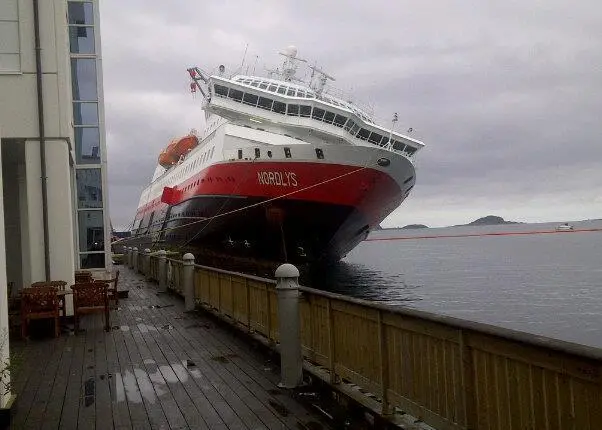
Miko Marine is one of them, and its magnetic patches now have a history of helping keep ships afloat despite hull damage. For example, after an engine room explosion at sea that resulted in two fatalities and the evacuation of crew and passengers, the badly damaged cruise ship Nordlys was towed into the port of Ålesund on 15 September.
Unfortunately, divers couldn’t easily locate the damage and despite pumps, the ship was listing at 21.7° and in danger of capsizing. Consequently the thrusters’ sea chests needed to be quickly sealed to eliminate them as potential sources of the leak.
Four magnetic patches from Miko were dispatched accompanied by an advisor – and extra magnets to keep the patches in place in case of any subsequent transit. Ultimately the leak was identified as a 38cm by 8cm tear that was closed by divers using traditional wooden plugs, and the Nordlys was safely towed to dry dock in Sula for repair the following week.
The effectiveness of these patches, despite many layers of paint or corrosion covering the metal, is achieved by mixing rare earth particles with an exceptionally strong blend of Nitrile rubber which gives a stretch strength of 9,000N per 5cm. To put it in easy to understand terms, a 5cm strip of the fabric can lift a car.
Applying magnetic patches can be a cost saving measure: emergency repairs inside a thruster tunnel, for example, or to part of a ship’s pumping or filtration infrastructure can result in docking fees that may be way out of proportion to the complexity of the task involved. The magnetic patches are DNV certified for this purpose which means that a sea chest can be quickly sealed and pumped dry so that work can be carried-out inside in complete safety.
Budget cutting is having an impact, and the British Isles are seen as being at particular risk of grounding incidents due to ongoing questions over funding of the UK’s Emergency Towing Vessels (ETVs). The consequences of large vessels running aground can be disastrous whether they are tankers or cargo ships laden with fuel.
So it’s interesting that Miko’s ShipArrestor is being cited as one possible solution that could enable fewer rescue tugs to service the same area at significantly lower cost.
The ShipArrestor system has been developed so that a conventional search and rescue helicopter can deploy a tow line around the winch gear on the foredeck of an abandoned vessel. The helicopter then lays the line upwind and releases it attached to a sea anchor. Full scale tests have demonstrated the system’s effectiveness and in one trial a 30m diameter nylon sea anchor was able to turn a 120,000 ton LNG tanker into the wind and slow its drift by 58%. This could prove vital for improving the chances of survival for a ship in danger of being blown ashore and also for the safety of the cargo and crew of a ship rolling in a heavy sea.
Norway-based davit supplier Vestdavit has developed a sliding davit solution which permits easy handling and maintenance of rescue craft in Artic conditions.
“As the Arctic opens up to shipping and oil exploration, there is more and more need for the specialised vessels which can operate in those conditions,” says Atle Kalve, development manager of Vestdavit. “We have already designed and supplied Arctic-capable davits for ice breaker operators, and now increasingly for US offshore firms operating in Alaska. But the weather in which vessels operating in the Arctic regions want to maintain operations calls for new ways to store, launch and recover boats in extreme conditions of sea state and low temperatures.”
The company has responded with the sliding PLR-3600 davit. The alcove protection allows maintenance of the craft and davit protected from the weather and ensures it is ready when needed. The davit system slides aft clear of the alcove then launches the boat using our proven davit systems in an extreme winterised version.”
The PLR-3600 Arctic davit is built from specialised steel and all moving parts have special seals, all tested, approved and certified for operations to -40°C. The hydraulic power unit and hydraulic system is special built for this type of operations, including use of special hydraulic fluid for Arctic operations. The davit has built-in shock absorbing and is wave compensated to allow ease of use in high seas. The whole unit is housed in a protected alcove or enclosed garage. Maintenance intervals are also lengthened to avoid the need for routine work on the davits while in very cold weather.
Vestdavit also designs and supplies Arctic-capable davits able to handle 30 tonne boats and can integrate these with the ship’s garage and stern launch boat handling systems for extreme conditions.
Related Articles
 METHANOL
 MONITORING, CONTROL & DIGITALISATION
 MONITORING, CONTROL & DIGITALISATION