



INTERCARGO: Governments must share the load
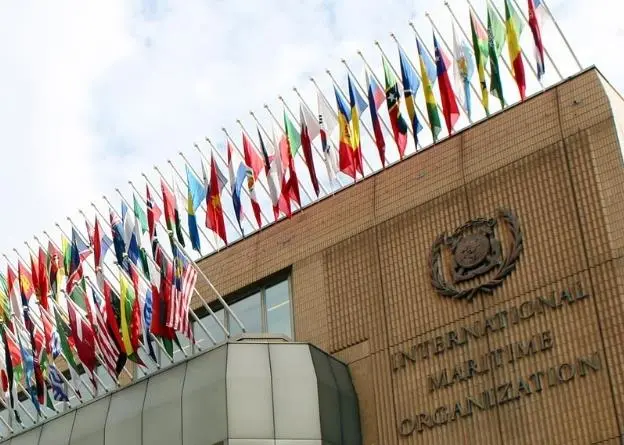
MEPC 78 discussions will include the potential revision of the IMO’s GHG strategy to achieve this goal, and the latest report from the UN’s Intergovernmental Panel on Climate Change (IPCC) will likely have an impact on discussions due to the conclusion that IMO’s initial GHG strategy falls short of what is required to achieve the goals of the Paris Agreement.
Spyros Tarasis, Vice-Chairman of INTERCARGO, says: “Global challenges require global solutions, but it must be remembered that the commercial development of these solutions is within the direct control of other stakeholders and not shipowners. Such a target requires a drastic and urgently needed acceleration in the commercial development of the required technologies, fuels, propulsion systems and related infrastructure.
“Whilst INTERCARGO fully supports the drive and the ambition to achieve zero emission shipping by 2050, it urges governments to adopt the necessary measures to accelerate R&D of zero-carbon technologies and expedite their deployment. The net-zero target will only be plausible if governments take the necessary action to achieve this at IMO.”
In order not to jeopardise the 2050 target, INTERCARGO calls for immediate approval of the industry proposal for the establishment of an International Maritime Research and Development Board and an IMO Maritime Research Fund.
In the medium term, it stresses the need for a global levy on carbon emissions from ships as a market-based measure to accelerate the uptake and deployment of zero-carbon technologies and fuels. INTERCARGO believes that without these concrete actions, it will be premature to revise intermediate targets for 2030 or indeed for any subsequent year beyond.

INTERCARGO fully supports the IMO in meeting the shared, global challenge of delivering on the shipping industry’s decarbonisation agenda and, in representing dry bulk ship owners, managers and operators, invites IMO to take action as needed.
Related Articles
 ALTERNATIVE FUELS & LUBRICANTS
 GENERAL NEWS
 GENERAL NEWS