



INTERTANKO gauges effect of MARPOL Annex II cargo reclassification
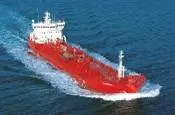
Impending revisions to MARPOL Annex II effecting the reclassification of chemicals and vegetable oils and fats will bring about changes in the trading possibilities for the chemical and products tanker fleets. INTERTANKO has made a study of these trades and of the availability of tonnage involving over 1,100 vessels. It concludes that there will be a significant impact on both the product tanker and chemical tanker trades, and that there will be a nominal surplus of about 5.7m deadweight (about 20%) of IMO Type 2/3 tankers from 2007 onwards after the reclassification comes into effect.
However, it should be borne in mind that whatever the final decision is on cargo reclassification, the market forces of the day will ultimately decide the actual, physical tonnage availability in each ship type. The chemical and products tanker operators will decide how they can best trade their tonnage between the regulated and the unregulated cargoes and therefore which tankers end up in which trades.
The revisions to MARPOL Annex II have been under review and discussion at the IMO and elsewhere for over 10 years, and have been driven by the desire of various Flag States to regulate all Annex II products, including vegetable oils, according to their physical properties and their carriage and discharge requirements
Regulating chemicals, oils and fats that are presently unregulated will have an effect on the products tanker market as well as on the chemical tanker market. This is because today product tankers as well as chemical tankers can carry many of the “easy” chemicals and all the vegetable oils and fats, whereas the proposed reclassification means that the majority of these cargoes may only be carried on specific IMO tanker types.
To aid the decision makers at IMO (the study’s conclusions have been submitted to the Marine and Environment Protection Committee’s MEPC 51 meeting at the IMO), to facilitate rational debate and to ensure that the most up to date information is available to all concerned, INTERTANKO has conducted a tonnage availability study for ?big volume movers? carrying the main cargoes that make up over 80% of the total of more that 130m tonnes of chemicals, vegetable oils, fats and molasses shipped annually. Some of these cargoes will be re-classified ?up? and some ?down? with regard to pollution and ship type requirements and some (pollution category Z) will still be able to be carried on products tankers.
INTERTANKO emphasises that there is no single, simple model that can provide the answer on how current tonnage capacity will be affected in 2007 when the proposed revisions are due to come into force. It recognises that the chemical and vegetable oils trades are very diverse (the placing of cargo space in the right place for actual cargo demand is notoriously difficult) and involve a number of operating restrictions that make forecasting tonnage usage rather complex. Therefore, certain assumptions have had to be made in assessing the impact. For instance, the Federation of Oils, Seeds and Fats Associations? (FOSFA) previously ?acceptable and banned cargo lists? restrict which cargoes can be carried after which. This means that although a tank may be empty it may not always be available to load edible oils.
Related Articles
 ALTERNATIVE FUELS & LUBRICANTS
 GENERAL NEWS
 GENERAL NEWS