



ISWG-GHG 7 delivers document to MEPC 75
Draft amendments to MARPOL agreed during the delayed Intersessional Working Group on Reduction of GHG Emissions from Ships (ISWG-GHG 7) in late October mark “a major step forward, building on current mandatory energy efficiency requirements to further reduce greenhouse gas emissions from shipping,” according to the official report on the meeting issued by IMO’s secretariat.
On that basis, the week had gone well, yet one delegate – who spoke to The Motorship on condition of anonymity – said that the week’s discussions began with “quite a weak proposal” that by mid-week had been “watered down … and then collapsed.”
That initial proposal was based on a review of various submissions for the meeting’s original April schedule. They were combined into the proposal referred to above, which mentioned, among other things, a need for guidelines on both Energy Efficiency Existing Ship Index (EEXI) and its related Carbon Intensity Indicators (CIIs).
It is always difficult to know what goes on at IMO working group (WG) meetings because non-delegates cannot follow their proceeding and their documents are never published in the public area of the IMODOCS online repository. So all The Motorship and other outsiders can go on are leaked documents, interviews, email exchanges and official statements.
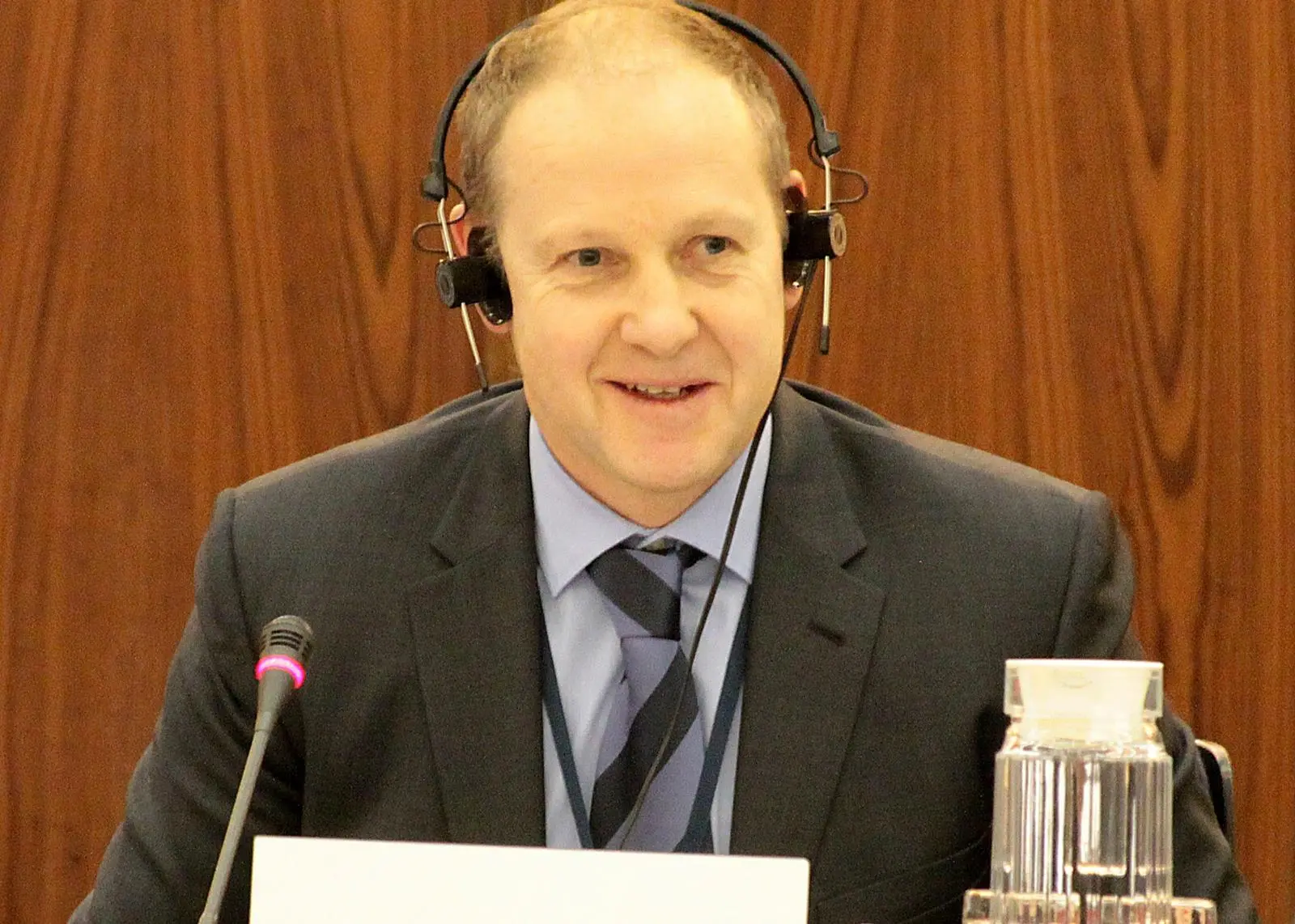
Our insider said that the failed discussion has affected IMO’s ambitions for EEXI and CIIs and added that when the discussions ‘collapsed’, the meeting’s chairman, Sveinung Oftedal – who is a special director within Norway’s Ministry of Climate and Environment – put forward his own proposals to break the impasse and the final outcome was based on those.
Not every flag state attending the meeting was happy with that outcome, The Motorship has heard, with one of those expressing disquiet apparently being the Marshall Islands. Its ambassador to Fiji, Albon Ishoda, who headed its delegation at the meeting, certainly had concerns about the meeting’s working paper, describing it to one media outlet as a “compromise short-term measure proposal [that] is neither consistent with a 1.5°C temperature pathway nor consistent with the levels of ambition” set out in IMO’s initial greenhouse gas strategy.
However, a Marshall Islands spokeswoman declined The Motorship’s invitation to say whether the flag state agreed with that assessment or whether its delegation had subsequently opposed the meeting’s outcome being passed to MEPC, as The Motorship believes, “due to the confidentiality of the proceedings of the working group.” In a statement, she said that there had been no voting during the meeting and that “it was agreed to incorporate short-term measures through new regulations under Chapter 4 of MARPOL Annex VI”, subject to approval at MEPC 75 and adoption by MEPC 76 next year.
Mr Oftedal was also positive about the meeting and its outcome. In a conversation with The Motorship, he paid tribute to IMO’s member states, who he said had shown an “extraordinary interest in cooperation … to arrive at such a good and specific outcome.”
But he confirmed that the guidelines mentioned in the working document had still to be completed and that an A-E rating schedule for CIIs had not been defined beyond the broad terms used in the proposal going to MEPC. That lists levels D and E as indicating a ship with ‘minor inferior’ and ‘inferior’ performance levels respectively and IMO’s meeting report notes that “a ship rated D for three consecutive years, or E, would have to submit a corrective action plan, to show how the required index (C or above) would be achieved.”
What will happen if no improvement follows that action plan is far from clear. According to a statement issued after the meeting by the International Chamber of Shipping (ICS), such ships “will face serious negative consequences unless they improve their performance,” but an ICS spokesman clarified to The Motorship that this referred to potential commercial consequences, since “there will be market pressure to use higher rated ships”.
A few days after the WG, ICS chairman Esben Poulsson spoke about this during a webinar held as part of the Posidonia Web Forums week, in which he said that “the whole basis of the [CII] rating system is to incentivise good performance and to disincentivize bad performance.”
Nonetheless, the ICS spokesman also said that the principle of imposing sanctions had been agreed at the meeting but “that has to be finally codified in line with the IMO process.”
It was also clear from our conversation with Mr Oftedal that those sanctions have not yet been specified. He said that “corrective action” had been “heavily discussed” during the WG meeting, although any provisions will depend on the legal status of the CII, which has not yet been decided. This may be clarified in the subsequent guidelines, he indicated.
Our own source viewed this outcome as meaning that “there is no sanction whatsoever, so [the corrective action plan] is completely meaningless.” He also gained an impression at the meeting that a small majority of delegations actually want there to be no enforcement measures.
As well as the ICS, other shipowner organisations have also welcomed the meeting’s outcome. A spokesman for the UK Chamber of Shipping told The Motorship that there had “clearly [been] a hot debate with differing views on enforcement, sector applicability, divisions between developed and less-developed maritime nations and significant detail on short term technical operational measures,” but that the meeting’s outcome “will create a key stepping stone in the decarbonisation pathway.”
If there are no further delays, the amendment agreed during the WG meeting could come into force in late 2022, Mr Oftedal indicated, which would be ahead of the planned review of IMO’s Initial GHG Strategy in 2023.
Assuming it is accepted by MEPC 75, the proposed amendment will be formally adopted by MEPC 76, which Mr Oftedal expects will probably take place in ‘late spring’ 2021, although no date has yet been declared by IMO’s secretariat. The earliest it could begin is 20 May – six months after MEPC 75 ends – because of the minimum period required between circulating and adopting amendments.
The adopted amendment would then be circulated to members and come into force 16 months later under the ‘tacit approval’ principle, sometime in autumn 2022.
There will be a review by 2026 into how effective the amendments have been “and, if necessary, develop and adopt further amendments,” IMO’s report of the meeting says. This does not impress our source. “We can ratchet it at that point, but it’s not going to come into effect until 2028,” he said.
But Mr Oftedal pointed out that 2026 is the latest date for that review; “it is actually up to the committee when to start and when to finalise” it. For now, he believes that, although “there remain quite important elements in development … we have achieved as much as we could at this point in time.”
Related Articles
 METHANOL
 MONITORING, CONTROL & DIGITALISATION
 MONITORING, CONTROL & DIGITALISATION