



Kongsberg’s new ‘Super-Efficient Bulker’ concept slashes fuel costs
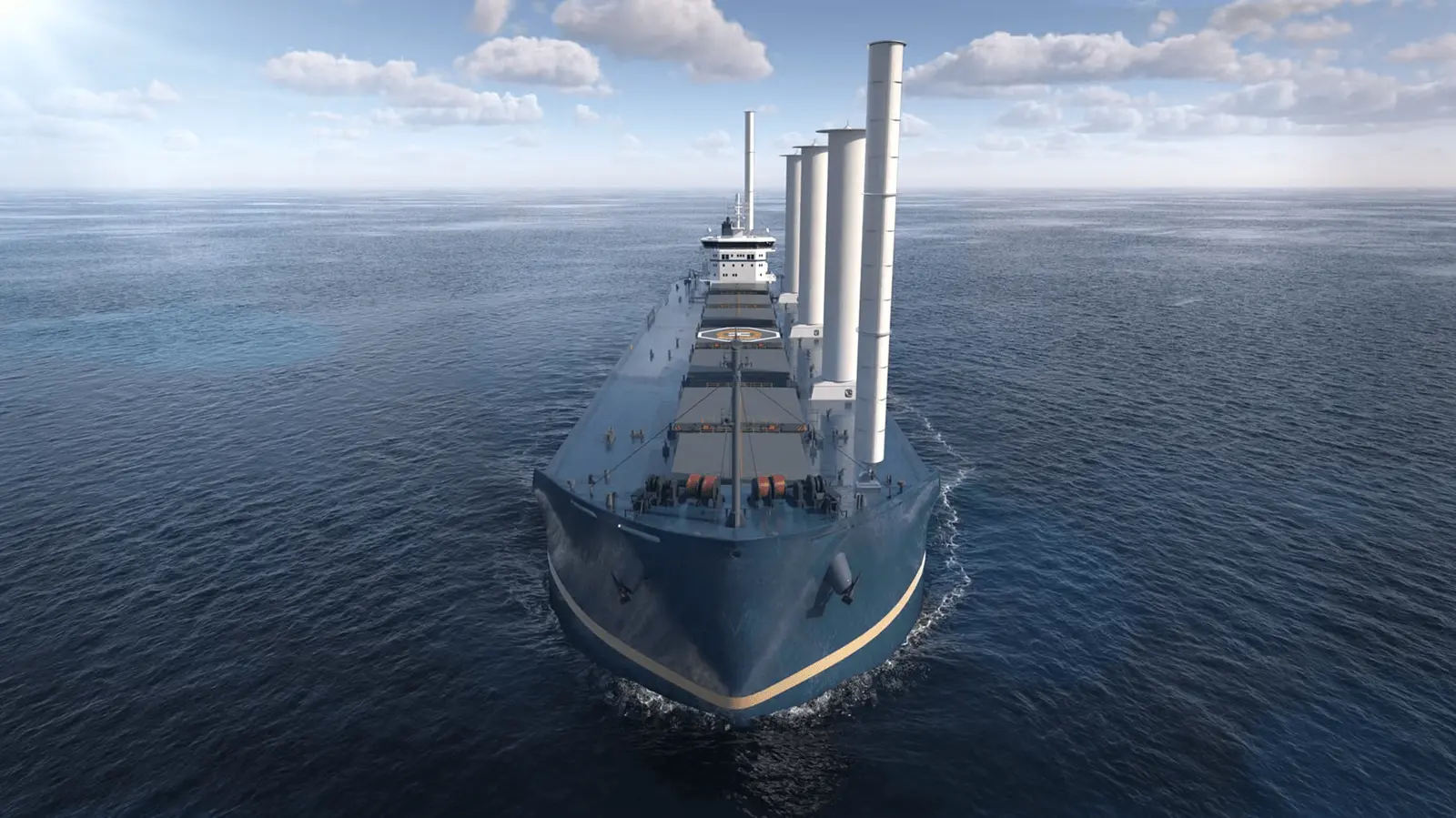
Kongsberg Maritime, together with Deltamarin, has developed a new design which promises fuel cost savings between 40-50% depending on the operational profile.
The companies used a Kamsarmax bulker of 82,000 DWT as the basis for the new design. This vessel type often faces restrictions with the global availability of low-carbon fuels, making it an ideal candidate for the study according to the company. Innovations include:
- Hybrid wind technology. The new vessel concept is based on a combination of three tiltable rotor sails and two suction wing sails.
- Air lubrication system. By trapping air bubbles beneath the hull, the vessel’s system significantly reduces resistance, leading to major fuel savings.
- Slow speed. By operating at a slightly reduced speed, the design strikes a balance between fuel efficiency and operational viability. Every knot counts – a 1-knot reduction translates to significant savings in fuel, emissions, and maintenance.
- Power management. The bulker integrates a hybrid shaft generator with frequency control, ensuring optimal electrical power usage and reduced emissions.
- System optimisation. Onboard, an Intelligent Energy Management System (iEMS) works in tandem with route optimization software. This ensures optimal energy use, keeping operational costs down.
- Hull skater. Keeps the hull clean and minimising resistance for continued low fuel consumption throughout the voyage.
Oskar Levander, vice president of strategy and business development at Kongsberg Maritime, said: “Ship owners face significant challenges in meeting tighter regulations. While low-carbon fuels are an option, many prefer to stick with conventional fuels. Our goal was to design a vessel capable of complying with predicted CII regulations throughout its lifetime, using advanced energy-saving technologies.
Kongsberg Maritime and Deltamarin have delivered a concept that proves significant fuel savings are achievable without abandoning conventional fuels. This is a game-changer for shipowners looking to navigate the increasingly stringent regulations and embrace a more sustainable future.
Related Articles
 ALTERNATIVE FUELS & LUBRICANTS
 GENERAL NEWS
 GENERAL NEWS