



Less is more: a lube oil consumption and cylinder condition optimisation case study
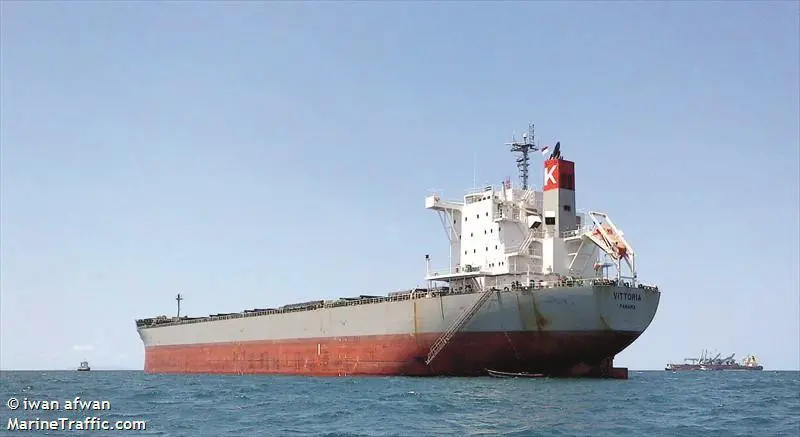
Given the importance of cylinder lubrication for the reliable operation of 2-stroke marine engines, it is unsurprising how much attention lube oil consumption receives from many shipowners and fleet managers. K-Line Bulk Shipping UK is no exception and have since 2019 been using HJ Lubtronic 2.0 SIP (Swirl Injection Principle) as their main engine lubricator. This system allows for an optimum cylinder condition compared with a standard cylinder lubricator, which was a key focus for the company.
K-Line launched a project in December 2020 working closely with the Aftersales & Service department at Hans Jensen Lubricators to find the optimum balance between having a low consumption of lube oil combined with good cylinder condition. The aim of the project was to reduce the feed rate to 0.50 g/kWh, from around 0.9 g/kWh, using a BN 70 Lube Oil only. This corresponds to a reduction of daily consumption from 97 litres to 47 litres, equivalent to a daily saving of more than US$100.
Hans Jensen Lubricators has extensive experience in supplying advanced cylinder lubrication systems gained over the last century. The conditions the equipment faces in the harsh environments on board a vessel require planned maintenance as well as a crew that fully understands how to operate and make the most of the possibilities of our cylinder lubrication system.
Numerous references show the ability to enable superior performance, though specific guidance on how to ensure the low feed rate and good cylinder conditions and tight follow-up.
Preparation and prior training
Before project startup, K-Line opted for specify a training webinar, which was attended by both vessel staff and office staff. The webinar helped familiarise both crew and superintendents with the lubrication system as well as potential responses to different scenarios. Furthermore, the webinar offered instructions about the parameters that impact on cylinder conditions and how to evaluate them. The webinar was well received and has continued to be used for training and crew onboarding.
Project background
K-Line selected two bulk carriers to act as pilot projects for the lube oil reduction, in close cooperation with HJL.
|
Vessel Names |
Albion Bay / Vittoria |
|
Year of Build |
2011 / 2013 |
|
Vessel type |
Bulk Carrier |
|
Engine type |
6S50MC-C / 6S60MC-C |
|
2020 Compliance |
Low Sulphur <0,5 % S |
|
CLO BN |
Navigo 70 MCL AW |
Technological aspects
Important parameters to take in to account when undertaking a project like this are:
|
Parameter |
Description |
|
Feed rate [g/kWh] |
Main parameter for optimisation project |
|
Cylinder oil in use |
Main parameter for a single BN oil in use |
|
Daily consumption of cylinder oil [L/24h] |
Used for visualizing savings of the feed rate reduction |
|
Port Inspection Report – PIR |
For evaluation of cylinder conditions |
|
Scrape Down Analysis – SDA |
For evaluation of cylinder conditions |
|
– On board |
|
|
– Laboratory tested |
|
|
Fuel type / fuel report |
For evaluation of cylinder condition with regards to cat fines |
|
Purifier performance report |
For evaluation of cylinder condition with regards to cat fines |
|
Shop test report |
Used for comparison for collected data |
|
Main Engine performance test |
For evaluation on engines performance with regards to cylinder conditions |
|
Maintenance history for: |
Used for evaluation of cylinder condition for proper recommendations |
|
– Liners |
|
|
– Pistons |
|
|
– Piston rings |
|
|
Liner wear records |
Used for comparison for the effect of the implementations of the feed rate reduction |
The data is collected prior to the project to create pilot evaluation. The evaluation will show where to focus the optimisation for the cylinder condition and what impacts the cylinder conditions in connection to the lubrication system.
Contrary to the perception on many vessels, it is quite often the phenomena of over lubrication that adds to less-than-optimal cylinder conditions. Hans Jensen Lubricators notes that turning up feed rates is a common response when issues occur with cylinders and liners. However, it has been determined that lowering feed rate will enhance cylinder conditions and reduce maintenance requirements. Therefore, a starting point was to stress this and gain understanding of the dynamics behind it.
Project timeline and Methodology
The time line set out for the project is illustrated below:
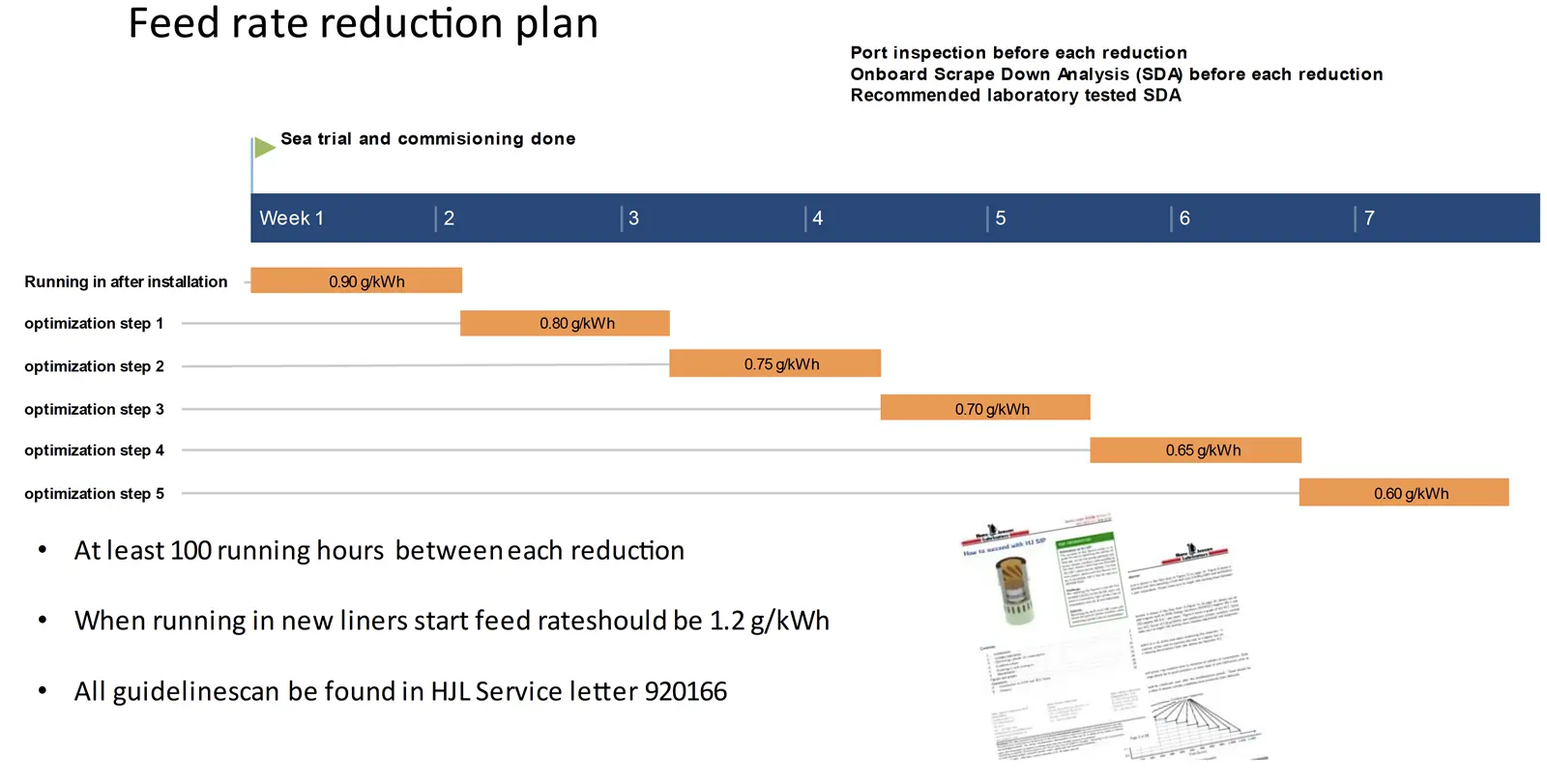
This reduction plan is based on a minimum of 100 running hours between each reduction.
In theory the five steps of reduction can be carried out over seven weeks. However, due to various factors such as vessel schedule and the duration of port stays, the plan was tailor-made to fit the specific vessels.
The process towards an optimal balance between feed rate and cylinder condition follows Hans Jensen Lubricators’ ‘SL920166 How to succeed with SIP’ service letter. In this publication, it is clearly described how to establish an index point, optimize feed rate and finally conclude that an optimum has been reached. 100 running hours in each phase is chosen because each adjustment needs time to settle in the system before an evaluation of sufficient quality can be made, in order to conclude if further reduction is possible.
Index point / starting point
Starting up a project like this where primary focus is to lower the feed rate, a well-documented index point is of utmost importance. For that, a thorough analysis of Port/piston conditions, oil sample analysis, liner measurements and the current condition of the lubrication system are conducted.
For the vessels in question a target feed rate of 0.5 g/kWh was set. This value is based on many years of experience gathered at Hans Jensen Lubricators with similar vessels, taking constant improvement and innovation into the target setting.
Optimization process
The optimization process is an iterative evaluation of cylinder condition based on port inspections and Scrape Down Analyses. These confirm the cylinder condition and indicate readiness to go for the next step. Each Scrape Down Analysis is made into a thorough report by the Aftersales Service Department at Hans Jensen Lubricators – a so-called Feed Rate Optimization Programme “FROP”. With reduction steps of 0.05 g/kWh, every 100 running hours, it has been possible to reduce the feed rate continually, together with the thorough FROP, to the target feed rate of 0.50 g/kWh.
Cooperation
Throughout the project, close cooperation between Hans Jensen Lubricators and K-Line was maintained. Hans Jensen Lubricators technicians observed the progress of the vessels on a daily basis in close contact with the K-Line superintendents. K-Line’s General Manager, Mr. Georgi Yorgakiev, commented: “Your advice to our superintendents throughout the project has been invaluable.”
Underlining the productive cooperation between the teams, the HJ lead technician for the project praised the close working relationship:
”Throughout this project good communication and understanding has been key for the success. Technical superintendents and HJ technical support have been in close contact from day one. Thorough guidelines have been provided by HJL and implemented by vessels accordingly, any uncertainties or doubts has been thoroughly discussed so all involved parties have been confident with the implementation steps. It has been a delight working with K-Line, which has shown a high level of commitment for the project.”
Technical aspects
In order for HJL to follow the development and provide specific recommendations for the feed rate optimization, evaluations were made of Scrape down analysis and port inspection reports.
Scrape down analysis
Throughout the project, as the feed rate was gradually reduced, it was found that iron content (FE) [ppm] remained below 50 ppm which indicates low abrasive wear – Iron is appearing in scrape down samples when abrasive wear is present in the cylinder. Normal range for this when using HJ SIP valves is 0-250 ppm.
Another important parameter to follow is the residual BN [mg KOH/g]. The BN in the cylinder oil is used as a detergent for cleaning the cylinder. When excessive amounts of BN is present in a cylinder this can lead to calcium deposits build up on pistons and around piston rings.
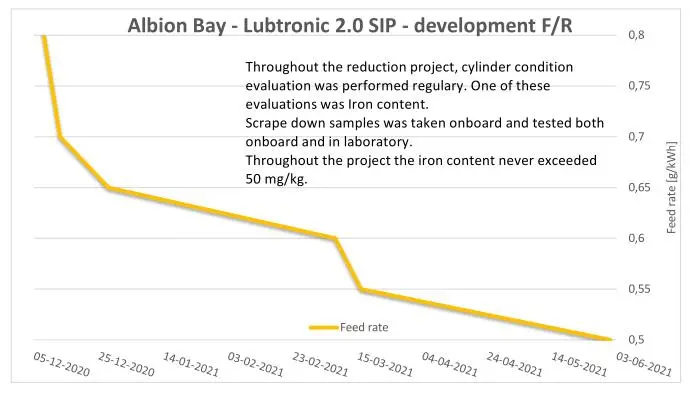
Referring to the above graphs, an onboard scrape down was taken between each feed rate reduction. Furthermore laboratory tested scrape down analysis was carried out several times through the project.
The development showed that the iron content never exceeded 50 mg/kg, even though the feed rate was reduced. As feed rate is reduced the concentration of the oil samples get more concentrated. The more concentrated the oil samples are, it can be expected that wear particles in the scrape down oil can be higher. However, throughout the project period, the wear particles amount remained below 50 mg/kg. This is a strong indication that less abrasive wear is present in the cylinders. Furthermore, as feed rate was reduced the residual BN content became higher. This is also due to the fact that concentration in the sample was getting higher. Under normal circumstances a high residual BN can lead to deposit build up on the pistons and around the piston rings. However, throughout the project we found that deposits were decreasing and cylinder condition was improving as the feed rate was reduced.
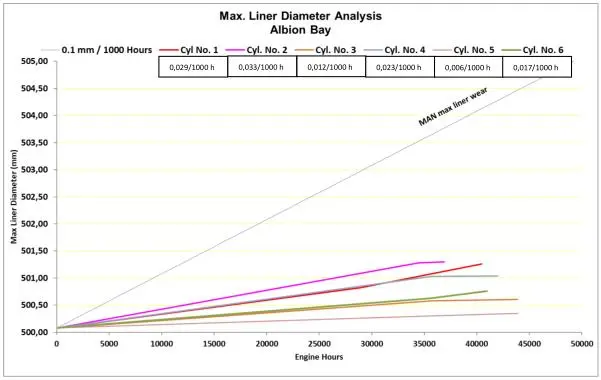
The low iron content is supported by liner measurement which was taken throughout the project.
Port inspections
Port inspections has been carried out by crew at each port where time permitted.
Before the project started, the cylinder conditions were evaluated as being acceptable with room for improvement. After each step of reduction evaluations were made by scrape down analysis and port inspection. This showed a steady improvement of the cylinder conditions.
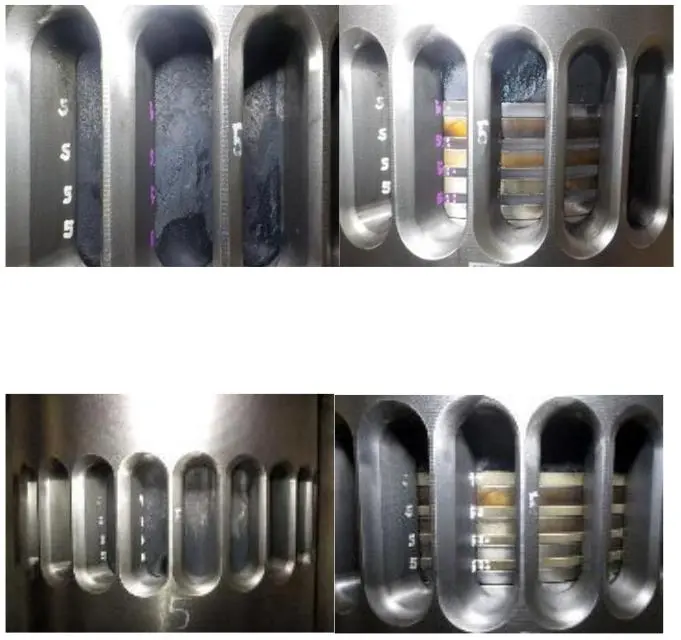
After the last reduction was implemented, the cylinder condition had shown much improvement, with decreased calcium deposits. The pistons and piston rings were also in a very good condition.
Project Conclusion
During this project Hans Jensen Lubricators has been vigilant in monitoring the development of the cylinder conditions and reduced the feed rate where, based on HJL’s experience, vessels would normally have increased feed rates. This has been key in the success of running the vessels with a high BN cylinder oil showing high residual BN results without getting deposit buildups, which could lead to higher abrasive wear.
K-Line has through good cooperation with Hans Jensen Lubricators achieved great savings on its vessels Vittoria and Albion Bay. Apart from achieving an all-time low in terms of lube oil consumption, it has been possible for the vessels to use one type of cylinder oil only. The reduction plan was presented for the vessels and adjusted according to feedback. Besides the two vessels that have been part of this project, K-Line has nine other vessels with similar system setup.
K-Line has gained practical experience managing the reduction of feed rate while ensuring good cylinder condition, partly through the training webinar and partly through the project. K-Line intends to apply the methodology used in this project to the rest of the fleet.
Related Articles
 CONVENTIONAL FUELS & OILS
 ALTERNATIVE FUELS & LUBRICANTS
 AMMONIA