



Life cycle management for marine market
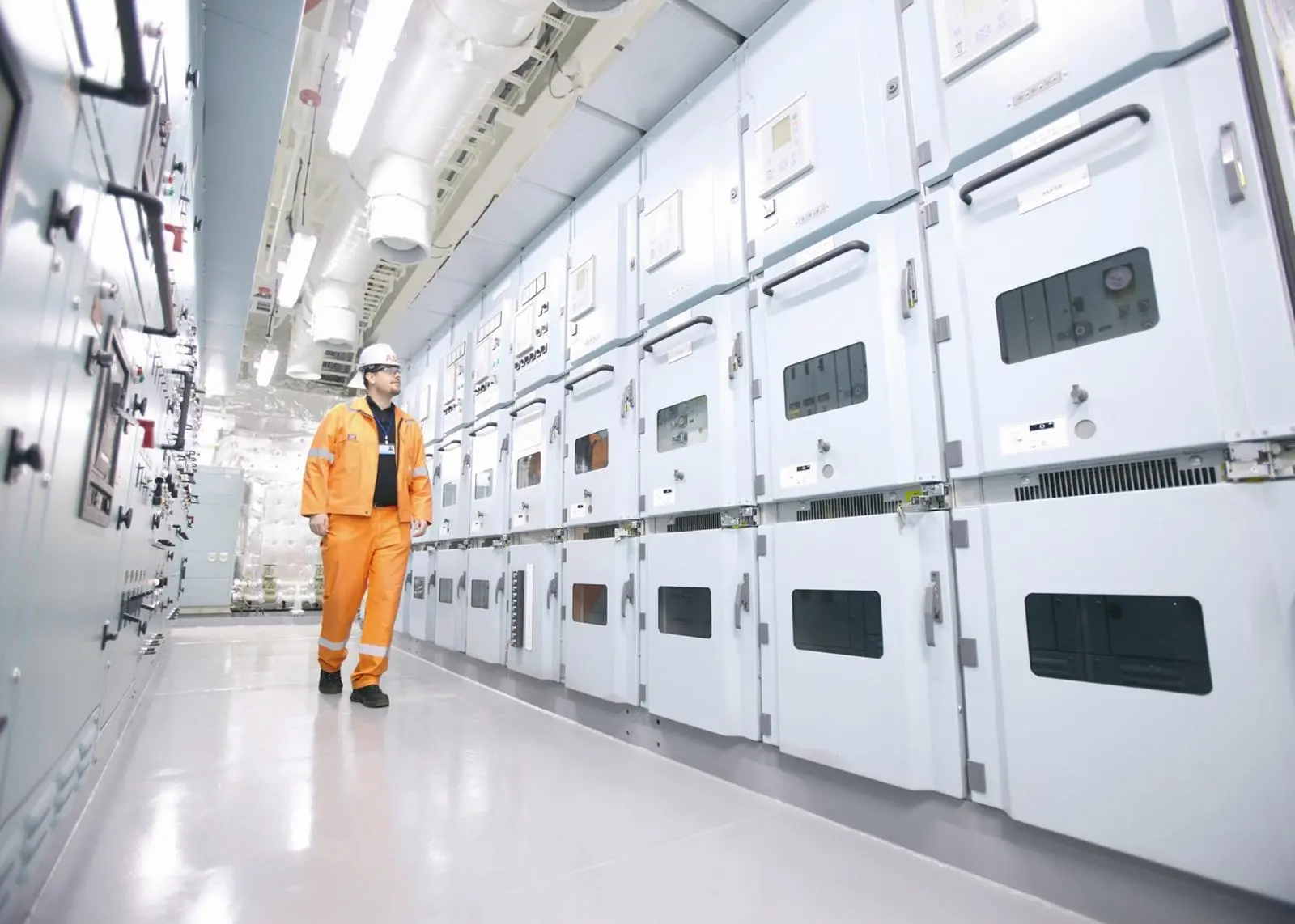
The model, introduced to help companies recognise the condition of electrical and automation equipment, is being used by ABB’s recently expanded marine and crane services team to help the industry determine what level of support is needed on existing installations. It covers the entire scope of supply of ABB products and systems from ABB’s extended automation system 800xA distributed control system through to low and medium voltage drives, generators, AVRs and switchgear and transformers.
During the ‘active’ and ‘classic’ phase, the complete life cycle services – from product selection and dimensioning, installation and commissioning, preventive and corrective maintenance, remote monitoring and intelligent diagnostics, technical support, upgrade and retrofit, replacement and recycling plus training and learning – are available. A product in the ‘classic’ phase will not be actively promoted by the sales team.
During the ‘limited’ stage the equipment is no longer available. The services offered are limited. Spare parts, maintenance and repair services are available as long as materials can be obtained. In the ‘obsolete’ phase, the equipment is not available. ABB cannot guarantee availability of services for technical reasons or within reasonable cost.
“We want to work closely with customers in managing the electrical assets of vessels and platforms,” says Dean Jennings, manager for harbour cranes and merchant vessel service. “ABB want to help customers proactively manage their assets so that failures and subsequent asset downtime is avoided altogether.”
ABB says that the rationale behind the move is that many customers do not realise that equipment is in the obsolete phase. This can prove extremely costly for applications like drilling vessels. “Often when a failure does occur then maintenance tends to be reactive when it could easily be prevented,” warns Jennings. “There is a risk that when a part fails, a replacement part may not be available. The cost to the operator can be huge. It is important that companies realise there is a sound alternative. One that will not only save money but will reduce the stress and panic of a key component failing.”
Related Articles
 ALTERNATIVE FUELS & LUBRICANTS
 GENERAL NEWS
 GENERAL NEWS