



Low-noise thrusters for Baltic route
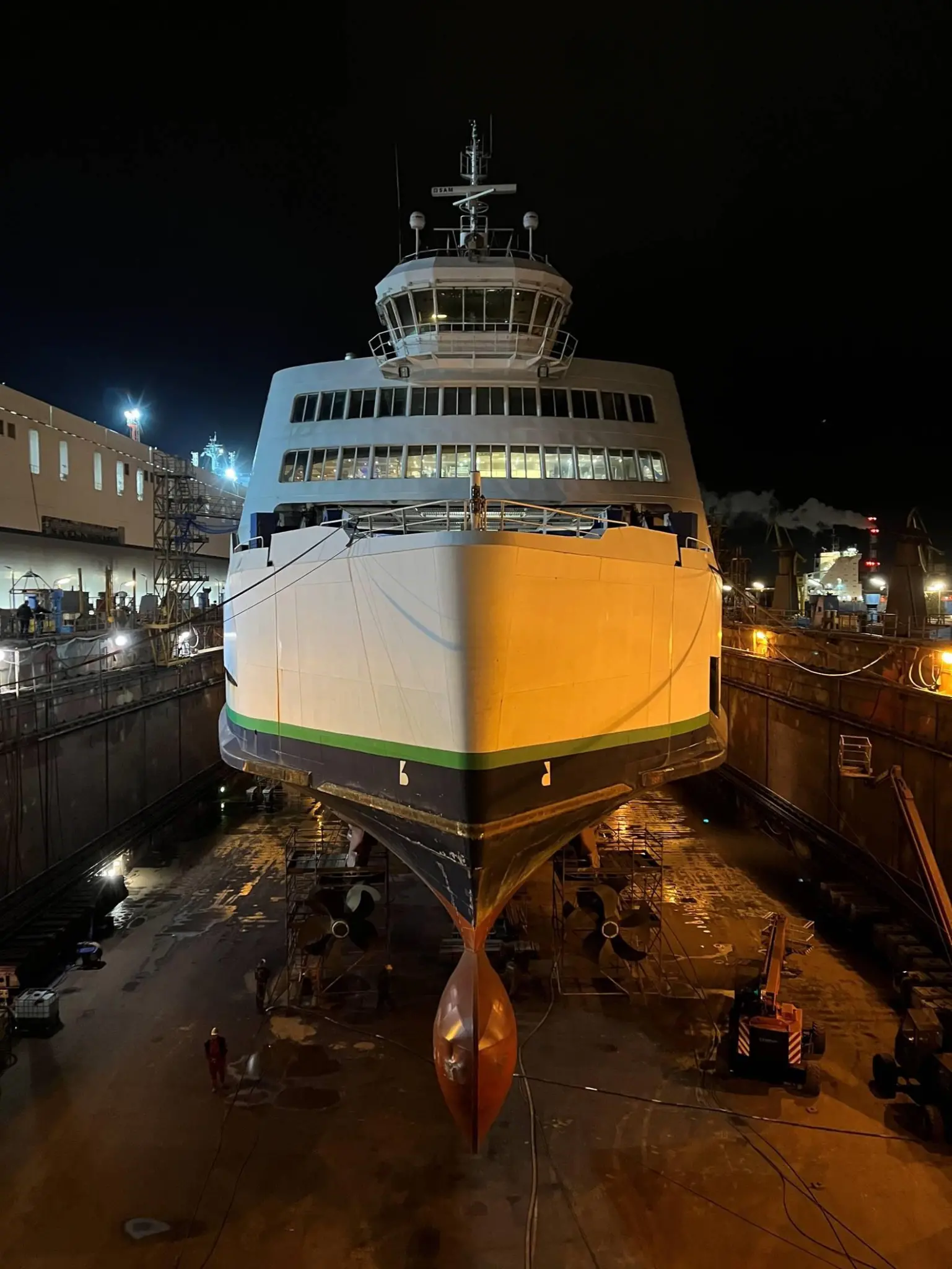
The propulsion system of the hybrid ferry consists of four thrusters – one at each corner of the ferry. The new thrusters ensure a more homogeneous flow through the water, resulting in less noise and vibration. Less underwater noise and less vibration provide better conditions for marine life in the Fehmarnbelt, including harbour porpoises. In addition, the more homogeneous water flow ultimately reduces emissions, including CO2.
The project completes the replacement of the original Contaz 35 push thrusters with Azipull 120 FP pull thrusters on all four of its Puttgarden-Rødby Germany-Denmark ferries. A total of 16 thrusters were replaced on the four hybrid ferries operating on the Fehmarnbelt. The total investment in new thrusters is more than EUR 13 million. The new Kongsberg Maritime propellers are 3200mm in diameter and each has four blades and weighs 25 tons, Scandlines said.
Together with the new thrusters, head boxes were installed which slightly change the ship hull around the thruster to further optimise the water flow to the propeller.
“With the completed project, we have reduced CO2 emissions from the hybrid ferries by up to 15% and thus taken an important step towards zero emission ferries on the Puttgarden-Rødby route. We are very pleased that this can be combined with less impact on the marine environment in the Fehmarnbelt,” says Michael Guldmann Petersen, COO of Scandlines.
In parallel with the replacement of the thrusters of the hybrid ferries, Scandlines’ simulator in Puttgarden has also been upgraded so that the crew has been optimally prepared for the new propulsion system.
Climate and environmental issues have long had top priority on Scandlines’ agenda. As early as 2013, the ferry company invested in hybrid ferries with battery banks, and in 2024 the first zero direct emission ferry will be inserted on the Puttgarden-Rødby route. Only six years later, in 2030, the entire route will be emission-free.
Related Articles
 ELECTRIFICATION AND BATTERY HYBRIDS
 BATTERIES, SUPERCAPACITORS, FUEL CELLS AND OTHER ENERGY STORAGE TECHNOLOGY
 ELECTRIFICATION AND BATTERY HYBRIDS