



Malaysia awaits its ship
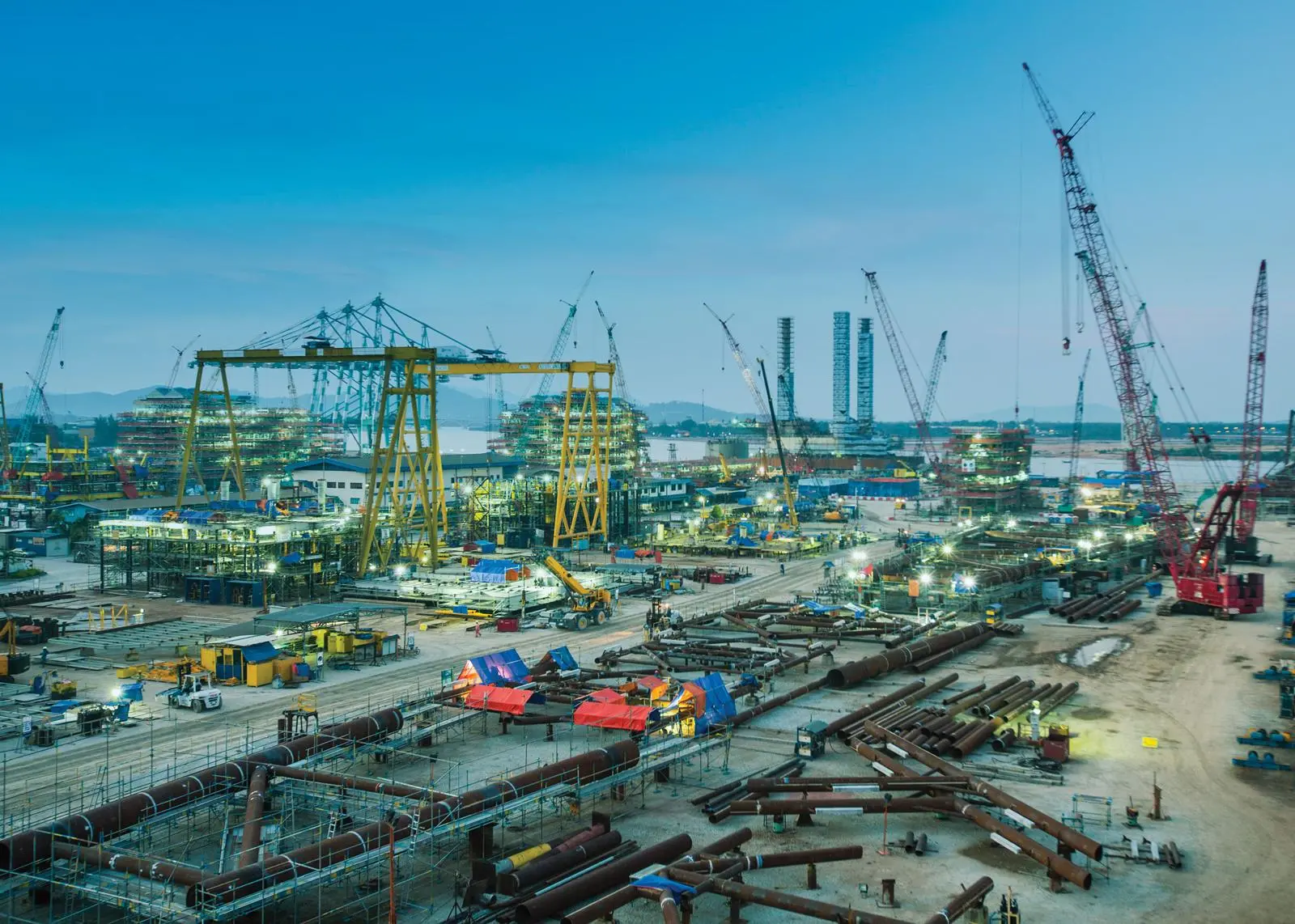
It looks as though Malaysia’s once sleepy shipbuilders are soon to be jolted out of their slumber. If it happens the promise is of the creation of some 55,000 jobs between now and 2020, says the nation’s International Trade and Industry Ministry, giving the country’s near comatose economy a much needed fillip. Shipbuilding revenue, it is argued, is also vitally needed following the fall in oil and commodity prices, on which the nation depended heavily in the past.
Not since Kuala Lumpur adopted its controversial cabotage policy in the 1980s – a policy it retains to this day, against better counsel – has the nation taken a real look at how it can tap its shipbuilding sector that, either by accident or default, has remained too dormant for too long.
“The country is the right choice to invest in, as it has a promising future based on its strategic location, competitive cost, a skilled and talented workforce, advanced infrastructure and extensive trade agreements regionally and globally,” claimed international trade and industry minister Datuk Sri Mustapa Mohamed in August.
That ‘strategic location’ and ‘skilled and talented workforce’ was soon to become cause for Mohamed to grant new companies either pioneer status – with a 70% income tax exemption on their statutory income for a period of five years – or an investment tax allowance of 60% on the qualifying capex incurred within five years from the date their first qualifying expenditure. Existing shipbuilding and ship repair companies will be given an investment tax allowance of 60% on the additional qualifying capex if they are formalised within five years.
The announcement and the slew of initiatives come amid a squall engulfing yards and businesses across Asia. The Malaysian government has been paying attention, as well as learning from the past misfortunes of it and other countries. When the world learned of the debacle behind Vietnamese state shipbuilder’s Vinashin implosion years ago, a home truth came calling: do not over extend one’s abilities.
When Singapore’s Neptune Orient Lines (NOL) downsized last year and then went under, it told Malaysia that container vessels are not just cumbersome, capital intensive and with costly outlays, but they rarely make any commercial sense to build; for all that happens upon completion is for them to be laid up somewhere in the seas surrounding Malaysia. The country’s own experience with liner company MISC some years ago amply vindicated that outlook, as does the recent bankruptcy of Korea’s Hanjin Shipping.
A new narrative
So it did not take long for Malaysia to understand what was needed. Not to tread where fools once had, but instead to head to what the angels are now seeking. Thus a new narrative was born. The way forward will be to leverage offshore vessels.
Maritime and shipping analyst Nazery Khalid told The Motorship: “Malaysian shipyards are limited in their capacity thus [we] do not focus on building large, ocean-going vessels. The focus has always been on building small-medium sized vessels of 120 meters length and below. The emphasis is on offshore support vessels (OSV) to leverage Malaysia’s offshore oil and gas riches and status as the hub for deep water oil and gas activities in southeast Asia.”
The right focus, Khalid believes, is for Malaysia to import the large, ocean-going vessels it needs and continue to focus on building and repairing small- to medium-sized vessels.
That strategy suggests there will be no rush for foreign partnerships. By comparison with South Korean and Chinese yards, Malaysian yards are noticeably small. With limited capacity there is none of that urge to head recklessly into building large ocean-going vessels and compound the glut in global shipping capacity; something a foreign partnership would usually entail.
The country’s shortage of ship design skills may be a stumbling point if Malaysian shipyards do go it alone. The admission from Dato Ir Abdul Hak Mohammad Amin, managing director of Malaysian ship builder and operator EA Technique that “we usually depend on third party consultants for our designs” attests to the prematurity of any such move. But Malaysia is addressing the shortfall: under the current Economic Transformation Programme plans are afoot to train up to 160 engineers and technicians in shipbuilding and ship repair, through Boustead Heavy Industries Corporation and Boustead Naval Shipyard.
Conservative impulses rule Malaysia’s decision-making processes in shipbuilding and, given the limited interest Malaysian yards attract internationally, even with Mohamed’s tax incentives the number of yards and vessels is likely to remain modest in the short term.
Of the six large shipyards in the country the biggest is MMHE. The remaining yards fanned out across the country take the nation’s yard holdings to a total of 100. All eyes will be on SapuraKencana Petroleum and Nam Cheong, both of whom specialise in offshore craft. The latter booked a record US$29 million in revenue for the second quarter of 2016 and counts itself as the second largest builder of OSVs east of the Suez Canal.
The largely overlooked question is how the growing abundance of US shale gas exports may inadvertently impinge on the country’s offshore ambitions. Could Malaysia’s offshore newbuilds become redundant even before they roll out? Will the proverbial ship have a chance of getting in? The jury is out.
Related Articles
 ALTERNATIVE FUELS & LUBRICANTS
 GENERAL NEWS
 GENERAL NEWS