



MAN Energy Solutions extends its 10.6 version roll-out
Initial details of these new engines were revealed via a ‘Market Update Note’ (MUN) issued by the company on 16 December, which reported that the new versions offer improved specific fuel oil consumption (SFOC) across their entire load range.
That note positioned these new 10.6 machines as complementing its G95ME-C10.6 engine, which was launched in February 2020, but Thomas Hansen, head of the two-stroke promotion and customer support team at MAN Energy Solutions, told The Motorship that it was “still very early” to release detailed technical specifications of these latest applications of its 10.6 generation.
But he said that the engines will be included in the next edition of MAN ES’s Marine Engine Programme, which will be released “during the first months of 2021”, according to the MUN. In that case, more technical data should be available shortly.
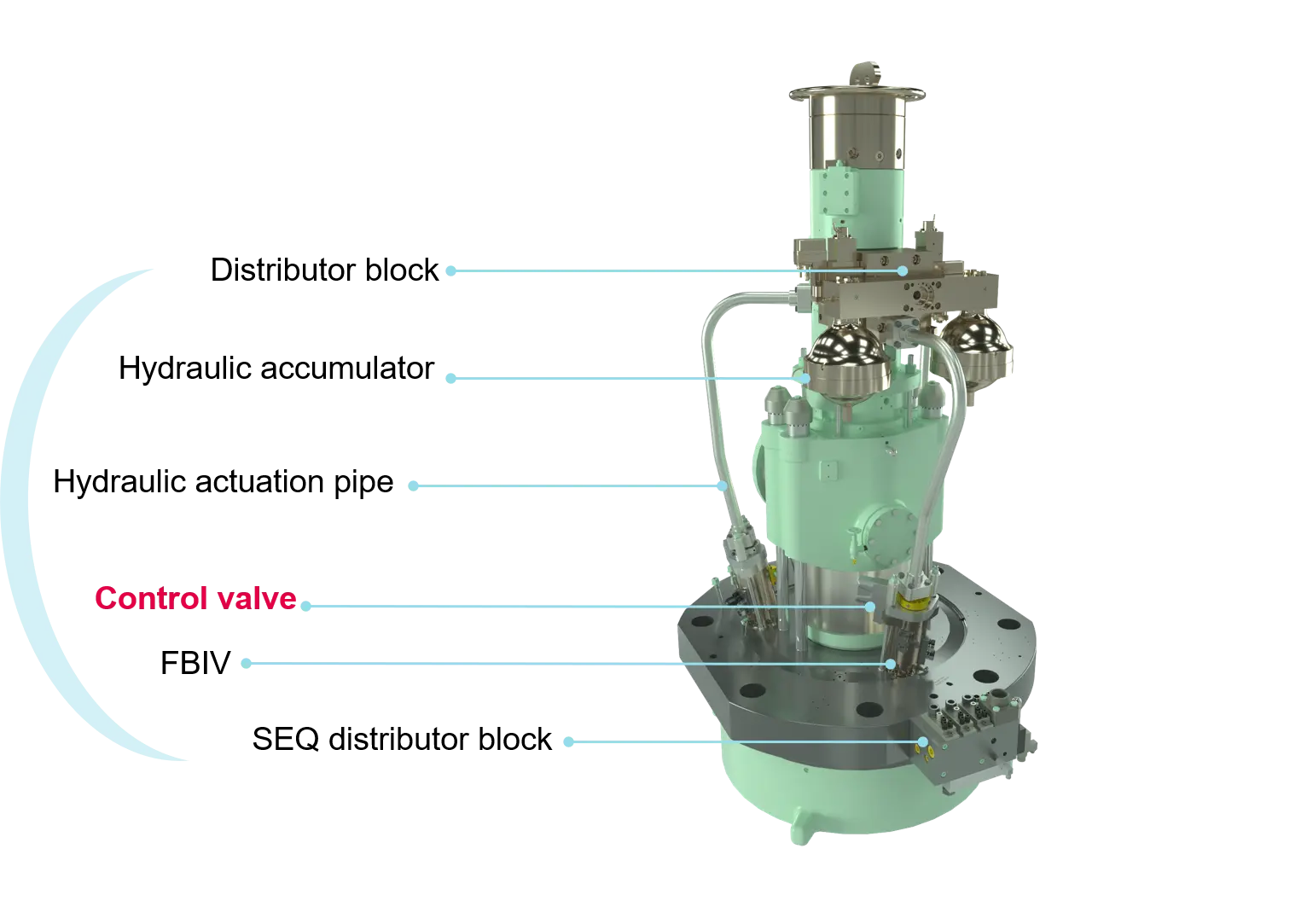
Meanwhile, material he provided to The Motorship included some specific details of the improvements made to the S50ME-C10.6, which include a new type of low force exhaust valve and a change to the material used for the exhaust valve spindle, both of which will reduce weight. A summary of that engine’s upgrade is in the box on this page.
[BOX]
S50ME-C10.6: main upgrades
A number of changes have been made to create the 10.6 version, including:
● New cylinder cover
● New type of low force exhaust valve
● Sequential fuel injection system
● New hydraulic cylinder unit
● Modified high pressure pipes for fuel valves
● Modified hydraulic pipe for exhaust valve
[END BOX]
Mr Hansen also provided more general information about the other two engines, which revealed that, in common with the G95ME-C10.6, both will be compatible with the Triton engine control platform that MAN Energy Solutions introduced last year eventually to replace its multi-purpose controller (MPC), which has been in use since 2003. Triton is a modular system, making it future-proof and compatible with such innovations as data exchanges, but it is arranged to be familiar to those already using the MPC.
Sequential fuel injection
A key change to the earlier versions of these engines is that these 10.6 models will include sequential fuel injection – a technology that was pioneered for two-stroke engines on the G95ME-C10.6 – and exhaust gas bypass tuning, which will give them a new low-load tuning for optimising SFOC and for NOx emission compliance, the MUN noted.
Sequential fuel injection allows each fuel valve on a cylinder head to be controlled individually, which makes it possible to “achieve the best possible trade-off between SFOC and NOx formation,” Mr Hansen said during a customer webinar on 28 January.
They will not, however, be offered with sequential turbocharging, which is another innovation found on the larger engine design. Kjeld Aabo, MAN ES director of new technologies for two-stroke promotion and customer support, said during the webinar that although sequential turbocharging could theoretically be applied to these engines, a cost-benefit analysis persuaded the enginebuilder not to offer it for these smaller sizes.
For sequential turbocharging, one turbocharger of a smaller size than the others is fitted to an engine, with large engines having up to four turbochargers, Mr Hansen said. The smallest one would not in use at loads below about 65%-70% of full load, making it possible to match an engine’s turbocharging to a broader load range. At low loads, this gives a smaller turbine area and a higher scavenging air pressure, giving “possibilities to optimise the SFOC without jeopardising any emissions regulations,” he said.
Asked whether sequential turbocharging could be retrofitted to these new engines, he said that the cost would be prohibitive: all their turbochargers would probably have to be replaced, along with upgrading the engine control system, piping and valves.
In any case, sequential turbocharging can only be applied to engines with more than one turbocharger, which excludes the 50- and 60-bore versions of the new 10.6 platform, which are always equipped with a just one turbocharger.
This is an evolution, rather than a step-change in technology. “It is basically the same as turbocharger cut-out,” Mr Hansen said, although the process is automatically controlled by the engine control system. He credited this development not only on the experience it has gained from using turbocharger cut-out on many other engines, but also on input from its cooperation partners, ABB and Mitsubishi. The result, he said, is “a really clever system.”
January’s webinar was focused on future propulsion options for large and ultra large container vessels and concentrated primarily on the G95ME-C10.6 engine. The first unit is due to be delivered in Q1 of next year, Mr Hansen told The Motorship, but he declined to identify its destination yard or vessel, apart from confirming it would be within its target market of large container ships. It is one of 12 of these engines on order at the time of the webinar, when six more were on option.
Related Articles
 PROPULSION
 GENERAL NEWS
 GENERAL NEWS